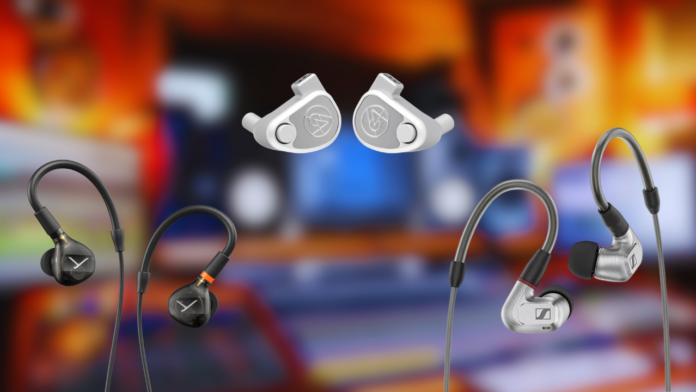
Studio headphones remain an essential part of most production setups, but in-ear monitors have become increasingly useful for mixing, editing, and checking how a track translates outside of the studio. The best IEMs for mixing can provide strong isolation, precise imaging, and enough resolution to expose subtle problems without requiring a treated room. IEMs also make practical secondary references. They let engineers check vocal placement, bass balance, reverb tails, edits, and stereo effects on a system that resembles how many listeners consume music. Their portability makes them especially useful for remote work, location recording, and late-night sessions.
No IEM should be treated as a complete replacement for studio monitors. Ear-canal acoustics, tip selection, and insertion depth can significantly change their frequency response. However, once an engineer learns a particular model, a dependable pair of reference IEMs can become one of the most revealing tools in the studio. Here are five of the best IEMs for mixing in 2026, covering everything from affordable reference listening to flagship professional monitoring.
Can You Mix Entirely With IEMs?
A complete mix can be produced on IEMs, but they work best as part of a broader monitoring system. IEMs eliminate room acoustics and reveal quiet details exceptionally well, yet they do not reproduce the physical speaker interaction that occurs in a room. They can also exaggerate stereo separation because the left and right channels feed each ear independently. Always check stereo width, center information, and low-frequency balance on studio monitors or conventional headphones before finalizing a mix. Regular breaks are also important. Strong isolation can make volume levels feel deceptively comfortable, so keep playback conservative and periodically reset your ears.
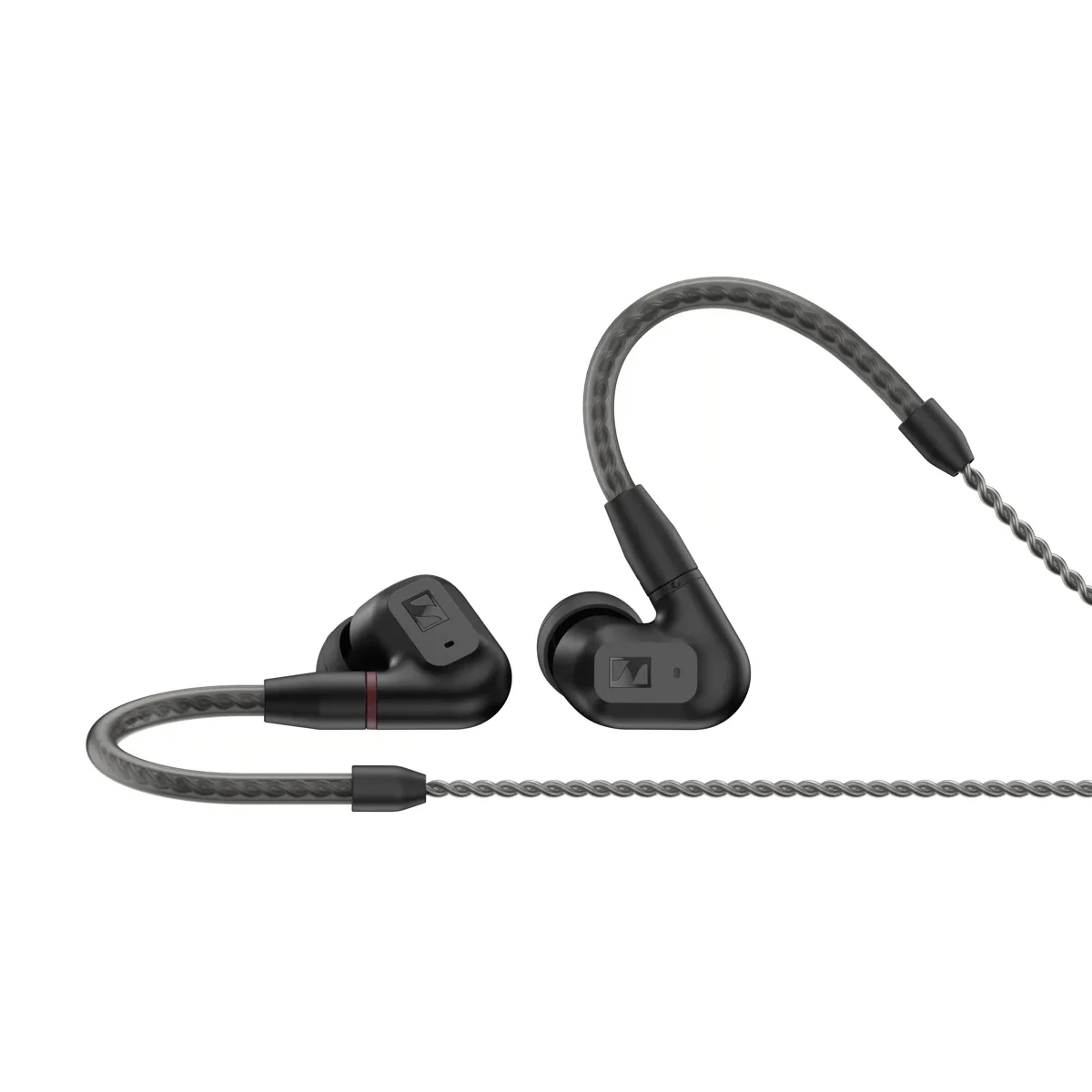
Sennheiser IE 200: Best Budget IEM for Mixing
The Sennheiser IE 200 is an excellent budget option for producers who need a compact secondary reference. It carries over the small shell design used throughout Sennheiser’s IE series, making it exceptionally light and easy to wear for extended periods. The single-driver configuration also gives the IE 200 a coherent sound, avoiding the crossover interactions that can occur in multi-driver IEMs.
Its soundstage is relatively intimate, especially compared with the IE 900, but the imaging is precise. Performances are evenly distributed, and individual elements are easy to locate. There is enough space between sounds to examine a mix without creating an artificially large or exaggerated presentation. This makes the IE 200 particularly useful for level placement, vocal positioning, and checking whether a mix remains organized on more modest playback equipment. The bass has a warm, controlled thickness with a satisfying punch. It does not offer the deepest sub-bass extension in this group, but it provides a realistic sense of body without clouding the midrange. Low mids carry some extra density, giving instruments more weight, while acoustic guitars, pianos, and vocals remain clear and textured.
Treble is lively and concentrated. This can help expose sibilance and aggressive high-frequency information, although the response may become intense at higher listening levels. Engineers should learn this characteristic before making broad EQ cuts based only on the IE 200. Despite its low 18-ohm impedance, the IE 200 can benefit from a capable dongle DAC, headphone amplifier, or audio interface with sufficient headroom.
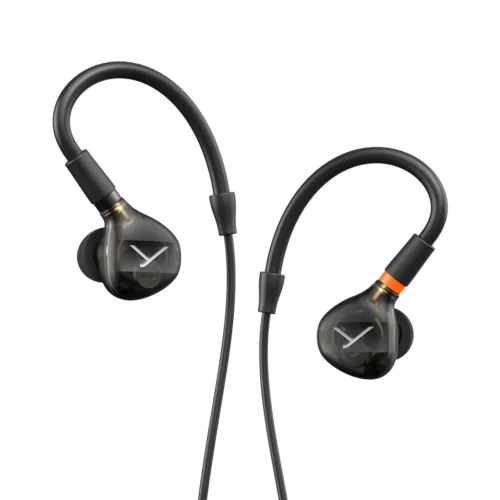
Beyerdynamic DT 70 IE: Best Overall IEM for Mixing
The Beyerdynamic DT 70 IE is the most direct recommendation for mixing because it was developed specifically for that application. It combines an analytical presentation with enough energy and low-end weight to keep long sessions engaging. Its soundstage is one of its biggest advantages. Rather than producing the narrow, left-to-right presentation associated with many studio IEMs, the DT 70 IE generates noticeable width and depth. Sounds occupy clear positions within the mix, while the stage extends slightly outside the head. This makes panning decisions, stereo effects, reverb placement, and instrument separation easier to assess. The low end is detailed and dynamic. There is real sub-bass resonance and weight, but the response remains tight enough to function as a dependable bass reference. Kick drums and bass instruments retain their physicality without becoming detached from the rest of the frequency spectrum.
The DT 70 IE is strongest through the mids. Its transparent, high-resolution presentation allows vocals and instruments to sound articulate without removing their natural weight. This helps expose masking, boxiness, congestion, and level inconsistencies. The treble has the familiar Beyerdynamic crispness, but it remains controlled. Cymbals and upper harmonics shimmer with enough intensity to reveal problems without regularly turning harsh. Its compact shell also makes the DT 70 IE comfortable for extended sessions.
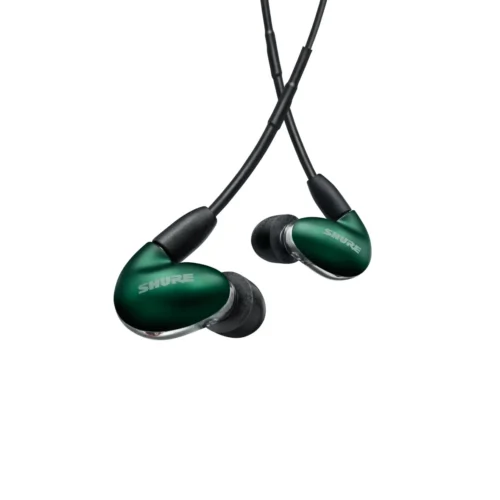
Shure SE846 Gen 2: Best Mixing IEM for Isolation
The Shure SE846 Gen 2 is a versatile professional monitor built around four balanced-armature drivers and a three-way frequency distribution. Its combination of strong isolation, accurate imaging, and adjustable tuning makes it suitable for studio work, location recording, and live monitoring. Bass is present but not dominated by sub-bass rumble. Instead, the SE846 emphasizes the upper bass, giving low-frequency instruments more growl and definition than overwhelming impact. This can be helpful when examining bass articulation and low-mid masking. However, engineers working on sub-heavy electronic, hip-hop, or cinematic material should check the deepest frequencies on an additional monitoring system. The mids have a generally warm character. A touch of low-mid emphasis gives guitars and snare drums greater weight, while a mild central-mid recession can make some vocals and instruments sound slightly thinner. High mids recover with energy, providing clarity to pianos, lead melodies, and percussion transients.
Soundstage width and imaging accuracy are among the SE846’s strongest mixing qualities. The stage is more linear than three-dimensional, but sounds are placed precisely across the stereo field. Complex panning and stereo microphone recordings are reproduced with enough separation to give individual layers room. Shure includes extended, balanced, warm, and bright nozzle filters. The balanced filter is the most logical starting point for mixing, while the bright filter can function as an alternate check for hiss, sibilance, cymbal harshness, and high-frequency distortion.
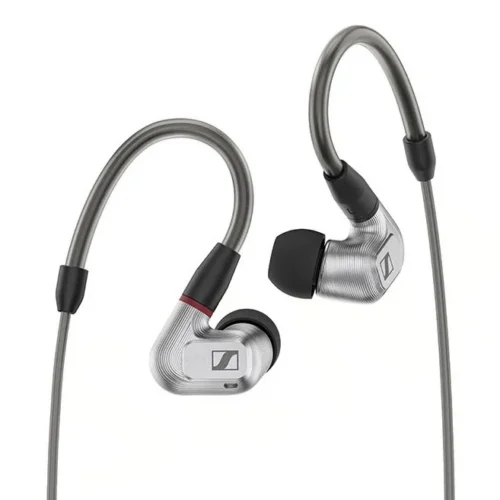
Sennheiser IE 900: Best IEM for Soundstage and Spatial Analysis
The Sennheiser IE 900 is a flagship IEM that combines exceptional spatial performance with the coherence of a single dynamic driver. The soundstage is remarkably expansive for an IEM. Sounds can appear left, right, above, below, forward, or behind the listener, creating an immersive space with accurate positioning. Individual instruments and effects retain clear boundaries, even when the arrangement becomes dense. This makes the IE 900 useful for panning, ambience, reverb depth, delay placement, and detailed sound-design work. Bass is powerful and full-bodied. Its abundant sub-bass adds weight, while the mid-bass remains tight and impactful. The low end is clean enough to reveal individual textures, but engineers must remember that the IE 900 delivers more bass energy than a strictly neutral reference.
Its midrange is not as forward as the bass, yet it remains natural, transparent, and highly detailed. Textural instruments maintain clear origins within the mix, and vocals appear sharply separated with a sense of height. This spatial quality can make it easier to inspect vocal effects, layering, and the relationship between a lead performance and its supporting arrangement. Treble is detailed without becoming clinical. It adds texture and definition while showing enough restraint to remain smooth. That balance makes the IE 900 useful for detecting high-frequency issues over long sessions without creating unnecessary fatigue.
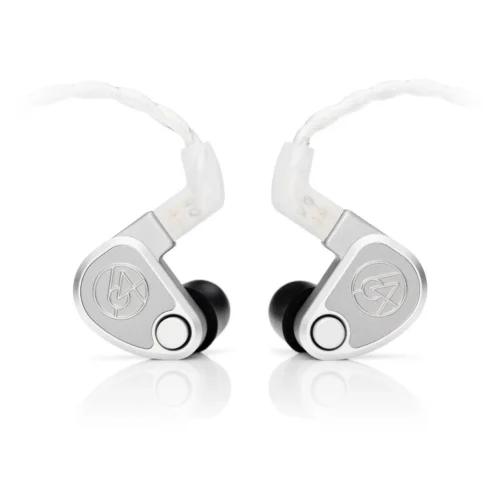
64 Audio U12t 2025: Best High-End Reference IEM
The 64 Audio U12t is the most advanced and expensive reference option in this guide. The revised model retains the technologies associated with the U12t, including 64 Audio’s Apex pressure-relief system, LID circuitry, and tia acoustic chambers. Its soundstage has a wide wingspan and pinpoint-accurate stereo image, exceptional for dense sessions involving layered guitars, stacked vocals, complex percussion, orchestration, or detailed effects. Bass is focused on reference-quality clarity rather than impact. It does not attempt to produce the thickest tone or hardest transients. Instead, it reproduces low-frequency information with a realistic and transparent character. This makes the U12t one of the more reliable options for identifying bass textures and relationships without being distracted by exaggerated slam.
The midrange is its greatest strength. Individual notes are rendered with excellent definition, shape, and physicality. Instruments sound raw and organic, with enough energy to remain lively without becoming artificially lush. This clarity helps expose masking, resonances, automation problems, and subtle processing decisions. Treble is colorful and sparkling but avoids sounding artificial. The highs extend with effortless resolution, allowing reverbs, upper harmonics, cymbals, and small recording artifacts to emerge naturally. Its balance of brightness and realism makes it a strong choice for mastering checks and highly detailed mix analysis.