
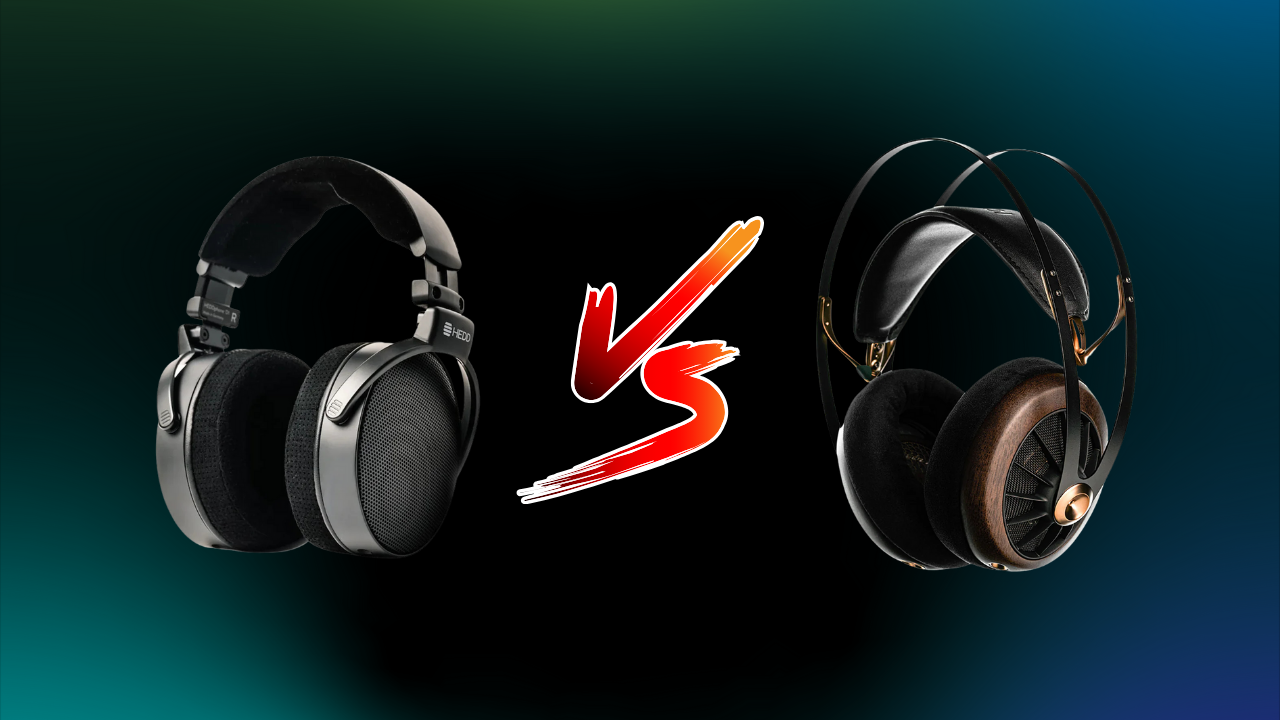
The HEDD Audio HEDDphone D1 and the Meze 109 Pro occupy a similar price bracket, yet they approach sound reproduction and headphone design from very different perspectives. Both are open-back headphones aimed at discerning listeners, but one leans heavily into reference-grade transparency while the other prioritizes musical engagement and comfort. This comparison examines how each headphone performs across build quality, comfort, sound signature, and listening applications to help determine which is the better fit for your needs.
What You Get
| HEDDphone D1 | 109 Pro |
|
|
Look & Feel
The HEDDphone D1 adopts a clean, functional design that places comfort and practicality above visual flair. Its lightweight construction and generously padded velour ear pads create a secure yet comfortable fit, even during extended listening sessions. The open-back design promotes airflow and reduces pressure buildup, while the moderate clamping force helps the headphone remain stable without becoming fatiguing. In contrast, the Meze 109 Pro makes an immediate impression with its elegant walnut wood earcups and refined industrial design. The self-adjusting suspension headband evenly distributes weight across the head, reducing pressure points and allowing for effortless long-term listening. The plush velour pads feel soft against the skin and contribute to excellent passive comfort, while the headphone’s lightweight frame prevents fatigue during extended sessions. Overall, the HEDDphone D1 emphasizes ergonomic practicality and ease of use, while the Meze 109 Pro leans into luxury aesthetics and all-day comfort without sacrificing functionality.
Design
Both the HEDDphone D1 and Meze 109 Pro use dynamic drivers with different individual components to achieve their respective tunings. The HEDDphone D1 employs a proprietary Air Motion Transformer (AMT) driver, a technology that originated in HEDD’s professional speaker designs and was adapted for headphones. Unlike conventional dynamic drivers, the AMT diaphragm moves air in a collapsing accordion-like motion, allowing it to respond more quickly and with greater precision. This results in ultra-fast transient response, extended high-frequency detail, and a neutral tonal reference that avoids coloration. The Meze 109 Pro is built around a high-output 40 mm dynamic driver engineered by Rinaro Isodynamics. This advanced dynamic design leverages a specialized magnet and voice-coil integration to increase linearity and reduce distortion, while supporting a broad frequency range. The result is a driver that delivers rich bass response, a smooth midrange, and an energetic top end without the need for excessive equalization.
In essence, the HEDDphone D1’s AMT driver emphasizes accuracy and transparency, ideal for revealing subtle details and timbral nuance. In contrast, the Meze 109 Pro’s optimized dynamic drivers favor a fuller, warmer presentation with a more organic sense of musical impact. These foundational differences help explain the contrasting sound signatures that you’ll experience from these two models.
Soundstage
The HEDDphone D1 delivers a soundstage that prioritizes accuracy and precision over sheer size, while the Meze 109 Pro takes a more expansive and immersive approach to soundstage presentation. If you’re looking for something more grounded, the D1 is a better-organized soundstage that displays instruments placed cleanly across the stereo field. Imaging is particularly strong, allowing individual elements to be located with ease, which makes the D1 well-suited for critical listening and analytical work. Rather than exaggerating width or depth, the soundstage remains controlled and realistic, offering a faithful representation of the recording.
The 109 Pro creates a sense of width and depth that feels airy and enveloping, drawing the listener into the music. Imaging remains accurate, but the presentation feels more relaxed and spacious, lending itself to a more emotionally engaging experience. The sense of height and dimensionality adds to the headphone’s immersive quality, especially when listening to live recordings or richly layered mixes. Listeners who prioritize precision and studio-style placement may prefer the HEDDphone D1, while those who enjoy a more cinematic and immersive presentation may find the Meze 109 Pro more appealing.
Low End
Bass response on the HEDDphone D1 is tight, fast, and highly controlled. Rather than emphasizing quantity, the D1 focuses on accuracy and texture, allowing bass notes to appear and disappear quickly without lingering resonance. This approach makes it easy to distinguish individual low-frequency elements in complex mixes and ensures that the bass never overwhelms the midrange. The result is a clean and articulate low end that supports the rest of the frequency spectrum without drawing unnecessary attention to itself.
The Meze 109 Pro presents bass in a warmer and more rounded manner. While still well-defined, the low end carries more body and weight, adding a sense of richness to the overall sound signature. Bass notes have a slightly slower decay compared to the D1, which contributes to a fuller and more relaxed listening experience. This tuning works particularly well with genres that benefit from warmth and groove, such as jazz, rock, and R&B. In short, the D1’s bass excels in speed and control, while the 109 Pro’s bass favors warmth and musicality.
Mids
Midrange reproduction is one of the HEDDphone D1’s strongest qualities. Vocals and instruments are rendered with exceptional clarity and neutrality, allowing subtle details to emerge naturally. Meanwhile, the Meze 109 Pro offers a more expressive and emotionally engaging midrange presentation. Vocals are slightly forward, lending intimacy and presence that draws the listener closer to the performance. Instruments carry a touch of warmth and richness, which enhances musicality without sounding overly colored. This tuning makes the 109 Pro particularly enjoyable for vocal-centric music and acoustic recordings.
The midrange on the D1 feels uncolored and transparent, making it ideal for listeners who want to hear recordings exactly as they were intended. This level of accuracy is especially beneficial for critical listening, mixing, or mastering applications where tonal balance is crucial. Those who prefer clinical clarity and tonal honesty may gravitate toward the D1, while listeners seeking warmth and emotional connection may find the 109 Pro more satisfying.
Highs
Treble performance on the HEDDphone D1 is clean, extended, and controlled, but if you’re looking for a more colorful high end, the Meze 109 Pro features a livelier treble that adds sparkle and energy to the sound. High frequencies on the D1 are presented with excellent detail and air, yet remain smooth enough to avoid harshness or fatigue. The treble integrates seamlessly with the rest of the frequency range, contributing to the headphone’s balanced and reference-oriented sound signature. With the 109 Pro, high frequencies are more pronounced, enhancing the sense of openness and excitement without becoming overly sharp. This treble tuning complements the warmer bass and expressive midrange, resulting in a sound signature that feels dynamic and engaging. Overall, the HEDDphone D1 leans toward neutrality and precision, while the Meze 109 Pro delivers a more colorful and energetic listening experience.
Summary
The HEDDphone D1 and Meze 109 Pro represent two compelling yet distinct approaches to open-back headphone design. The D1 stands out for its reference-grade neutrality, precision, and analytical clarity, making it an excellent tool for serious listening and professional use. The Meze 109 Pro, on the other hand, prioritizes musical engagement, comfort, and immersive presentation, offering a listening experience that feels inviting and emotionally rich. Both headphones deliver outstanding value under $800, and choosing between them ultimately comes down to whether you value absolute accuracy or expressive musicality more in your listening experience.
The HEDD Audio HEDDphone D1 and Meze 109 Pro are available at Audio46.
MAJORHIFI may receive commissions from retail offers.