

Sennheiser and Sony dominate the premium Bluetooth headphone landscape, but they do so with very different philosophies. The Sennheiser HDB 630 is engineered as an audiophile-leaning wireless headphone with neutral tuning, studio-grade detail, and support for high-resolution Bluetooth streaming via a USB-C dongle. The Sony WH-1000XM6, meanwhile, continues Sony’s tradition of class-leading noise cancellation, a warm and musical sound signature, and one of the most feature-rich app ecosystems available today. If you’re choosing between these two 2025 flagships, this head-to-head comparison breaks down every important category to help you decide which one truly fits your listening style.
What You Get
| HDB 630 | WH-1000XM6 |
|
|
Look & Feel
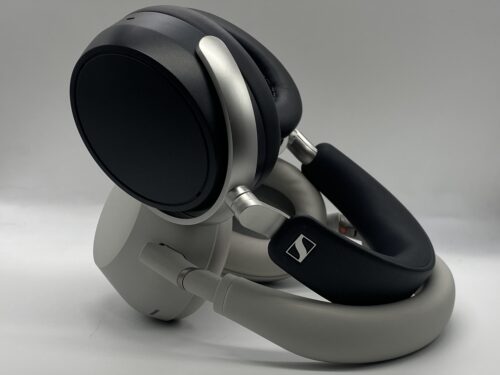
When comparing the look and feel of the Sennheiser HDB 630 and Sony WH-1000XM6, their design philosophies diverge quickly. The HDB 630 has a more professional, studio-inspired appearance with its matte finish, sturdy build, and thicker, premium-feeling padding that suggests durability and long listening sessions. In contrast, the WH-1000XM6 leans into a modern consumer-friendly aesthetic: lightweight, soft-touch materials, and plush memory foam pads that make it feel almost weightless on the head. While Sennheiser offers a more robust and luxurious physical presence, Sony provides superior long-term comfort thanks to a more ergonomic frame and lighter clamping pressure. One feels like a studio tool; the other feels like an all-day travel companion.
Design & Functionality
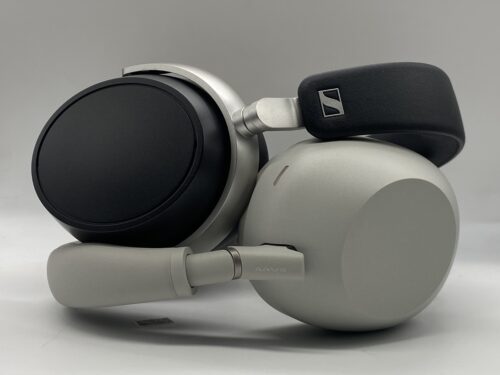
A key component shaping the sonic identity of both headphones lies in their driver design and implementation. The Sennheiser HDB 630 uses 42 mm dynamic transducers engineered with a focus on accuracy, low distortion, and wide frequency extension. These drivers are paired with a finely tuned acoustic chamber that emphasizes transparency, separation, and neutral response, a hallmark of Sennheiser’s audiophile-inspired designs. Conversely, the Sony WH-1000XM6 employs slightly smaller but highly optimized dynamic drivers tuned in tandem with Sony’s proprietary DSEE Extreme and Digital Sound Enhancement Engine.
Functionality highlights the biggest philosophical difference between the two. The HDB 630 keeps things simple and sound-focused with tactile physical controls, excellent app-based EQ customization, and the included BTD 700 dongle for high-resolution 24-bit playback over Bluetooth. It emphasizes audio fidelity and streamlined usability over software-heavy features. Meanwhile, the WH-1000XM6 takes the opposite approach, packing in features like advanced touch controls, industry-leading adaptive ANC, Speak-to-Chat, auto-pause, spatial audio, and seamless multipoint pairing. Sony is built for convenience and intelligence-driven features, whereas Sennheiser is built for purists who prefer minimalism and high-fidelity performance. Both are functional, but in very different ways.
Bluetooth
Bluetooth performance is where the trade-offs become clearest. The Sennheiser HDB 630 supports aptX Adaptive and offers incredibly stable, high-resolution playback through its included USB-C dongle, which is a major advantage for audiophiles or gamers who want low latency and maximum fidelity. However, it lacks multipoint Bluetooth, limiting convenience for users who frequently switch between devices. The Sony WH-1000XM6 counters with the newest Bluetooth 5.3 protocol, strong codec support including LDAC and LC3, and seamless multipoint functionality that allows simultaneous connections to two devices. While Sennheiser wins in raw bitrate and audiophile resolution, Sony dominates real-world usability and device flexibility.
Battery Life
Battery life is an easy comparison: the Sennheiser HDB 630 offers nearly double the runtime of the Sony WH-1000XM6. With up to 60 hours of playback with ANC enabled, the HDB 630 is unmatched in its class and ideal for travelers or listeners who want minimal charging. The WH-1000XM6, at around 30 hours, still performs respectably but simply cannot compete with Sennheiser’s marathon endurance. Sony’s faster charging and power-saving features help make up the difference, but for pure longevity, Sennheiser clearly takes the lead.
Soundstage
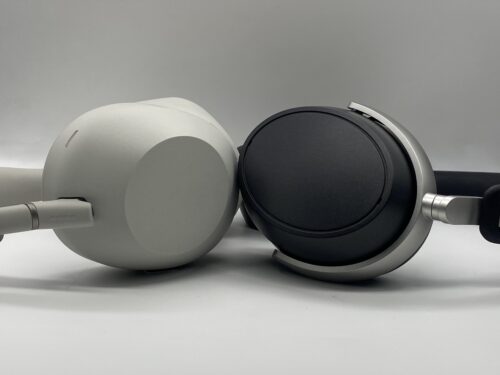
In terms of soundstage, the HDB 630 immediately distinguishes itself as the more open and spacious headphone. Its imaging, width, and depth feel closer to an open-back design, delivering a holographic presentation that benefits orchestral, acoustic, and live recordings. The WH-1000XM6, while improved from the XM5, still offers a more intimate, forward soundstage with less separation and less three-dimensional placement. Sony’s spatial audio modes can artificially widen the scene, but in standard stereo playback, Sennheiser maintains a natural advantage. For listeners who value immersion and instrument placement, the HDB 630 decisively wins this category.
Low End
The low-end signatures of the two headphones are shaped by their target audience. The Sennheiser HDB 630 focuses on bass accuracy and control, delivering a tight, well-defined low end that never bleeds into the mids. It’s articulate and detailed, ideal for analytical listening. In contrast, the Sony WH-1000XM6 offers a warmer, fuller, more dynamic bass experience, with greater punch and slam that suits pop, hip-hop, electronic, and cinematic soundtracks. Sony’s bass is intentionally colored for enjoyment, while Sennheiser stays faithful to the source. Bass lovers will gravitate toward the XM6; studio-leaning listeners will prefer the HDB 630.
Mids
Comparing midrange performance reveals one of the biggest tonal differences between the two. The Sennheiser HDB 630 delivers an exceptionally clean, transparent, and neutral midrange with lifelike vocal reproduction and precise instrument detail. It’s ideal for vocalists, acoustic tracks, and detail-oriented genres. Sony’s WH-1000XM6 prioritizes warmth and smoothness, giving mids a slightly recessed but pleasant character that enhances long listening sessions but sacrifices some separation and clarity. Sennheiser wins for accuracy, while Sony wins for relaxed, easy listening.
Highs
Treble reproduction further highlights the contrast. The Sennheiser HDB 630 extends higher, offers more sparkle and air, and captures fine details without crossing into harshness. Its articulate highs contribute significantly to its spacious soundstage. The Sony WH-1000XM6, however, opts for smoother, more rolled-off highs designed to eliminate listening fatigue, which it does extremely well, but at the cost of micro-detail and upper-end brilliance. Sennheiser is the choice for those who want precision and articulation; Sony is for those who prefer warmth and comfort over detail.
Summary
Sennheiser and Sony dominate the premium Bluetooth headphone landscape, but they do so with very different philosophies. The Sennheiser HDB 630 is engineered as an audiophile-leaning wireless headphone with neutral tuning, studio-grade detail, and support for high-resolution Bluetooth streaming via a USB-C dongle. The Sony WH-1000XM6, meanwhile, continues Sony’s tradition of class-leading noise cancellation, a warm and musical sound signature, and one of the most feature-rich app ecosystems available today. If you’re choosing between these two 2025 flagships, this head-to-head comparison breaks down every important category to help you decide which one truly fits your listening style.
The Sennheiser HDB 630 and the Sony WH-1000XM6 are available at Audio46.
MAJORHIFI may receive commissions from retail offers.