
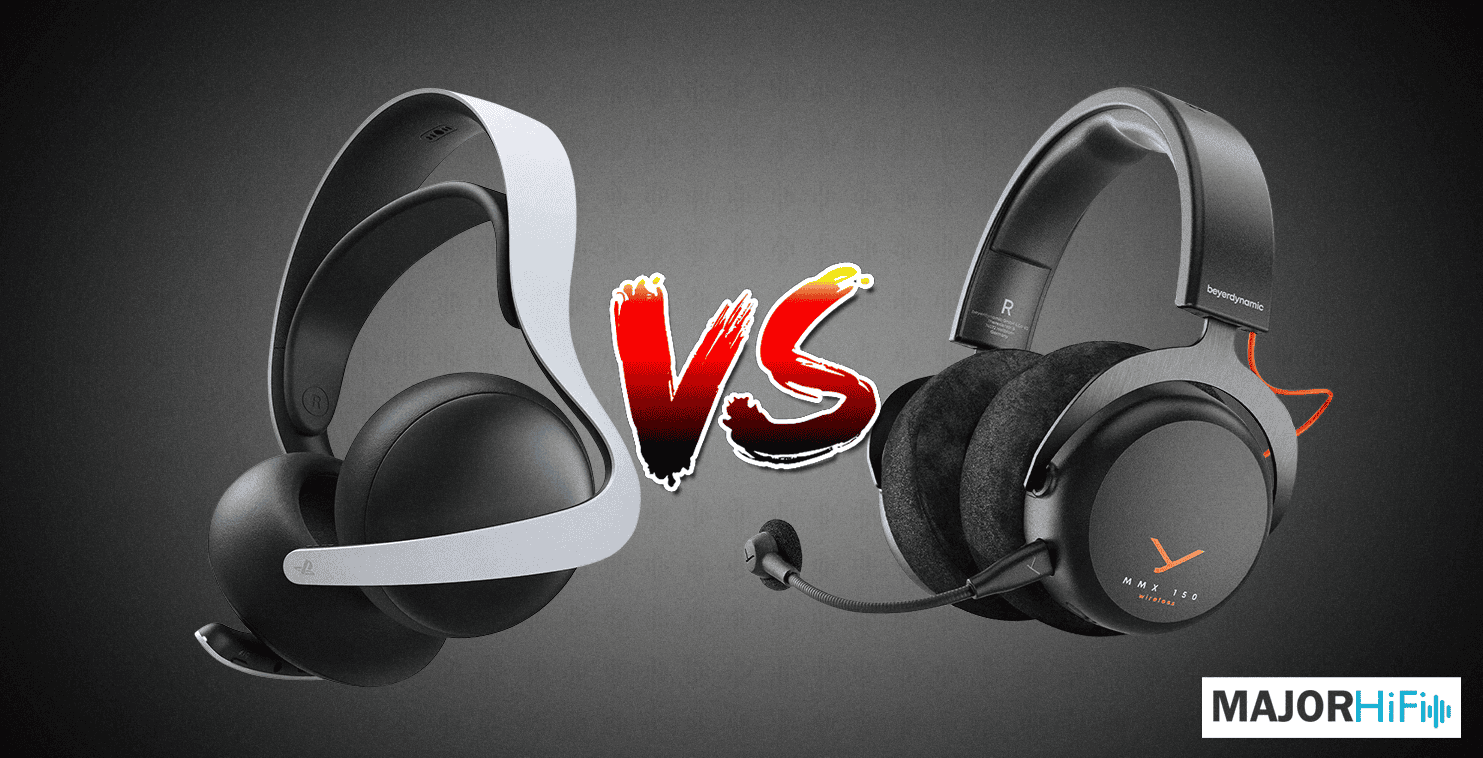
Wireless gaming headsets in the mid-range category have evolved rapidly, offering features and sound quality that were once reserved for premium models. Two of the most talked-about options right now are the Beyerdynamic MMX 150 Wireless and the Sony PlayStation Pulse Elite. While both aim to deliver immersive gaming audio and reliable wireless performance, they take very different approaches in terms of tuning, platform focus, and overall design philosophy. This comparison breaks down how these two gaming headsets stack up across comfort, connectivity, sound quality, microphone performance, and everyday usability.
What You Get
| MMX 150 Wireless | PlayStation Pulse Elite |
|
|
Look & Feel
The MMX 150 Wireless keeps things restrained and practical. Its closed-back design, plush memory-foam ear pads, and lightweight frame make it comfortable for long gaming sessions without excessive clamping force. The overall aesthetic leans more toward studio headphones than flashy gaming gear, which will appeal to users who prefer a low-profile look. The Pulse Elite, by contrast, has a more futuristic and console-centric appearance. It’s larger and slightly heavier, largely due to its planar magnetic driver implementation. While the padding is generous and comfortable, the headset feels more substantial on the head, which may be noticeable during extended sessions.
Design & Functionality
The Beyerdynamic MMX 150 Wireless utilizes traditional dynamic drivers, a proven and widely used design in both consumer and professional audio applications. Dynamic drivers are known for their efficiency, strong midrange presence, and reliable bass response, all of which align with the MMX 150’s emphasis on clarity and precision. In practice, this results in a fast transient response and a focused presentation that prioritizes positional accuracy. The Sony Pulse Elite, by contrast, sets itself apart with planar magnetic drivers. Planar drivers use a thin diaphragm suspended between magnetic arrays, allowing sound to be distributed more evenly across the surface.
Beyerdynamic prioritizes versatility with the MMX 150 Wireless. The detachable microphone enables the headset to function as a casual wireless headphone, and the onboard controls are intuitive and well-placed. The headset is designed to transition easily between gaming, voice chat, and everyday use. Sony’s Pulse Elite is clearly optimized for PlayStation users. The retractable microphone keeps the design clean, and PlayStation-specific features integrate seamlessly with the PS5 interface. However, this tighter ecosystem focus makes the Pulse Elite feel less flexible outside of Sony hardware.
Mic Quality
Beyerdynamic’s detachable microphone delivers clear and intelligible voice capture, making it reliable for team communication and streaming. Noise reduction is effective without sounding overly processed. Sony’s retractable mic benefits from AI-based noise suppression. While background noise handling is strong, voice tone can sound slightly compressed compared to the MMX 150.
Bluetooth
The MMX 150 Wireless supports Bluetooth alongside its low-latency USB dongle, making it easy to switch between PC, console, and mobile devices. Connection stability is strong, and latency is minimal when using the dongle for gaming. The Pulse Elite uses Sony’s proprietary PlayStation Link wireless technology in addition to Bluetooth. PlayStation Link provides ultra-low latency and excellent stability on PS5 and PlayStation Portal, though Bluetooth performance on other devices is more limited in comparison.
Battery Life
Battery life is one of the MMX 150 Wireless’s strongest advantages. With up to 50 hours of use on a full charge, it’s well-suited for long gaming weeks without constant recharging. Fast charging also adds convenience for quick top-ups. The Pulse Elite offers around 30 hours of battery life, which is respectable but clearly behind the Beyerdynamic. Quick charging helps offset this somewhat, though heavy users may find themselves charging more frequently.
Soundstage
The soundstage on the Beyerdynamic MMX 150 Wireless is relatively intimate but extremely precise. Rather than presenting an exaggerated sense of width, it focuses on clearly defined spatial placement. Footsteps, gunfire, and environmental cues are easy to localize, which is crucial for competitive multiplayer gaming. Imaging remains stable even in busy scenes, helping the headset maintain clarity under pressure.
In contrast, the Sony Pulse Elite delivers a noticeably wider and more enveloping soundstage. Thanks to its planar magnetic drivers, audio elements feel more spread out and layered, creating a sense of space that enhances immersion. Large environments feel expansive, and ambient effects are rendered with a convincing sense of depth. While this presentation is less laser-focused than the MMX 150, it excels at drawing the player into the game world.
Low End
The low-end response of the MMX 150 Wireless is controlled and disciplined. Bass is present where it needs to be, but it never overwhelms the rest of the frequency range. Explosions and impact-heavy effects sound tight rather than boomy, ensuring that important midrange information like dialogue and positional cues remains intact. This restrained bass tuning reinforces the headset’s competitive edge. The Pulse Elite approaches bass from a different angle. Instead of delivering a heavy slam, it focuses on texture and nuance. Low-frequency effects feel detailed and natural, particularly in atmospheric games where subtle rumble and environmental sounds matter more than sheer impact. While bass lovers may find it slightly reserved, the presentation remains balanced and cohesive.
Mids
Midrange performance is one of the MMX 150 Wireless’s strongest attributes. Voices, footsteps, and ambient details sit front and center, making communication and situational awareness effortless. Dialogue remains crisp and intelligible even during chaotic gameplay, which is a major advantage for multiplayer sessions and team-based shooters. The Pulse Elite’s midrange is smoother and more relaxed. Dialogue sounds natural and well-integrated, blending seamlessly with music and effects rather than standing out aggressively. This tuning works especially well for narrative-driven games, where voice acting and environmental audio are meant to feel organic and cinematic.
Highs
The treble on the MMX 150 Wireless is bright and revealing, contributing to its sense of clarity and detail. High-frequency sounds such as footsteps, reloading clicks, and environmental textures are easy to pick out. However, this brightness can occasionally verge on sharpness depending on the source or game mix, making EQ adjustments beneficial for some users. Sony’s Pulse Elite takes a more relaxed approach to the high frequencies. Treble detail is still present, but it’s smoother and less fatiguing over long sessions. This tuning favors comfort and immersion, reducing listening fatigue during extended play while still preserving enough detail to keep soundscapes engaging.
Summary
The Beyerdynamic MMX 150 Wireless and Sony Pulse Elite are both strong contenders, but they cater to different types of gamers. The MMX 150 Wireless excels in battery life, cross-platform compatibility, and competitive audio performance, making it a versatile choice for players who game across multiple devices. The Pulse Elite shines within the PlayStation ecosystem, offering immersive planar magnetic sound and seamless integration with PS5 hardware. Ultimately, the better headset depends on your priorities: versatility and endurance with Beyerdynamic, or PlayStation-focused immersion with Sony.
The Beyerdynamic MMX 150 Wireless is available at Audio46.
The Sony PlayStation Pulse Elite is available here.
MAJORHIFI may receive commissions from retail offers.