
Sennheiser’s new HDB 630 Wireless Audiophile Headphones aim to bridge the gap between studio accuracy and premium portability. Designed for listeners who want professional-level sound without sacrificing comfort or convenience, the HDB 630 blends the company’s audiophile expertise with modern Bluetooth functionality. Bundled with the BTD 700 USB-C dongle for high-resolution playback, this model positions itself as a serious contender among wireless over-ear headphones. But can it truly deliver the level of precision and realism that discerning ears demand?
What You Get
- HDB 630 closed-back headphones
- BTD 700 Bluetooth® USB C dongle
- 1.20 m USB C – USB-C audio and charging cable
- 1.20 m audio cable with 3.5 mm plug
- In-flight adapter
- Carrying case
Look & Feel
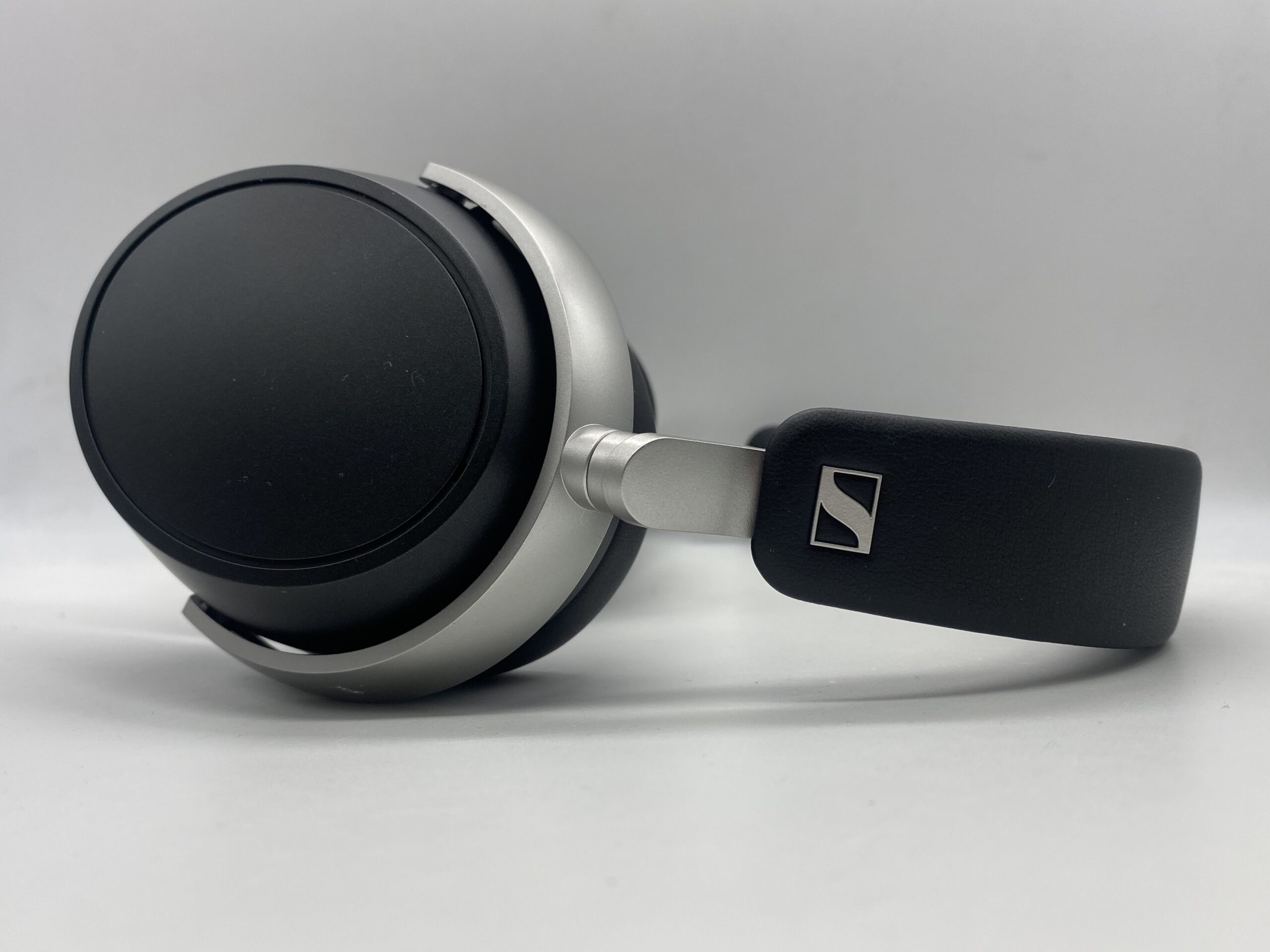
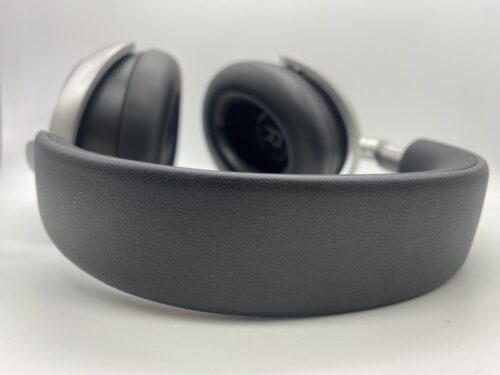
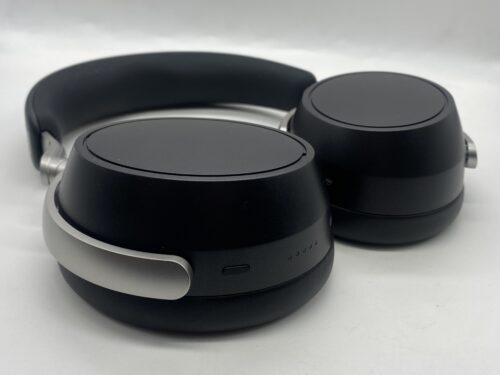
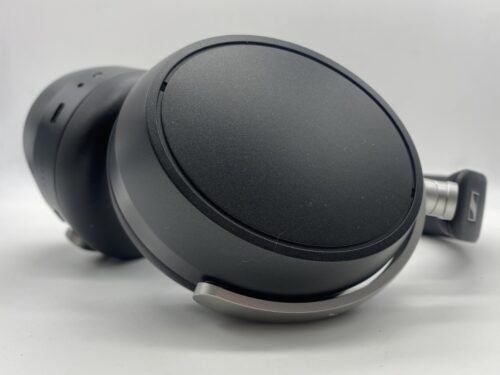
Although the HDB 630 takes on the naming convention of Sennheiser’s open-back models, the appearance of these headphones takes after their Momentum line. The earcups, pads, and headband are mostly the same, even appearing a bit smaller than their consumer counterpart. Being in the upper range of wireless headphones, I was actually surprised by how unflashy the HDB 630 is in design compared to something like the Bowers & Wilkins PX7 S3. Everything about the HDB 630’s appearance is as standard as it gets, but it fits with Sennheiser’s professional standards. This works well for its fit too, as the HDB 630 can be worn for many hours. They’re light and comfortable, with a snug pinch that is just effective enough to hold the ear cups in place.
Design & Functionality
The Sennheiser HDB 630 package together several high-end components for serious listening: a pair of closed-back over-ear headphones built around Sennheiser’s in-house 42 mm transducers tuned for neutral, detailed midrange, and a wide sound-stage. In terms of loudness, the HDB 630 offers a fair supply of headroom for slight volume increases that make a difference. With the BTD 700 adapter, this headroom is expanded, and the HDB 630 starts to show you what this driver is really capable of.
Sennheiser’s Smart Control app houses a lot of the headphone’s main features. You have an array of sound personalization features, like parametric EQ, crossfeed, and anything else that their other Bluetooth headphones offer. Like their other Bluetooth headphones, the HDB 630 offers noise-canceling, which doesn’t receive any meaningful upgrades. Sennheiser’s ANC does its job, even when never the primary focus of their headphones.
In terms of functionality, the HDB 630 has a lot in common with models like the XM6, complete with touch and wear sensors. While there’s a short delay in getting these actions to register, they work pretty consistently.
Bluetooth
The Sennheiser HDB 630 uses Bluetooth 5.2, featuring CODECs like aptX Adaptive and HD. There’s no aptX Lossless, which might feel strange considering its competition has been offering it this year, but they have a resposne to that in the form of the BTD 700 USB-C adapter. This adapter keeps the headphones wireless, but offers 24-bit/96 kHz playback. If I can point to one small gripe, it’s that you can’t use multipoint to use the headphones with two devices at once, with one device connected to Bluetooth and the other connected via the BTD 700.
Battery Life
Like the Momentum 4, the HDB 630 gives you 60 hours of playtime from one charge. This gives you plenty of listening time for long flights and a handful of days of commuting.
Soundstage
With standard Bluetooth, the HDB 630 carries a fair level of width and spatial movement. It’s a step above the Momentum 4 and Sony WH-1000XM6, but using the BTD 700 makes this a whole different headphone. Attaching the USB-C adapter immediately enhances the soundstage and imaging to a shocking degree. Separation and imaging depth are increased to give the HDB 630 a level of depth that you rarely hear on wireless headphones. You might think this closed-back headspace sounds limiting at first, but the HDB 630 can extend further than what is expected.
The headspace lifts up and encircles your head in a dome-like way, impressing with its sense of cavernous depth. It calls attention to the empty space between instruments, giving the HDB 630 the ability to carve out performances more accurately. I’ve never had an easier time localizing sounds wirelessly than with the HDB 630. It feels like a complete non-linear stereo environment, intensifying the overall immersion of the soundstage. Sound elements are also brought up to scale, ensuring performances that are as tall as they are wide.
Low End
Everything that you want out of the bass is there for the most part, but some may be disappointed by its soft impact. You can combat that with a little bit of EQ, but their default tuning is a lot more neutral. The bass still has plenty of presence, though, as the tone makes itself known often enough to make a difference. It presents a dynamic response that feels realistic but also still alive.
Bass notes make themselves known with pristine clarity but never quite extend forward. Sub-bass power is there to lift the tone just enough to give the frequencies shape in the mix, but rumble is a lot more subtle. They never appear too thin, though. In fact, the bass of the HDB 630 can delve pretty deep and extract some nice detail that enhances its resolve. This is what softened me to this particular response, as the bass gave me a consistently layered performance that always gave me something to bite on from track to track.
Mids
While the timbre of the midrange can sound a bit flat, there’s still more resolution to these frequencies compared to its competition. You have a full midrange tone that gives instruments a clear identity in the mix, allowing for more critical assessment. The mids have a ton of room to maneuver in, allowing instruments to articulate themselves with more clarity than a lot of wireless headphones are capable of. This is where the sound signature feels the most like a studio headphone, communicating evenness and spaciousness rather than texture. If the instrument response doesn’t convince you, then vocals are sure to impress. They’re super rich and lively, slightly raised and crisp in tone.
Highs
The treble frequencies on the HDB 630 are really tight, while offering streaks of airy presence. There’s a slight brightness to the tone that I think is quite nice, as it heats up the sizzle of the highs for a satisfying flavor. Nothing is peaky or harsh, but there’s nothing shy about it either. If the HDB 630 weren’t so controlled in its treble, this response could get out of hand, but the definition of the highs really pops this way. Its sizzle is less glittery and more realistic, making cymbals and shakers tail off in the natural room they’re in. There’s plenty of height added to the mix, ensuring a level of immersion that allows the sound to really breathe.
Summary
The Sennheiser HDB 630 is more than just another premium wireless headphone; it’s a thoughtful hybrid of Sennheiser’s audiophile tradition and their consumer-friendly Momentum line. With 60 hours of battery life, aptX Adaptive support, and the included BTD 700 adapter unlocking 24-bit/96 kHz playback, it delivers one of the most expansive and natural soundstages available in a closed-back Bluetooth design. While its understated look and softer bass may not appeal to everyone, the HDB 630 stands out for its exceptional imaging, balanced tuning, and professional-level clarity. For those who want a wireless headphone that feels just as comfortable in a studio as it does on a long flight, the HDB 630 makes an undeniable case for itself as one of Sennheiser’s most refined wireless releases to date.

The Sennheiser HDB 630 is available at Audio46.
MAJORHIFI may receive commissions from retail offers.