
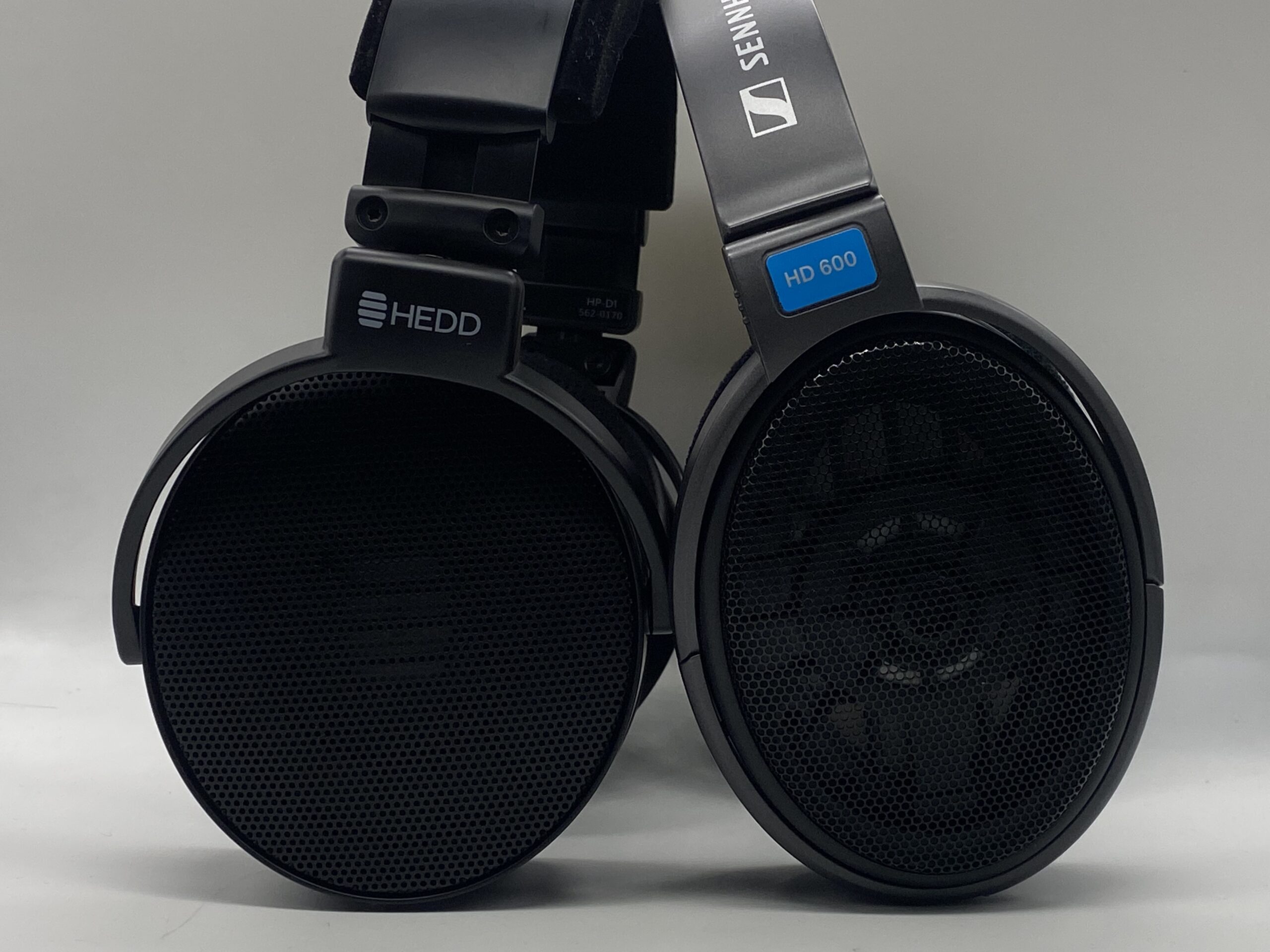
The HEDD Audio HEDDphone D1 and Sennheiser HD600 represent two very different approaches to open-back reference listening, one built on cutting-edge engineering and the other on timeless tonal balance. The D1 aims for hyper-accurate detail, transparency, and a studio-grade presentation, while the HD600 stands as one of the most beloved audiophile headphones ever made thanks to its natural timbre and expressive midrange. In this comparison, we break down build, comfort, sound design, and frequency performance to help you decide which of these two classics delivers the better experience for your music preferences and listening habits.
What You Get
| HEDDphone D1 | HD 600 |
|
|

Look & Feel
The HEDDphone D1 has a modern, studio-focused appearance with a clean, engineered aesthetic that’s larger than the HD600 but surprisingly well-balanced thanks to its plush velour pads and padded headband. In contrast, the Sennheiser HD600 retains its iconic speckled-blue frame, known for being lightweight, flexible, and extremely comfortable during extended listening. Both headphones use velour pads, but the HD600’s breathable design and lighter clamping force give it a slight advantage for all-day wear.

Design
The HEDDphone D1 uses a custom dynamic driver built around a Thin-Ply Carbon Diaphragm (TPCD), giving it speed, rigidity, and impressive transient accuracy while maintaining an easy-to-drive 32-ohm impedance suitable for nearly any DAC or player. Meanwhile, the Sennheiser HD600 employs Sennheiser’s classic dynamic driver design with an open-back shell and a 300-ohm impedance that strongly benefits from proper amplification. Although more utilitarian in materials, the HD600 is incredibly durable and serviceable, with nearly every component easily replaceable.

Soundstage
The HEDDphone D1 presents a precise, center-focused soundstage that prioritizes accuracy and separation over width, placing instruments cleanly and realistically without artificial inflation. The Sennheiser HD600, by comparison, offers an airy, natural soundstage with a gentle sense of space that’s especially enjoyable for acoustic, classical, and vocal-heavy recordings. While the D1 is more exacting, the HD600 provides a more relaxed and open listening environment.
Low End
The HEDDphone D1 delivers a lean, tight, highly articulate low end designed for accuracy, making it a strong performer for mixing and genres where bass clarity is crucial, though it avoids boosting impact or warmth. The Sennheiser HD600 provides a controlled, neutral bass response with a touch of natural warmth, offering pleasant mid-bass presence despite limited sub-bass extension. The HD600’s low end feels more musical, while the D1’s is more technical and disciplined.
Mids
The HEDDphone D1 excels in midrange transparency, revealing micro-details and textures with studio-level clarity that gives vocals and instruments an exceptionally lifelike, analytical presentation. In contrast, the Sennheiser HD600 is renowned for its warm, natural midrange that renders vocals with expressive realism, making it one of the most musical mid-focused headphones ever produced. The D1 is more revealing, but the HD600’s mids remain unmatched for sheer emotional engagement.
Highs
The HEDDphone D1 offers smooth, extended treble that remains articulate and detailed without crossing into harshness, giving listeners precise high-end resolution and plenty of air. The Sennheiser HD600 provides a softer, more natural treble response that emphasizes realism over analytical sharpness, ensuring long-term comfort even with brighter recordings. Where the D1 reveals everything, the HD600 prioritizes an easy, balanced top end that suits a wide variety of genres.
Summary
The HEDDphone D1 and Sennheiser HD600 serve different listeners despite occupying the same open-back reference space. If you want maximum detail, transparency, and studio-grade neutrality, the D1 is the stronger choice. If you value musicality, natural tonality, and all-day comfort, the HD600 remains an unbeatable classic. The D1 is built for analytical listening and mixing, while the HD600 excels at emotional engagement and pure musical enjoyment.
The HEDD Audio HEDDphone D1 and Sennheiser HD 600 are available at Audio46.
MAJORHIFI may receive commissions from retail offers.