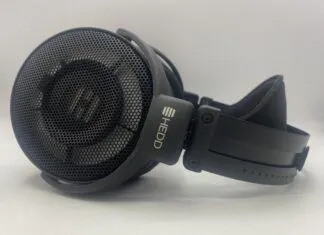



The HEDD Audio HEDDphone DX and Audeze LCD-X are premium open-back headphones that make sense in the studio and at home. Both give you enough detail to pick apart a mix, and both have enough low-end impact to make listening for pleasure worthwhile. Where they differ is in what they draw your attention to. The HEDDphone DX opens up the space around a performance, while the LCD-X brings vocals and percussion forward with more body. If you’re deciding between these two reference headphones, that difference matters as much as the choice between dynamic and planar magnetic drivers.
What You Get
| HEDDphone DX | LCD-X |
|
|
Look & Feel
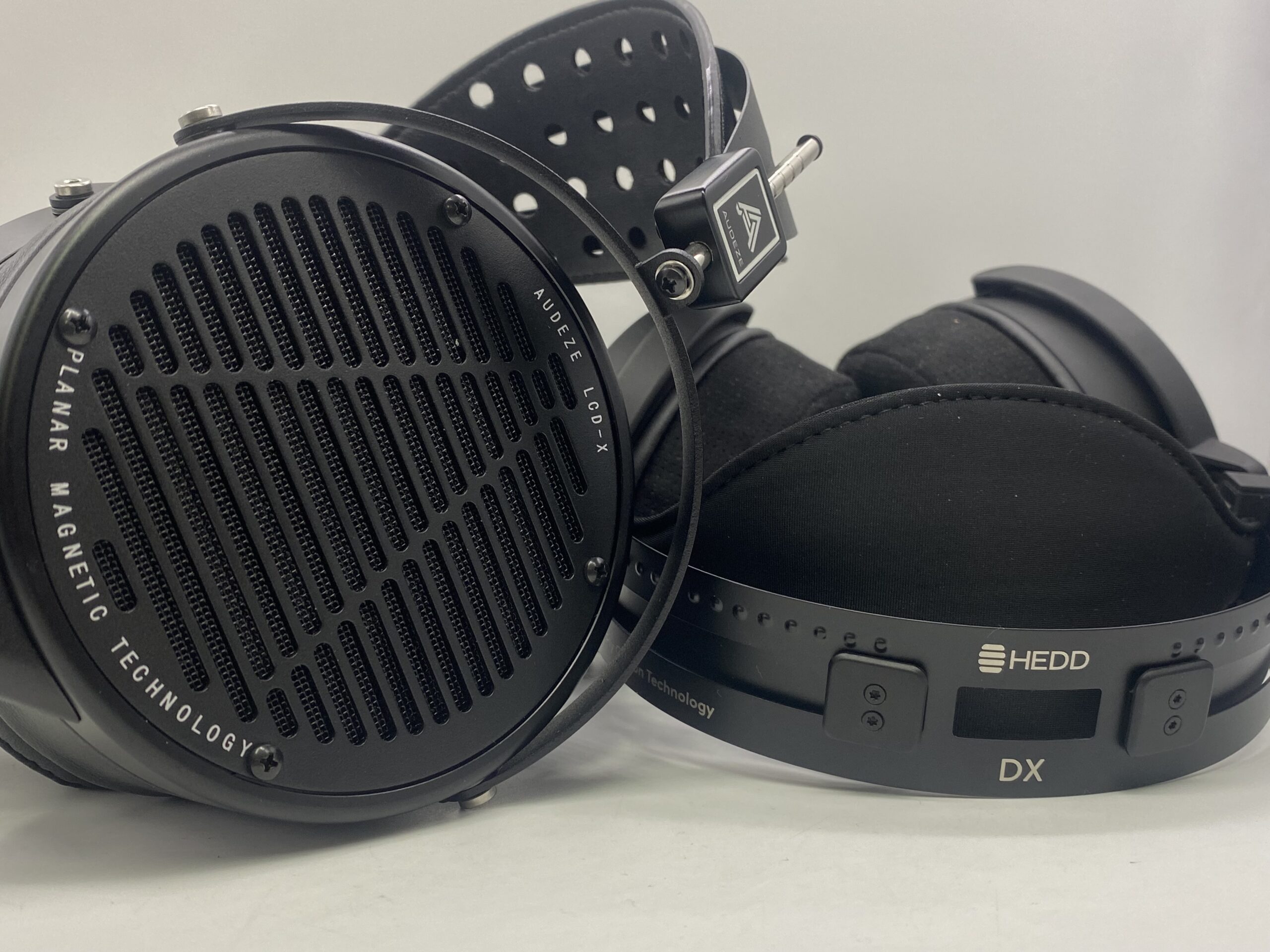
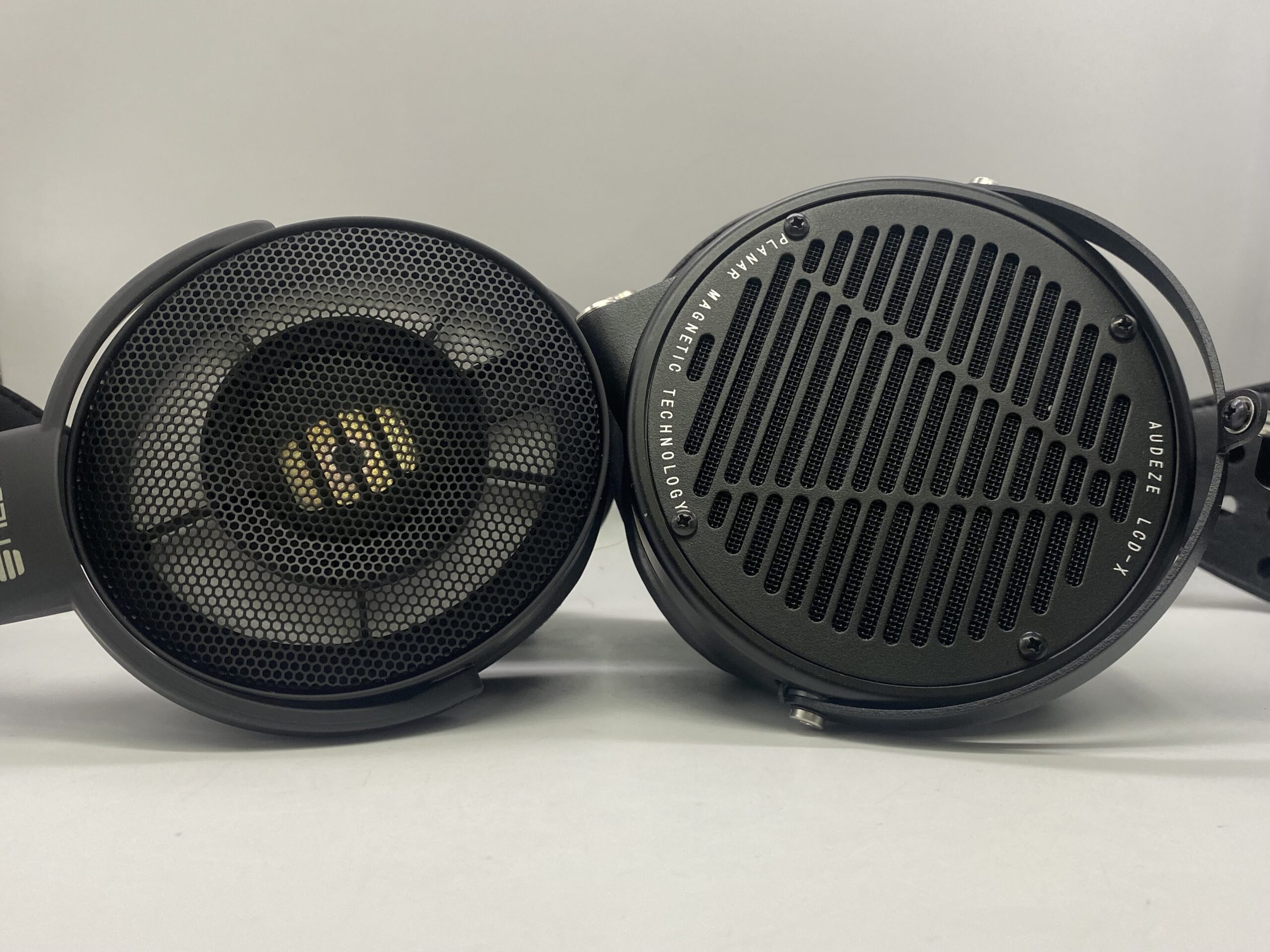
The HEDDphone DX has a clean, practical design. Its black grilles and gray interior give it some character, but the suspension headband and perforated velour pads are what make it easy to live with. The headband spreads the weight evenly, and the cups give your ears room to breathe. That combination is especially appealing if you spend several hours editing or listening with headphones on.
The LCD-X feels more substantial, with a sturdy metal frame and generously cushioned pads. Its suspension headband helps spread the weight, while the pads give it a snug, enveloping fit. The Audeze has the more substantial build if that’s part of what you want from a premium headphone. The HEDDphone DX has the advantage if you prefer a lighter feel and more airflow around your ears.
Design
| Specification | HEDD Audio HEDDphone DX | Audeze LCD-X |
|---|---|---|
| Driver | 50 mm high-excursion driver | Planar magnetic driver |
| Diaphragm | Thin-ply carbon | Ultra-Thin Uniforce |
| Impedance | 32 ohms | 20 ohms |
| Sensitivity | 100 dB/mW | 103 dB/mW |
| Cable in the reviewed package | 4.4 mm balanced | 4-pin XLR with a ¼-inch TRS adapter |
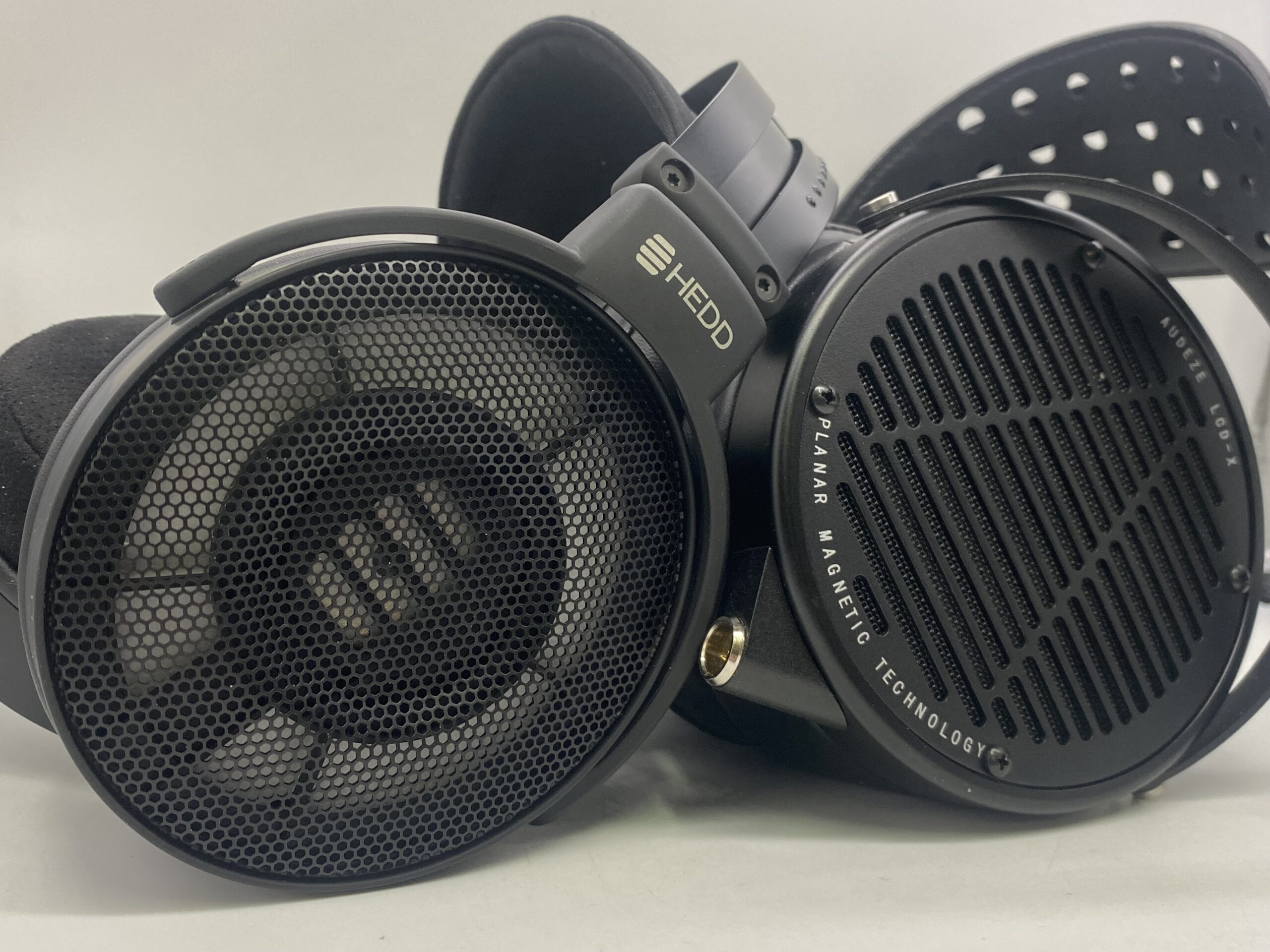
HEDD uses a multilayer carbon diaphragm designed to control resonances and keep transients clean. The LCD-X pairs its planar magnetic driver with Fazor waveguides, which help manage how sound travels past the magnet structure. Both have approachable sensitivity ratings for full-size open-back headphones. If you’re plugging directly into an audio interface, check the cable first. The reviewed LCD-X package includes a ¼-inch adapter, while the DX package uses a 4.4 mm balanced connection.
Soundstage
Soundstage is the biggest reason to choose the HEDDphone DX. Its width is impressive, but the sense of distance is what makes it more convincing. Instruments can sit well outside the center image and still have a clear position. A pan has a path you can follow across the stereo field, and a reverb tail seems to extend into the room before it fades. On a live recording, that gives you a better sense of where the performers are in relation to each other and how much space surrounds them.
The LCD-X takes a more forward approach. Its focused vocal image gives you a clear anchor, and it separates the instruments around that vocal well enough to follow individual layers in a dense arrangement. That distinction is useful in the studio. The DX makes it easier to judge how far back a room mic feels or how a pan moves through the mix. The LCD-X makes it easy to concentrate on how the lead vocal sits against guitars, keys, and percussion.
Low End
The HEDDphone DX puts more of the emphasis on what happens deep in the bass. There’s a clear sub-bass bloom with enough rumble to give a track scale, but the response holds its shape. On a mix with a sustained synth bass and a punchy kick, the DX gives you room to hear the weight underneath the track as well as the individual hits above it.
The LCD-X draws more attention to the punch and body of those hits. Its midbass warmth gives bass lines and kick drums a fuller sound, and the planar driver keeps the attack tight. That warmth also carries into the lower mids, which helps explain why the Audeze sounds more grounded and forward. The DX is the more appealing choice if you listen for sub-bass texture and how low-frequency layers stack. The LCD-X is the one to reach for if you want the rhythm section to hit with more immediate force.
Mids
The HEDDphone DX has a natural, open midrange that brings out the texture of clean guitar picking and the air in a singer’s upper register. Notes have well-defined edges, but there’s a smoothness to the way they ring out. That makes small phrasing changes easy to hear without making acoustic instruments sound overly etched.
The LCD-X gives vocals a stronger center presence and brings more weight to instruments like snare drums. One of its strengths is how clearly it conveys changes in intensity, whether a singer leans into a phrase or a drummer goes from a light tap to a full hit. Both headphones resolve plenty of midrange detail. The DX lets you hear more of the space around the performance, while the LCD-X brings the dynamics and body of the performance closer.
Highs
Both headphones keep the treble detailed and smooth, which suits long listening sessions. The HEDDphone DX has the airier presentation. Its highs add height to the soundstage, and the way it follows the decay of cymbals and reverbs reinforces that sense of space. The LCD-X gives cymbal strikes a clean, tactile attack and keeps their shimmer audible against the warmer bass and mids. If you’re listening to a drum kit, the distinction is easy to put into practical terms. The LCD-X draws your ear to the moment the stick hits the cymbal, while the DX makes it easier to follow the sound as it rings out into the room.
Summary
The HEDD Audio HEDDphone DX is my pick for listeners who put soundstage and imaging first. Its sense of depth is the clearest reason to choose it, especially if you spend time judging panning, room ambience, or reverb decay. Add the defined sub-bass and breathable fit, and it’s easy to see the appeal for both critical listening and full-album sessions.
The Audeze LCD-X makes more sense if you like a closer vocal image and want bass and drums to carry more punch. Its combination of midbass warmth, focused mids, and smooth highs works especially well when you’re listening for vocal dynamics or trying to hear how the rhythm section holds a dense mix together. I’d choose the DX for the space around the performance and the LCD-X for the weight and immediacy of the performance itself.
The HEDD Audio HEDDphone DX and the Audeze LCD-X are available at Audio46.