

JVC has taken two unconventional approaches to premium true wireless sound. The Kenwood Glass Core Pro uses a hybrid driver configuration and vibrating glass technology to improve clarity and bass definition, while the Wood Masterpiece relies on a real wood diaphragm to reproduce music with a more natural timbre. Both earbuds offer Bluetooth 6.0, LDAC, active noise cancellation, and sound quality that aims beyond the typical consumer wireless experience. However, their tuning philosophies are noticeably different. The Glass Core Pro focuses on articulation, precision, and dynamic bass, while the Wood Masterpiece favors warmth, tonal richness, and an expansive stereo image. This comparison examines how the JVC Kenwood Glass Core Pro and JVC Wood Masterpiece differ in design, features, battery life, and overall sound.
| Kenwood Glass Core Pro | Wood Masterpiece |
|
|
Look and Feel
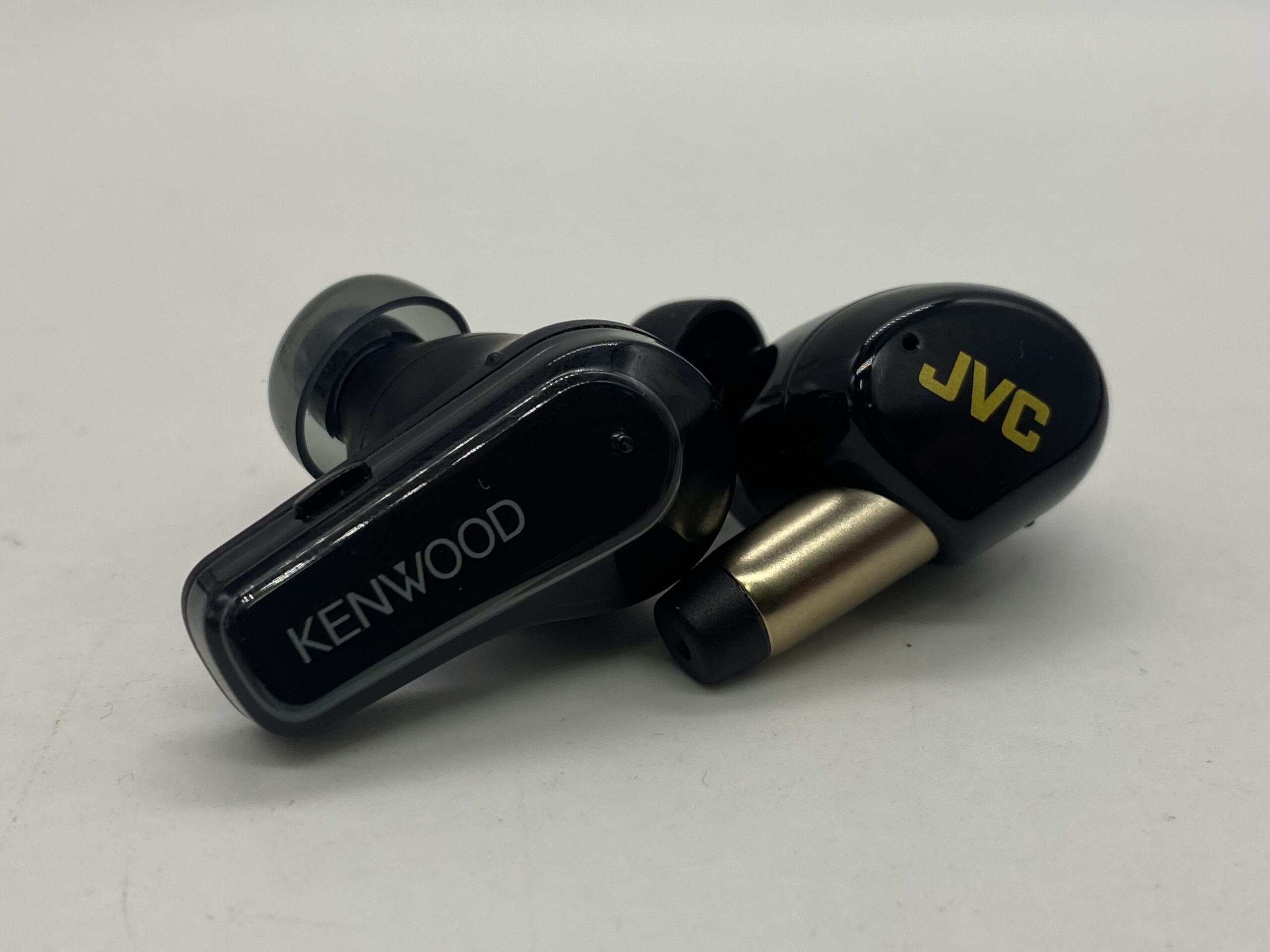
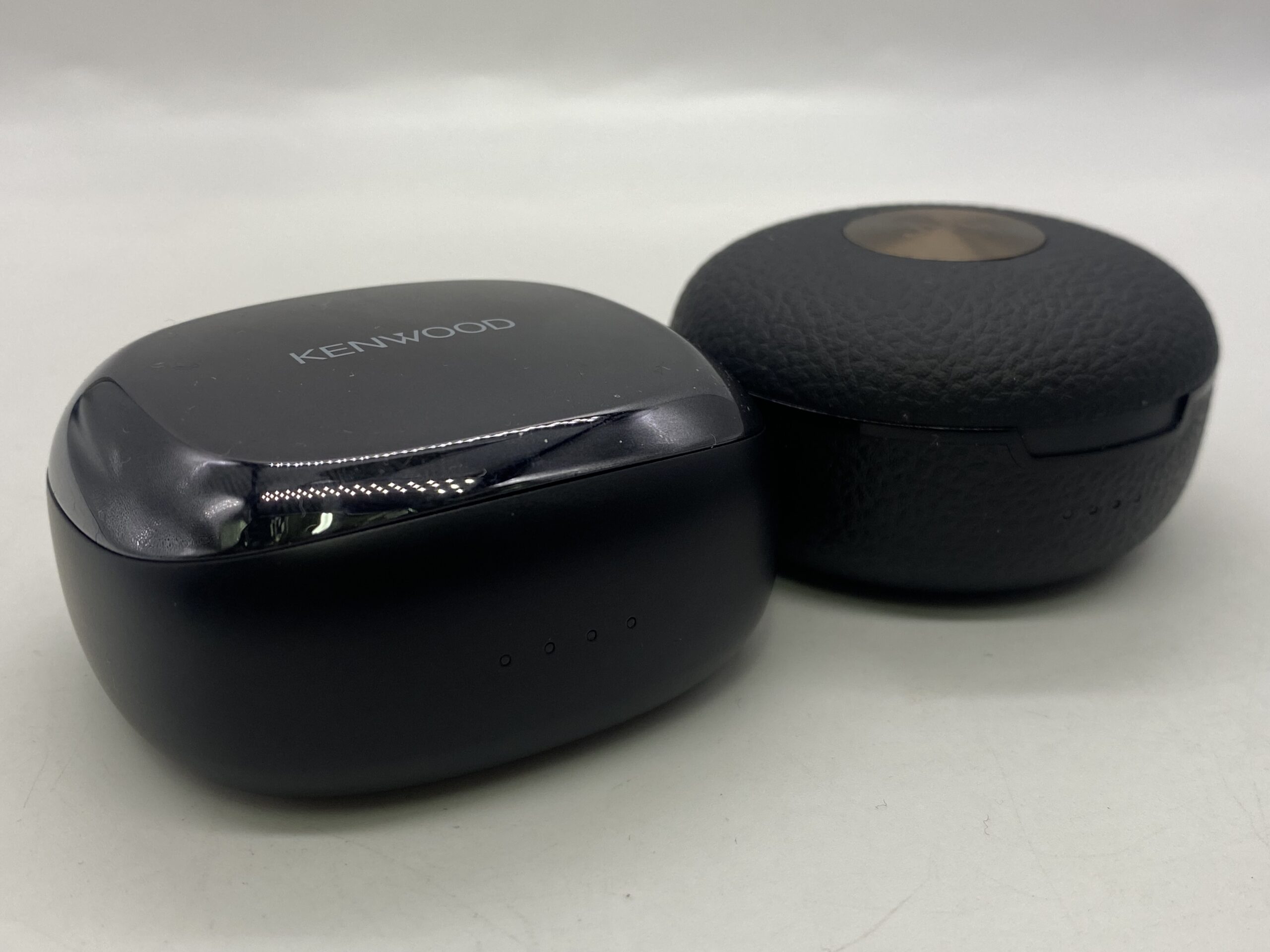
Both models use a stemmed design, but the Kenwood Glass Core Pro is the larger of the two. Its wider stem gives the earbuds a more substantial appearance, although the earpieces remain lightweight. The housing rests securely within the ear, with the nozzle helping stabilize the fit during longer listening sessions. The Wood Masterpiece feels slightly more refined aesthetically. It is available in glossy black and sunburst finishes, with copper-colored accents that give it a more luxurious appearance. Its housing strikes a good balance between security and size, sitting firmly in the ear without feeling overly intrusive. Comfort is strong on both models, but the Wood Masterpiece has the sleeker and more distinctive design. The Glass Core Pro is still lightweight and ergonomic, even if its larger shell is more noticeable.
Design and Functionality
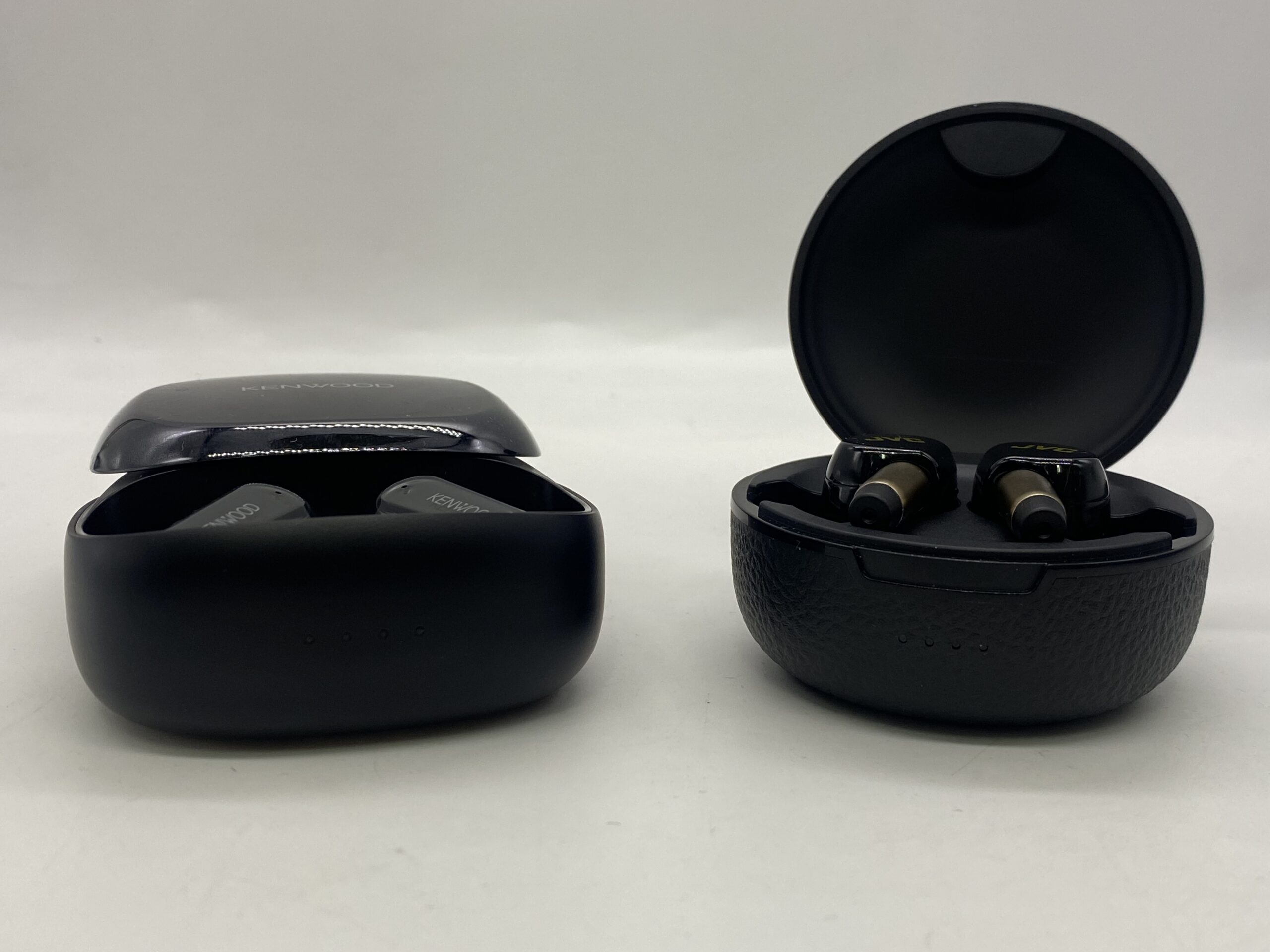
The biggest difference between these earbuds is their driver technology. The Kenwood Glass Core Pro uses a hybrid system consisting of a 10mm dynamic driver and a MEMS driver. Its vibrating glass plate is designed to reduce unwanted resonance while improving clarity, spatial detail, and bass performance. The JVC Wood Masterpiece uses a single dynamic WOOD Dome driver with a diaphragm made from real wood. Combined with a neodymium magnet and JVC’s K2 processing, this design emphasizes organic resonance, tonal realism, and natural decay.
Both earbuds include active noise cancellation and an ambient awareness mode. The Glass Core Pro offers strong isolation, although it does not quite reach the performance of the best ANC earbuds. Its physical stem buttons are reliable and easier to operate than many touch-sensitive controls, even if some of the accompanying feedback sounds are unnecessarily dramatic. The Wood Masterpiece provides a more extensive collection of software features. Its companion app includes 10 sound modes, five studio-tuned presets, personalized sound calibration, a 92-step volume control, multipoint management, spatial audio, latency adjustments, and a Find My Earphones function. Its customizable touch controls are responsive, although the wear sensor can be inconsistent. For listeners who want extensive personalization, the Wood Masterpiece has the advantage. The Glass Core Pro keeps its operation more straightforward, with physical controls and a less software-dependent experience.
Bluetooth
Both JVC models use Bluetooth 6.0 and support SBC, AAC, and LDAC. This gives each pair broad compatibility while allowing Android users and other compatible devices to access higher-resolution wireless playback through LDAC. The Wood Masterpiece also supports multipoint connectivity for switching between two devices, along with a dedicated low-latency mode for gaming and video playback. Its wireless system feels more feature-rich and adaptable to different uses. The Glass Core Pro uses Power Class 1 output to provide a strong, stable connection. Its wireless performance is dependable, but the Wood Masterpiece offers more convenience for users who regularly move between a phone, tablet, and computer.
Battery Life
Battery performance is one of the clearest victories for the Glass Core Pro. With ANC turned off, it provides up to 14.5 hours of playback from the earbuds and 49 hours with the charging case. Turning on ANC reduces those figures to 12 hours and 40.5 hours, respectively. The Wood Masterpiece offers up to 10.5 hours from the earbuds with ANC disabled and 31.5 hours when including the case. These are still competitive numbers, but they fall well behind the Glass Core Pro. If long battery life is a priority, the Glass Core Pro is the better choice.
Soundstage
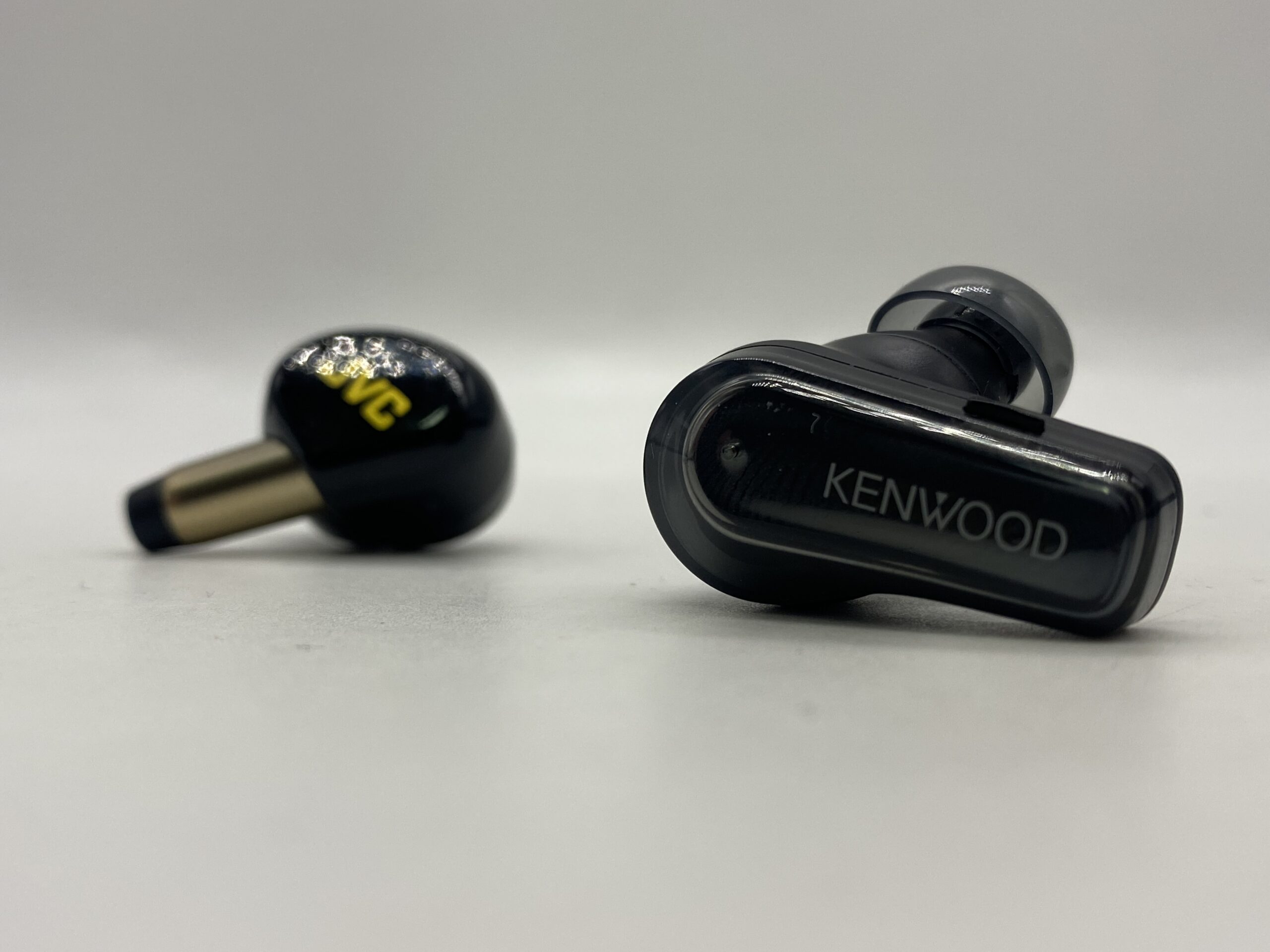
Both earbuds provide exceptional soundstage performance for true wireless models, but they present space differently. The Glass Core Pro has a wide, highly organized soundstage with precise positional information. Instruments occupy clearly defined locations, and sounds panned to the far left or right display an impressive sense of scale. Its layering resembles what you might expect from a good wired IEM, prioritizing accuracy and separation over exaggerated spaciousness.
The Wood Masterpiece sounds wider and more naturally immersive. Its stereo field has excellent depth, separation, and wingspan, allowing drums and other spatial effects to wrap convincingly around the listener. Interestingly, the standard stereo presentation is more effective than the optional spatial audio mode, which narrows the image and reduces separation. The Wood Masterpiece has the more enveloping soundstage, while the Glass Core Pro delivers sharper imaging and more organized positioning.
Low End
Bass is one of the Glass Core Pro’s strongest qualities. Its lows are clean, deep, and articulate, with excellent control over individual bass notes. Sub-bass has enough energy to add weight without overwhelming the rest of the frequency range, while the mid-bass supplies a quick, satisfying punch. Bass instruments have natural texture and strong dynamic movement, giving the Glass Core Pro one of the most impressive low-end presentations available from true wireless earbuds.
The Wood Masterpiece takes a warmer approach. Its bass is thick, rounded, and smooth, producing more bloom than definition. Several sound presets can increase its mid-bass weight, but they do not necessarily make individual notes more articulate. This presentation can be very enjoyable for listeners who prefer fullness and warmth, though it is not as precise as the Glass Core Pro. For clean, textured, and dynamic bass, the Glass Core Pro is the clear winner. The Wood Masterpiece is better suited to listeners who want a softer and more relaxed low-end character.
Mids
The Wood Masterpiece takes the lead in the midrange. Its default tuning provides a flat, even response with full-bodied instruments and naturally projected vocals. The wood diaphragm contributes to a rich timbre that gives the midrange convincing weight and scale. Additional presets can bring vocals forward or create a more V-shaped signature, but the standard tuning offers the most realistic balance.
The Glass Core Pro has a clearer but slightly thinner midrange. Its low-mids and upper-mids receive more emphasis, helping vocals and energetic sound elements stand out. Female vocals are particularly prominent, with the mid-treble adding crispness and definition. However, instruments do not always have the same body or tonal richness provided by the Wood Masterpiece. Choose the Wood Masterpiece for natural timbre and fuller vocals. The Glass Core Pro will appeal more to listeners who prefer clarity, energy, and a cleaner separation between midrange elements.
Highs
The Glass Core Pro produces the crisper and more detailed treble response. Cymbals have a satisfying shimmer, and high-frequency information remains transparent without becoming harsh. Its main limitation is decay, as certain sounds end more abruptly than expected and restrict the sense of vertical space. Treble on the Wood Masterpiece is smoother and more reserved. It remains clear and balanced, but it does not have the same crisp edge as the Glass Core Pro. Cymbals sound splashy rather than sharply defined, with an audible roll-off that keeps the highs relaxed. Some presets add extra brightness, although they can sound less natural than the default tuning. Listeners seeking sparkle and detail should choose the Glass Core Pro. Those sensitive to bright treble may prefer the smoother Wood Masterpiece.
Summary
The JVC Kenwood Glass Core Pro and Wood Masterpiece are both audiophile-inspired true wireless earbuds, but they cater to different preferences. The Glass Core Pro is the more technical and energetic option. Its articulate bass, precise imaging, crisp treble, physical controls, and significantly longer battery life make it an excellent choice for listeners who prioritize clarity and definition. Its midrange can sound thin compared to the Wood Masterpiece, but the overall presentation remains highly organized and engaging.
The Wood Masterpiece offers the warmer and more natural listening experience. Its expansive soundstage, rich midrange, organic timbre, deep app customization, and extensive wireless features create a more relaxed but still highly resolving sound. Its bass is less defined and its treble less crisp, but its tonal realism gives it a distinct identity. Overall, the Kenwood Glass Core Pro is better for bass precision, imaging, treble clarity, physical controls, and battery life. The JVC Wood Masterpiece is better for natural timbre, vocal richness, soundstage immersion, and software customization. Neither is strictly superior, but the Glass Core Pro feels more technical, while the Wood Masterpiece is more musical and organic.
The JVC Kenwood Glass Pro and Wood Masterpiece are available at Audio46.