



Sennheiser now offers two compelling wireless headphones built for noticeably different listeners. The Momentum 5 represents the company’s mainstream flagship, combining a musical sound with effective noise cancellation and convenient everyday features. Meanwhile, the HDB 630 targets audiophiles who prioritize accurate imaging, neutral tuning, and high-resolution wireless playback.
Both headphones use 42mm dynamic transducers, offer extensive app customization, and share a similar design language. However, their performance begins to diverge once you examine their tuning and intended use. In this Sennheiser Momentum 5 vs HDB 630 comparison, we’ll determine which model offers the better experience for your listening habits.
What You Get
| Momentum 5 | HDB 630 |
|
|
Look and Feel
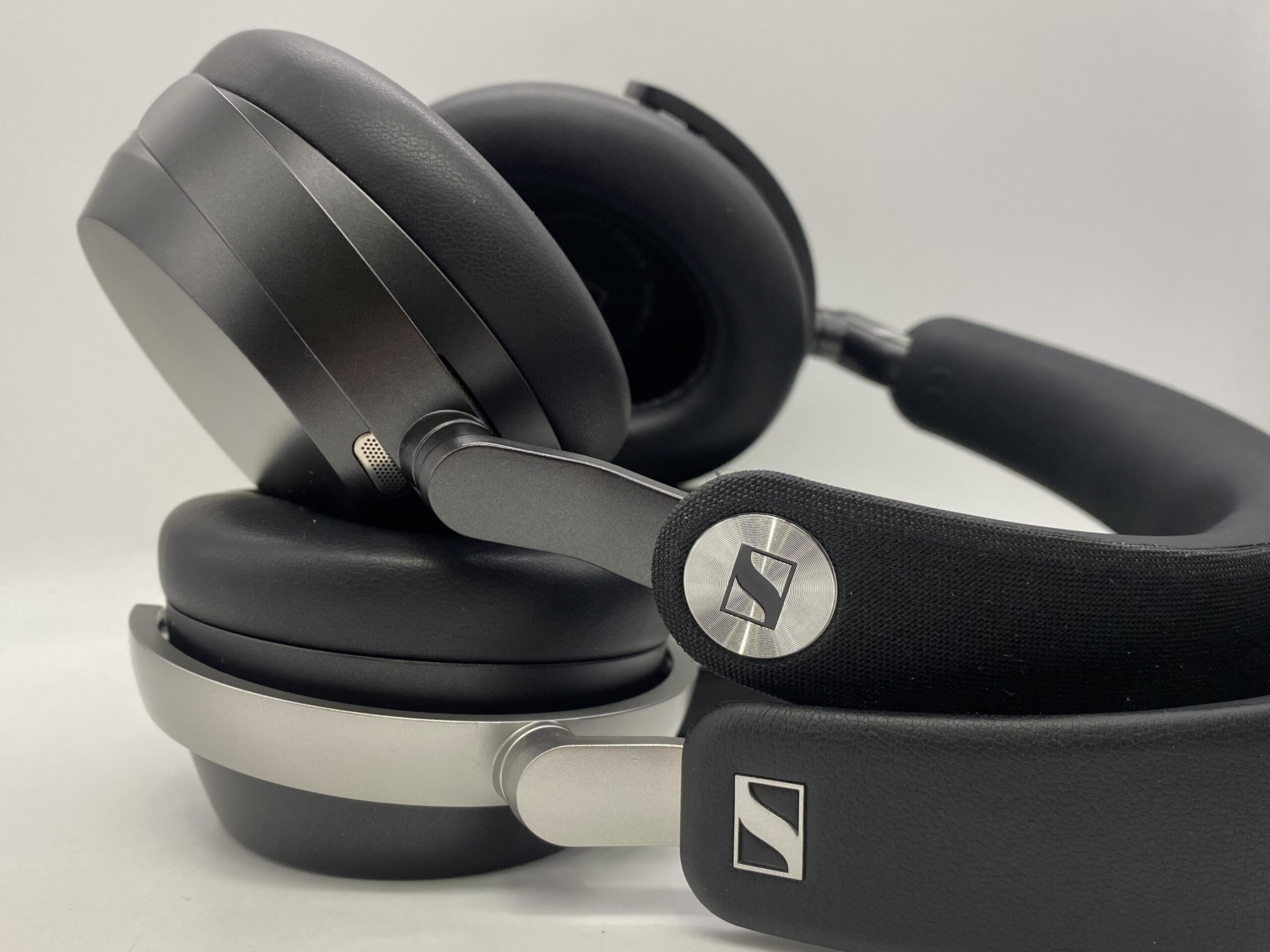
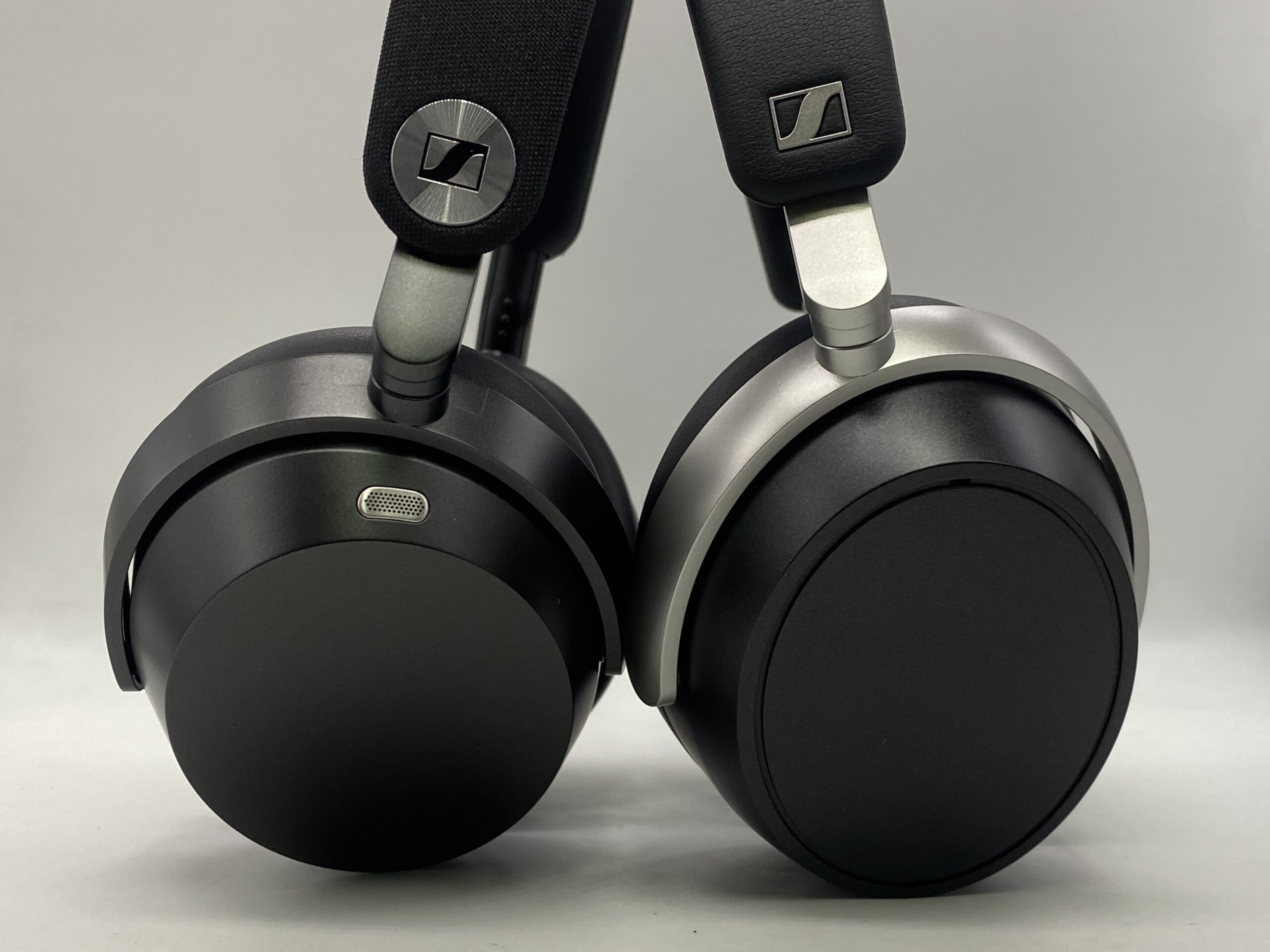
The Momentum 5 and HDB 630 are clearly related in terms of their physical construction. Both use lightweight over-ear designs with familiar Sennheiser ear cups, generously padded cushions, and headbands that remain comfortable over extended listening sessions. Visually, the Momentum 5 is the more stylish headphone. Its polished finish and medallion-style Sennheiser logo give it a slightly more luxurious appearance than previous Momentum models. It still maintains a minimalist profile, but it looks more like a premium consumer headphone than the understated HDB 630.
The HDB 630 takes a more professional approach. Its appearance is relatively plain, especially compared to similarly priced wireless headphones, but the subdued design fits its studio-inspired identity. Its light frame, snug clamp, and comfortable padding also make it suitable for long critical-listening sessions. Neither headphone completely reinvents Sennheiser’s wireless design, but the Momentum 5 makes the stronger visual impression. The HDB 630 is better suited to listeners who prefer an unobtrusive and functional aesthetic.
Design and Functionality
Both headphones are built around 42mm dynamic transducers, but Sennheiser tunes them with different priorities. The Momentum 5 is designed to produce an engaging and accessible sound, while the HDB 630 aims for greater neutrality and resolution. Sennheiser’s Smart Control Plus app gives both models access to sound customization and noise-canceling controls. The Momentum 5 offers an especially smooth user experience, with adjustable ANC, transparency controls, an anti-wind setting, and customizable touch gestures. Its touch panel and wear sensor are also highly responsive.
The HDB 630 provides a more advanced set of sound-shaping tools. Along with standard EQ options, it includes a parametric equalizer and crossfeed control, giving experienced listeners more precise control over the presentation. Its touch and wear sensors work reliably, although there can be a slight delay before some commands register. Noise cancellation is another area where the Momentum 5 has the advantage. Its updated ANC is more effective and receives greater emphasis as part of the overall package. The HDB 630’s ANC remains useful for commuting and travel, but its sound quality is clearly the primary attraction.
Bluetooth
The Momentum 5 uses Bluetooth 5.4 and supports SBC, AAC, aptX Adaptive, aptX HD, and aptX Lossless. It also supports Snapdragon Sound with compatible devices. This gives it a modern and versatile wireless platform that works well across a variety of smartphones and audio sources. The HDB 630 uses Bluetooth 5.2 with aptX Adaptive and aptX HD. It lacks native aptX Lossless support, but Sennheiser compensates for this by including the BTD 700 USB-C transmitter. When connected to a compatible source, the adapter enables wireless playback at up to 24-bit/96kHz. More importantly, the BTD 700 produces a clear improvement in the HDB 630’s performance. The Momentum 5 provides the simpler experience, especially if your device already supports aptX Lossless. The HDB 630 requires an additional dongle to reach its full potential, but its high-resolution performance is ultimately more impressive.
Battery Life
Battery performance is excellent on both headphones. The HDB 630 provides up to 60 hours of playback, matching the Momentum 4’s endurance and offering enough power for several days of regular use. The Momentum 5 supplies up to 57 hours. Although that figure is slightly lower, Sennheiser rates it for the same duration whether ANC is activated or deactivated. That consistency makes the Momentum 5 particularly useful for listeners who want to leave noise cancellation on throughout the day without constantly monitoring the battery. The HDB 630 technically lasts longer, but the difference is minimal. Both are among the strongest premium wireless headphones in terms of battery life.
Soundstage
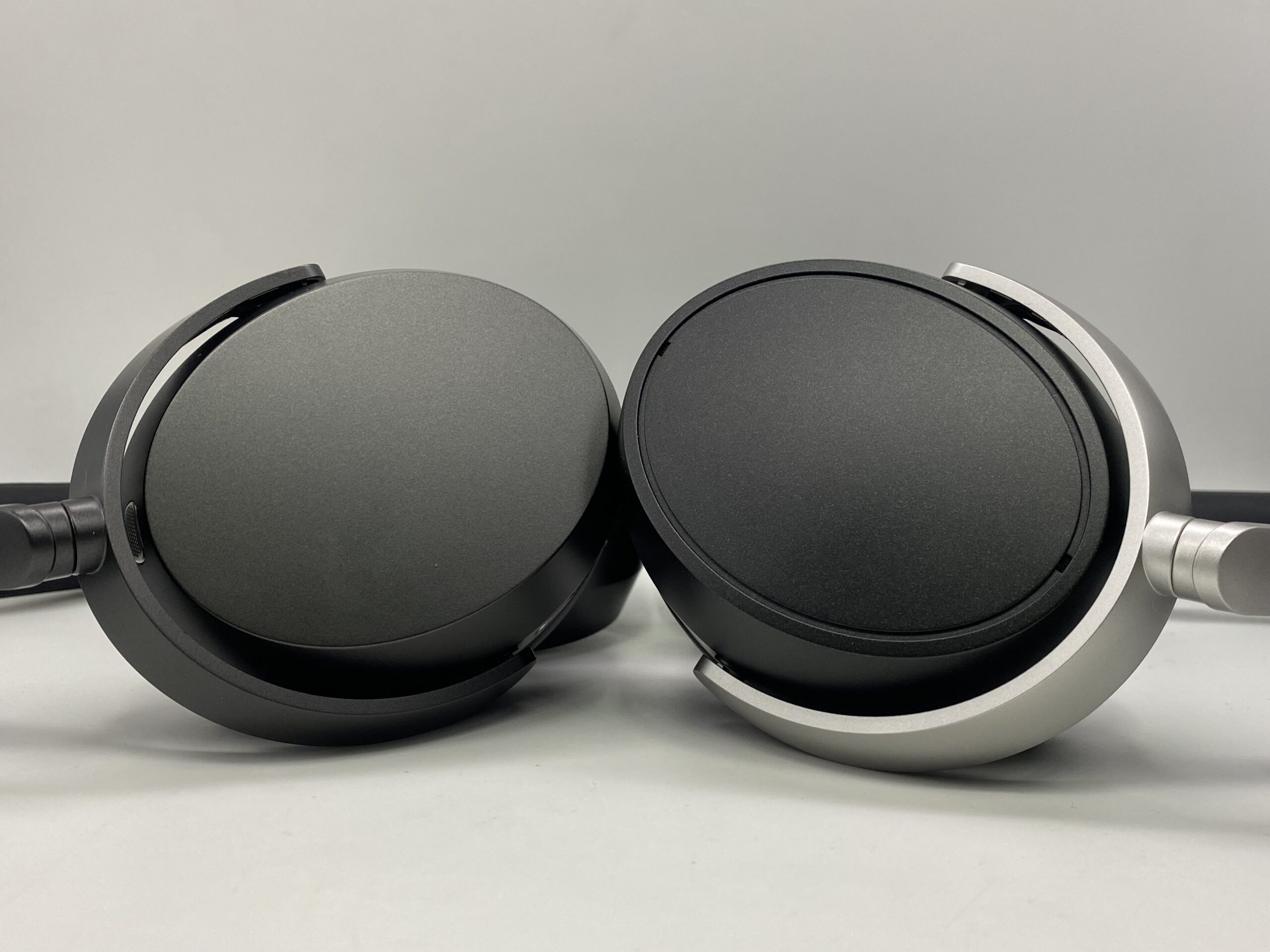
Soundstage is where the HDB 630 establishes its clearest advantage. Even over standard Bluetooth, it produces a spacious presentation with accurate placement and convincing lateral movement. Connecting the BTD 700 further expands its depth and separation. The HDB 630 forms a large, dome-like space around the listener. Instruments have plenty of room between them, and individual sounds are easy to locate throughout the stereo field. Performances feel tall as well as wide, allowing the headphone to produce an unusually dimensional presentation for a closed-back wireless design.
The Momentum 5 also has an impressive soundstage, especially compared to mainstream noise-canceling headphones. Its imaging is clear, separation feels natural, and instruments occupy recognizable positions. The presentation is immersive without abandoning the stability of a traditional stereo image. Sennheiser’s Immersive Audio mode can expand the Momentum 5’s presentation without drastically altering its fundamental character. Dolby Atmos adds more height, but it can also soften impact and make the image sound less precise. It works best with atmospheric recordings, while the default stereo mode is generally preferable for natural instruments. Both headphones outperform many consumer Bluetooth models in spatial presentation. However, the HDB 630 offers greater depth, more exact localization, and a more audiophile-oriented sense of scale.
Low End
The Momentum 5 produces the more powerful and immediately satisfying bass response. Its low end is thick, clean, and impactful without becoming excessively bloated. Sub-bass receives particular emphasis, creating a deep rumble that gives electronic music, hip-hop, and cinematic recordings an engrossing foundation. There is enough control to keep the bass from overpowering the rest of the frequency range. Listeners who want additional weight can also use the app’s EQ or bass-boost feature without sacrificing too much definition.
The HDB 630 takes a more neutral approach. Its bass is detailed and well-layered, but it does not extend forward with the same force. Sub-bass is present and can reach surprisingly deep, although its rumble is more restrained. This softer impact may disappoint listeners who expect their wireless headphones to produce a strong physical punch. However, the HDB 630’s low end is better suited to critical listening. Individual bass notes have greater clarity, and subtle changes in texture are easier to identify. The Momentum 5 is the obvious choice for bass quantity and excitement. The HDB 630 wins on control, neutrality, and low-frequency detail.
Mids
The Momentum 5 delivers a clear and musical midrange, with enough tonal realism to move beyond the typical consumer Bluetooth presentation. Vocals remain intelligible, strings have convincing presence, and smaller arrangements display a satisfying amount of articulation. More complex tracks can introduce some haze, and transients sometimes sound smoothed over. Even so, the roomy presentation helps instruments maintain separation and prevents the mids from feeling congested.
The HDB 630 offers greater resolution through this region. Instruments have clearer identities, and the spacious soundstage allows individual parts to move naturally without becoming crowded. Its midrange can sound somewhat flat in terms of color, but this restraint contributes to its studio-like character. Vocals are a particular highlight on the HDB 630. They sound rich, crisp, and slightly elevated, making dialogue and vocal-focused recordings exceptionally clear. The Momentum 5 has the more forgiving and immediately musical midrange. The HDB 630 is more revealing, making it the stronger option for listeners who value accuracy and critical assessment.
Highs
Both headphones offer an elevated but controlled treble response. The Momentum 5 gives cymbals, bells, and other high-frequency details a noticeable strike while avoiding excessive sharpness. Its treble has enough bite to keep the sound lively, with a smooth decay that prevents notes from feeling abruptly muted. The HDB 630 is slightly brighter and more precise. Its highs have a tight, realistic quality, adding air and height without becoming harsh. Cymbals and shakers decay naturally into the surrounding space, reinforcing the headphone’s impressive sense of depth. The Momentum 5 provides a polished and energetic treble that works well across genres. The HDB 630 reveals more fine detail and produces more realistic spatial decay.
Summary
The Sennheiser Momentum 5 is the better all-around wireless headphone. Its powerful bass, improved ANC, modern Bluetooth support, responsive controls, and consistent 57-hour battery life make it exceptionally easy to recommend for commuting, travel, and everyday listening. It delivers a more entertaining performance without abandoning the spaciousness and clarity associated with Sennheiser.
The HDB 630 is the more specialized option. Its neutral bass, revealing midrange, controlled treble, and exceptional imaging place sound quality ahead of mainstream convenience. When paired with the BTD 700 adapter, it delivers a level of depth and localization that the Momentum 5 cannot quite match. For most listeners, the Momentum 5 offers the stronger balance of sound and functionality. For audiophiles who want the most precise and spacious wireless presentation, the HDB 630 remains the superior choice.
The Sennheiser Momentum 5 and HDB 630 are available at Audio46.