Within two months of each other, Chinese HiFi standouts Sivga and ddHiFi released new IEMs at a similar price. First came the ddHiFi Memory 4.4 models in May, seeking to innovate its initial Type-C earbud model with new specs and input jack. The Sivga Lyrebird arrived in July as a completely new model, pushing a quad-driver setup for an all-encompassing sound. Listening to these pairs next to each other, what can listeners expect when deciding in this range?
Package Contains
| Sivga Lyrebird | ddHiFi Memory AL4.4 |
|
|

Build Design
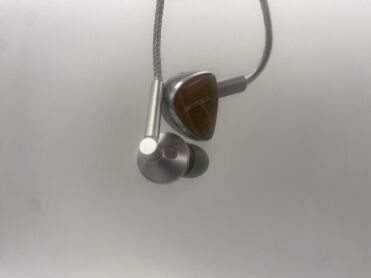
With natural and industrial aesthetics being my personal favorites, both IEMs were absolute visual treats. Sivga maintains its wooden faceplate standard, nicely contrasting the smooth metallic shell with a pattern-esque texture. Differing from its teardrop-shaped brethren, the Lyrebird has a triangular design with rounded edges. The Memory 4.4 moves in an opposite direction, foregoing any external flair for a uniform metal sheen. ddHiFi emulates the typical stemmed earphone model, contributing to its distinct fit. Specifically looking at the aluminum version, the solid color avoids the smudging of the chrome palladium plating.
The most significant difference is certainly fit. Not necessarily regarding comfort, rather wearing style. Notably, the AL4.4 fits like a traditional wired earbud, having a more welcoming presentation for casual listeners. Shell size runs incredibly small for the standard IEM, but seal is definitely not compromised. For casual and extended listening sessions, ddHiFi’s is far more intuitive. Sivga continues the traditional IEM affair, but a pretty good rendition to be fair. I was worried about the aforementioned triangular shape, but I never felt any protrusions. Like their aesthetics, this is a tossup to preferences.
Build quality is a unanimous Lyrebird victory. Its cable feels a tad stiff, but far tougher than the rope of the AL4.4. The shell is certainly tougher, making Sivga’s more reliable and resistant to harm. Speaking of reliability, the Lyrebird’s 2-pin design makes the cable replaceable, whereas the AL4.4’s is not.
Audio Design
These IEMs carry polar philosophies for quality sound. Sivga covers all bases with a quad-driver hybrid system. Consisting of dynamic, balanced armature, microplanar, and piezoelectric ceramic drivers, the Lyrebird seeks out uniform profiling utilizing each driver’s unique strengths. By contrast, the AL4.4 puts everything into a single 13mm planar magnetic driver designed by MOONDROP. ddHiFi’s redesign of the original Memory overhauls its internal acoustics and driver composition to draw more range and clarity.
| Sivga Lyrebird | ddHiFi Memory AL4.4 | |
| Sensitivity | 108±3dB @1kHz | 121dB/Vrms (@1kHz) |
| Impedance | 14Ω±15% @1kHz | 16Ω±15% (@1kHz) |
| Frequency Response | 20 Hz – 20 kHz | 20Hz – 20kHz |
Soundstage
Side by side, the definitive standout is the Lyrebird. Developing a substantially dimensional stage for its price range, Sivga tunes the IEM to cover impressive width and a serviceable depth. Instruments sit in their own pocket of the space and layer cleanly amongst each other. Slight but existent verticals make this an in-ear with a highly competitive soundstage for the price.
Unfortunately for the AL4.4, its flatness really sticks out next to the Lyrebird. Acknowledging the positives, its nice width keeps placement defined, and some vertical scope exists to keep layering neat. However, the distinct lack of depth creates what feels like the audio equivalent of viewing a beautiful mural. What is here sounds fantastic, but when entered in a competition with sculptures, its dimensionality sorely sticks out.
Low End
Amongst its overall signature, the Lyrebird’s bass is certainly robust. Notes have distinct, clear hits with enough room to reverberate with smooth warmth or rumbling force. Hip-hop and dance tracks reap significant reward, existing as an exciting heartbeat to power any energetic track. While this density compliments these genres, those requiring detailing in other ranges might be muffled out by the comparably huge low end.
Although not as active as the Lyrebird, the precision of the AL4.4’s bass is still definitely noteworthy. Bass and Synth sounds have a substantial firmness that avoids being too particularly clinical. Definitely less forward, but not in any way that is detrimental. ddHiFi’s bass supports its other ranges quite well, with just enough there to not feel overwhelmed.
Midrange
Being right above the low end, the Lyrebird’s mids sometimes feel respectively flushed out. Vocals are salvaged, remaining forward and decently clear. I can not say the same for instrumentals, which while warm and musical, kind of get lost in the thundering bass. Upper mids escape this fate slightly, providing nice flavor to the upper end of the signature.
Without the restrictions inadvertently placed on the Lyrebird, the Memory AL4.4’s bass has the room it needs to run wild. Effortlessly clean and sonically expansive, the IEMs spread across the range with a very natural sound. For a straightforward listening experience, these make a phenomenal showing for the price range.
Highs
With the bass as its dominant anchor, the Lyrebird’s treble is not as musically active. Sivga’s priorities for its treble lie more within clarity and speed. Highs have a supportive fluidity that cuts through without distracting from the overall sound. While not desirable for more rounded or brighter listeners, rolled treble does little to impede the Lyrebird’s rumbly low signature.
ddHiFi gives their IEM a bit more here, expected from its comparably balanced tuning. Displaying a fine synergy of polish and airiness, the Memory AL4.4’s treble similarly props up its star mids. While its commitment to both left me wanting more of each from certain tracks, it was not anything I did not expect from the price range.
Final Verdict
Comparing these two Chi-Fi IEMs, the only similarity I really found was the price. Sivga’s outing was certainly more fun, boasting a dynamic bass physicality and expanded space that is perfect for heavier tracks. ddHiFi’s strengths lean more from its earbud shape and natural sound, making them a nice option for a higher quality casual listen. These staunch differences make choosing between them pretty easy. If you are seeking a bassy IEM that literally and figuratively punches above its price point, the Lyrebird is a serious contender. If you are transitioning into or are unhappy with your standard IEM, the Memory AL4.4 could be a nice place to start.
The Sivga Lyrebird and ddHiFi Memory AL4.4 are both available at Audio46.