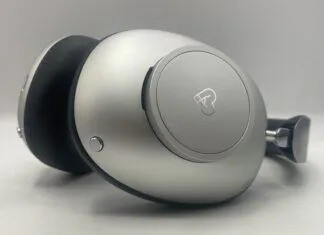



Choosing luxury wireless headphones involves more than finding the longest feature list. At this level, you want a listening experience that makes familiar music feel worth revisiting, along with comfort and controls that justify using the headphones every day. The Loewe Leo vs DALI IO-12 comparison raises an interesting question: how much should you prioritize the space surrounding a performance, and how much should you prioritize the character of the instruments within it? Both matter, but they can lead you toward different headphones.
What You Get
| Leo | IO-12 |
|
|
Look & Feel
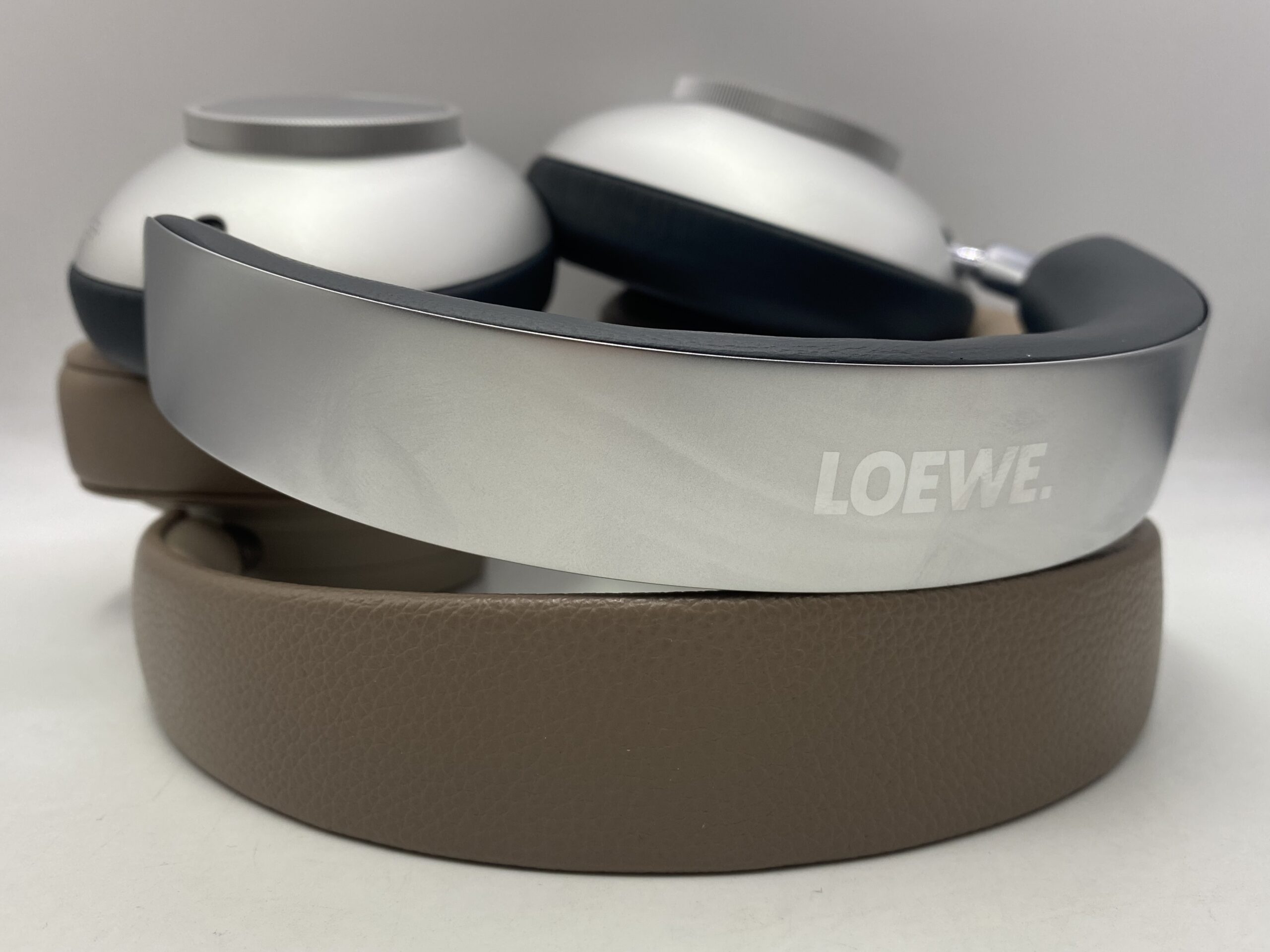
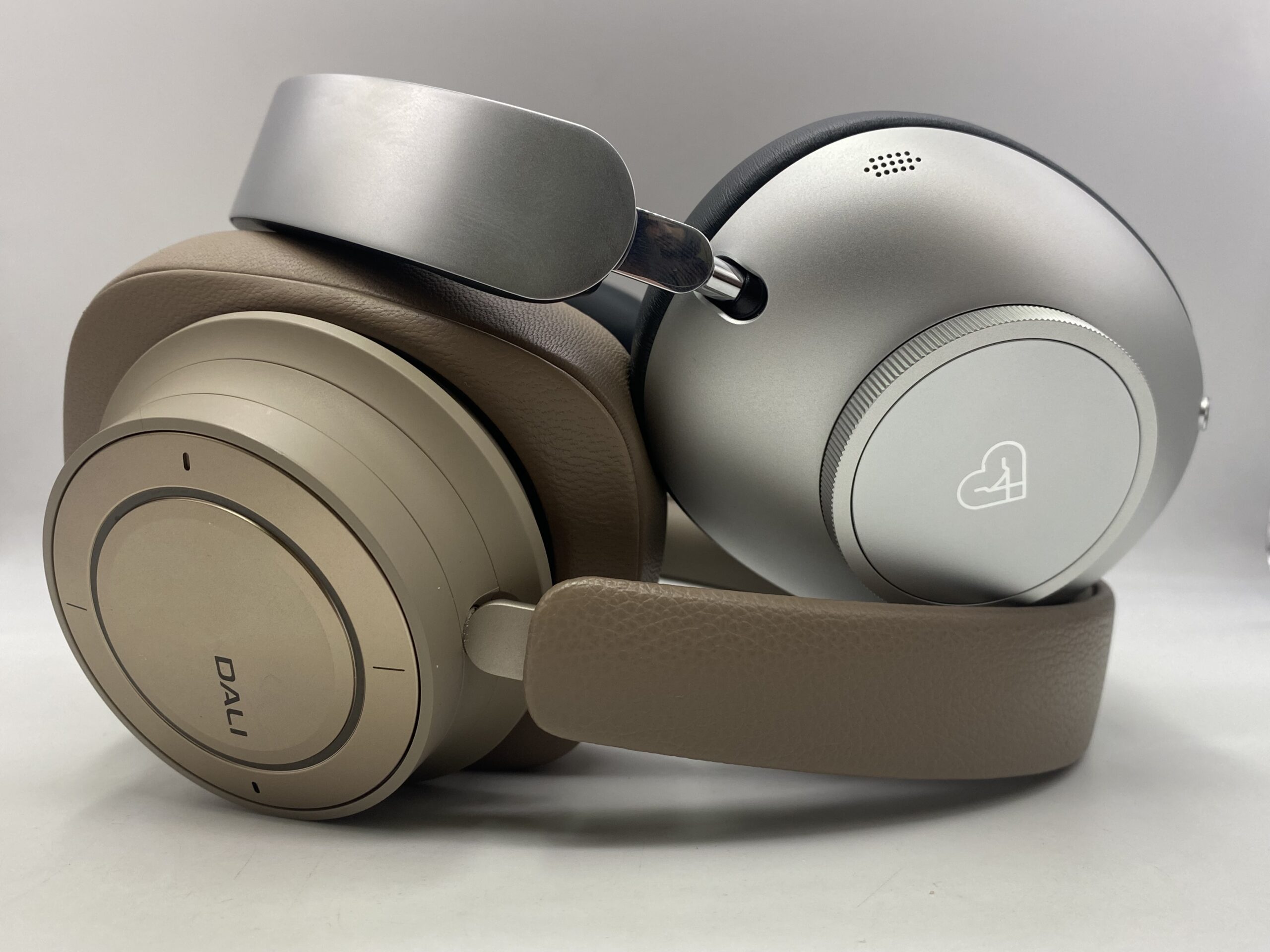
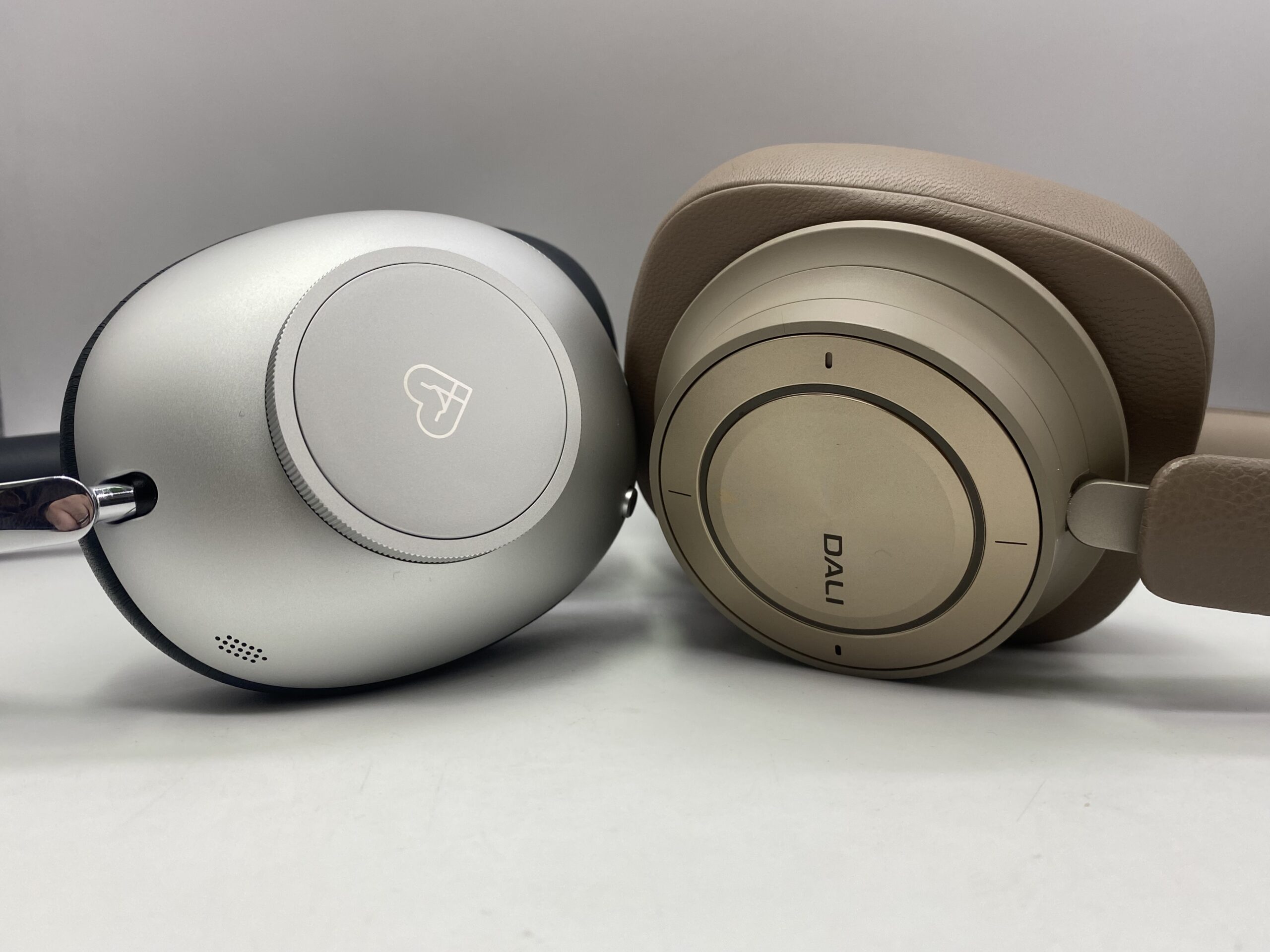
The Loewe Leo and DALI IO-12 express their luxury positioning differently. The Loewe Leo makes a strong impression with its anodized aluminum frame, sleek styling, and sturdy construction. Its dual volume dials provide satisfying, precise control. Comfort is good, but the ear cushions could be deeper, softer, and more breathable, especially at this price. The DALI IO-12 pairs an elegant design with spacious leather ear pads. Its fit feels secure without excessive pressure, leaving room around your ears while maintaining a strong seal. Loewe stands out for its substantial build and tactile controls, but DALI offers the more comfortable experience for extended listening.
Design & Functionality
Both headphones use 50mm dynamic drivers, but their underlying designs differ. The Loewe Leo combines OCE diaphragms with a Texas Instruments OPA1622 amplifier. DALI incorporates its Soft Magnetic Compound technology, designed to reduce eddy currents and distortion.
Loewe offers more ways to personalize the experience. Its app includes EQ, spatial audio, hearing-based sound personalization, and ANC adjustments. Adaptive noise cancellation responds to changing surroundings, while transparency mode lets outside sound through. These options make the Leo appealing if you enjoy adjusting your headphones for different recordings and listening environments.
DALI takes a more direct approach, placing its controls on the right ear cup. There is no companion app, so adjustments happen through physical buttons, including controls for noise cancellation, transparency, and bass enhancement. Its ANC effectively reduces distractions, although isolation is not its defining strength. The practical difference comes down to how involved you want to be. Loewe provides a broader toolkit for tailoring playback, while DALI keeps its available adjustments immediately accessible. Neither approach automatically makes for a better listening experience, but each suits a different daily routine.
Bluetooth
The Loewe Leo uses Bluetooth 5.3, supporting SBC, AAC, LC3, and LC3+, alongside multipoint connectivity. Its app also offers connection management and a low-latency setting. The DALI IO-12 uses Bluetooth 5.2 with aptX, aptX HD, and aptX Adaptive, delivering straightforward pairing and stable wireless performance. Codec availability depends on your source device, making compatibility more useful to check than the Bluetooth version alone.
Battery Life
Loewe specifies approximately 45 hours of playback with ANC enabled and up to 65 hours without it. A full charge takes around two hours, and listening while charging is supported. DALI quotes 35 hours of wireless playback, providing enough capacity for several listening sessions between charges. Loewe has the stronger stated endurance, particularly for travelers or anyone who prefers charging less frequently. These figures are quoted specifications rather than a controlled battery comparison.
Soundstage
The Loewe Leo’s standout quality is its enveloping spatial presentation. Its imaging extends around the listener, with substantial depth and panning that feels dimensional rather than restricted to a straight line between the ears. This effect is already apparent in standard stereo; spatial audio adds some freedom without making the presentation hollow.
The DALI IO-12 creates an open, spacious stage with a stronger impression of a performance unfolding in front of you. Instrument separation is particularly convincing, giving individual sounds distinct positions and natural distance. The distinction is between being surrounded by a recording and observing its arrangement. Based on these characteristics, the Leo has particular appeal for listeners drawn to atmosphere, while DALI’s presentation favors following individual musical parts. Neither quality alone determines resolution: a large stage and sharply defined instruments are separate accomplishments.
Low End
The Leo’s bass changes noticeably with EQ. Its Bass preset supplies smooth, resonant mid-bass weight, while Pop reduces that resonance for a tighter, punchier response. The choice meaningfully affects the shape of bass notes, beyond simply increasing their level. DALI’s standard response is leaner and neutral, delivering natural punch without making bass dominant. Its bass mode adds body and thickness while keeping resonance controlled.
These descriptions suggest different starting points for finding your preferred balance. With the Leo, choosing a preset becomes part of establishing its musical character. DALI offers a simpler decision about how much foundation the arrangement needs. For bass-focused listening, the key question is whether you prefer sustained fullness or sharper rhythmic definition.
Mids
The IO-12’s midrange emphasizes clarity, realistic instrumental tone, and lively attacks. Voices and instruments retain expressive energy, making this a central strength of its sound. The Leo’s Neutral preset produces its clearest vocals and better instrumental balance. Its Vocal setting sounds thinner and boxier, while a slight lower-midrange haze persists even with the more favorable tuning.
This gives DALI the stronger argument for listeners who prioritize vocal intelligibility and instrumental articulation. It also illustrates why preset names deserve little weight: the setting labeled for vocals does not necessarily provide the most convincing voice reproduction. Judge the balance through familiar phrasing and instrumental textures.
Highs
DALI’s treble adds shimmer, detail, and height, giving cymbals an elevated presence. Its brightness may be excessive for some listeners, although the presentation remains controlled. The Leo is more restrained. Some mid-treble sparkle remains, but upper-frequency trailing detail and energy are limited. EQ does not fundamentally transform that reserved character.
The resulting choice is partly about sensitivity. DALI’s approach should appeal more to listeners seeking an illuminated presentation; Loewe’s suggests a gentler balance. Greater brightness should not automatically be equated with greater accuracy, just as smoother treble does not automatically guarantee better long-term comfort.
Summary
The Loewe Leo and DALI IO-12 make different arguments for luxury wireless listening. The Leo’s strongest attraction is its expansive soundstage, creating an enveloping sense of space that makes layered recordings particularly engaging. Its substantial aluminum construction, satisfying volume dials, extensive customization, and longer quoted battery life add to its appeal. However, the cushions could feel more indulgent, and its slightly cloudy lower mids and restrained treble leave room for improvement at $2,000.
The DALI IO-12 makes a more convincing case through comfort and tonal refinement. Its spacious imaging supports clear, expressive mids and shimmering highs, while the bass adjustment adds weight without overwhelming the presentation. You sacrifice app-based customization, but its straightforward controls and comfortable fit make it easy to settle into a long listening session. At the original $1,300 asking price, that combination also presents a stronger value proposition. For most listeners prioritizing sound quality and comfort, the DALI IO-12 is the stronger overall choice. The Loewe Leo deserves consideration if immersive staging, personalization, and tactile design are your main priorities. Its higher price buys a particular experience, so the deciding factor is how much that surrounding sense of scale matters to your enjoyment of music.
The Loewe Leo and the DALI IO-12 are available at Audio46.