Premium true wireless earbuds need to make music engaging while remaining convenient enough for daily listening. A spacious presentation might impress immediately, but comfort becomes more valuable halfway through an album. Similarly, a long list of wireless features matters most when they improve the experience of the devices you actually use. The Sennheiser Momentum True Wireless 5 and Bowers & Wilkins Pi8 bring different strengths to that balance. Sennheiser makes a compelling case through comfort and battery serviceability, while B&W places greater emphasis on spacious sound and midrange definition. Which approach better suits your listening?
What You Get
| Momentum True Wireless 5 | Pi8 |
|
|
Look & Feel
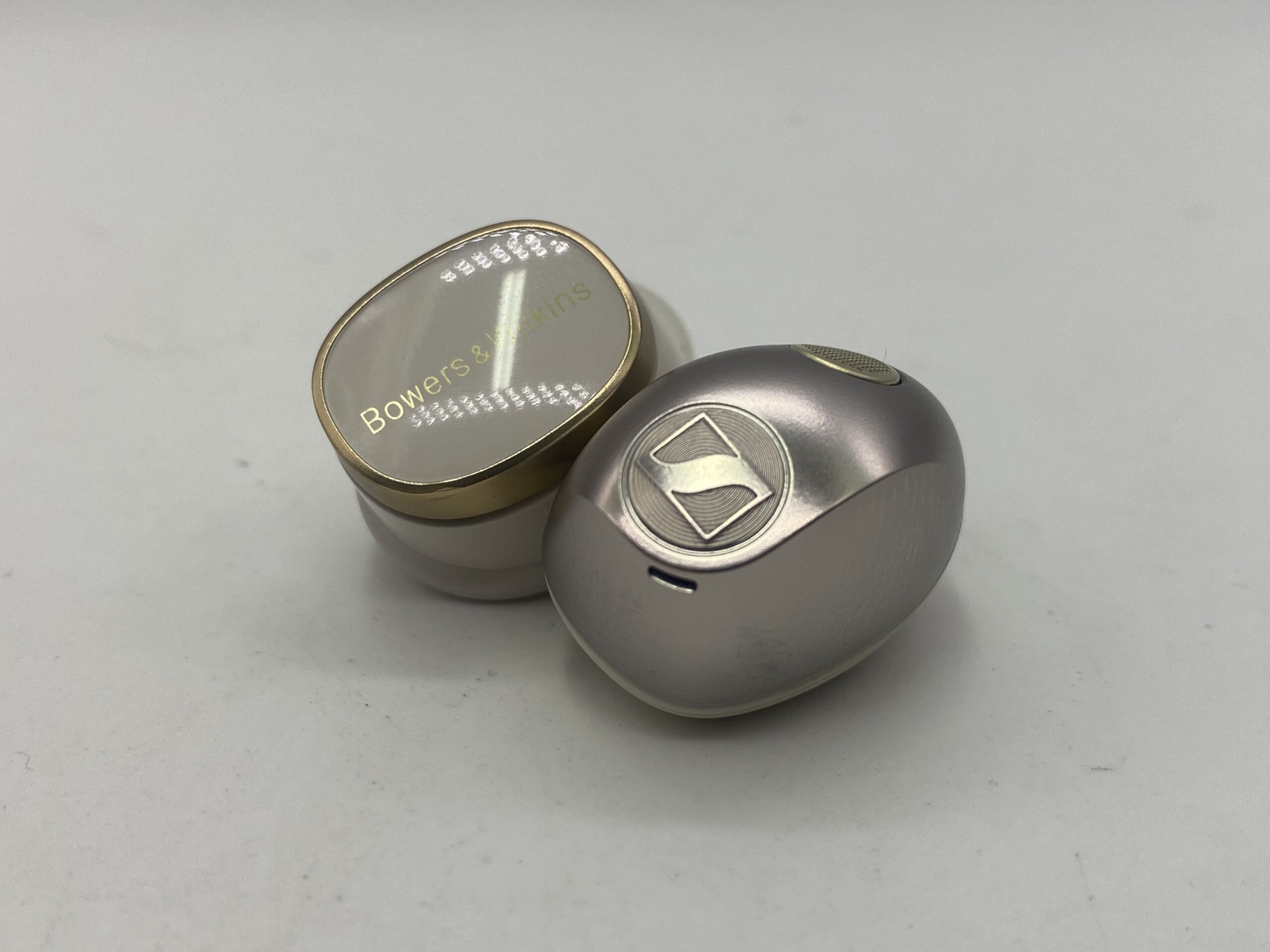
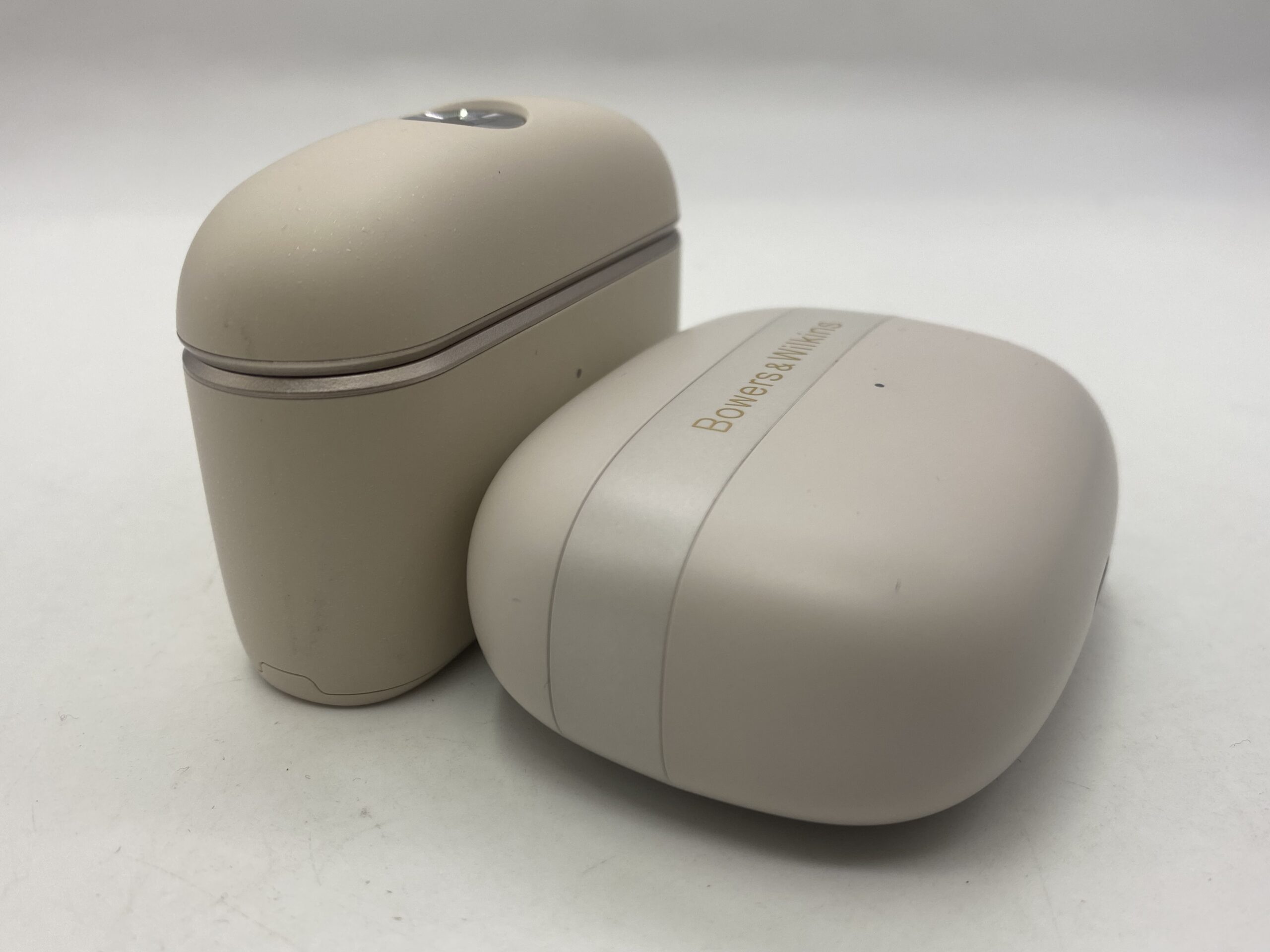
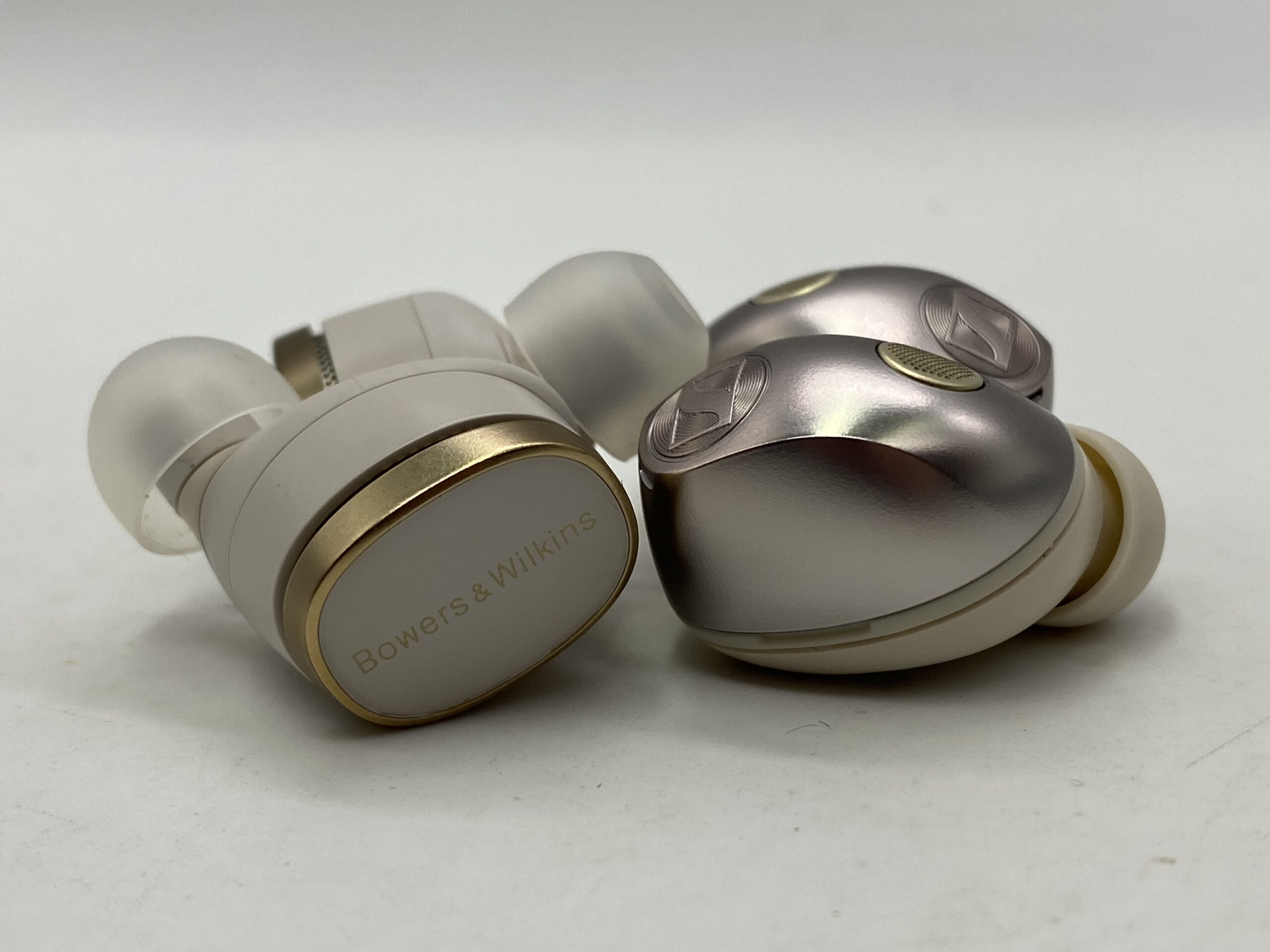
Sennheiser’s slimmer housing offers a secure, comfortable fit over extended sessions. The glossy Pi8 looks stylish, but its twist-in fit can become fatiguing after several hours. A secure seal and a comfortable fit are separate considerations. An earbud can remain firmly in place while creating pressure over time. Short listening sessions may disguise that problem; longer sessions tend to reveal it. This makes fit especially important for anyone buying earbuds for full albums, work, or travel. Sennheiser has the stronger case for extended use, although individual ear shape remains decisive.
Design & Functionality
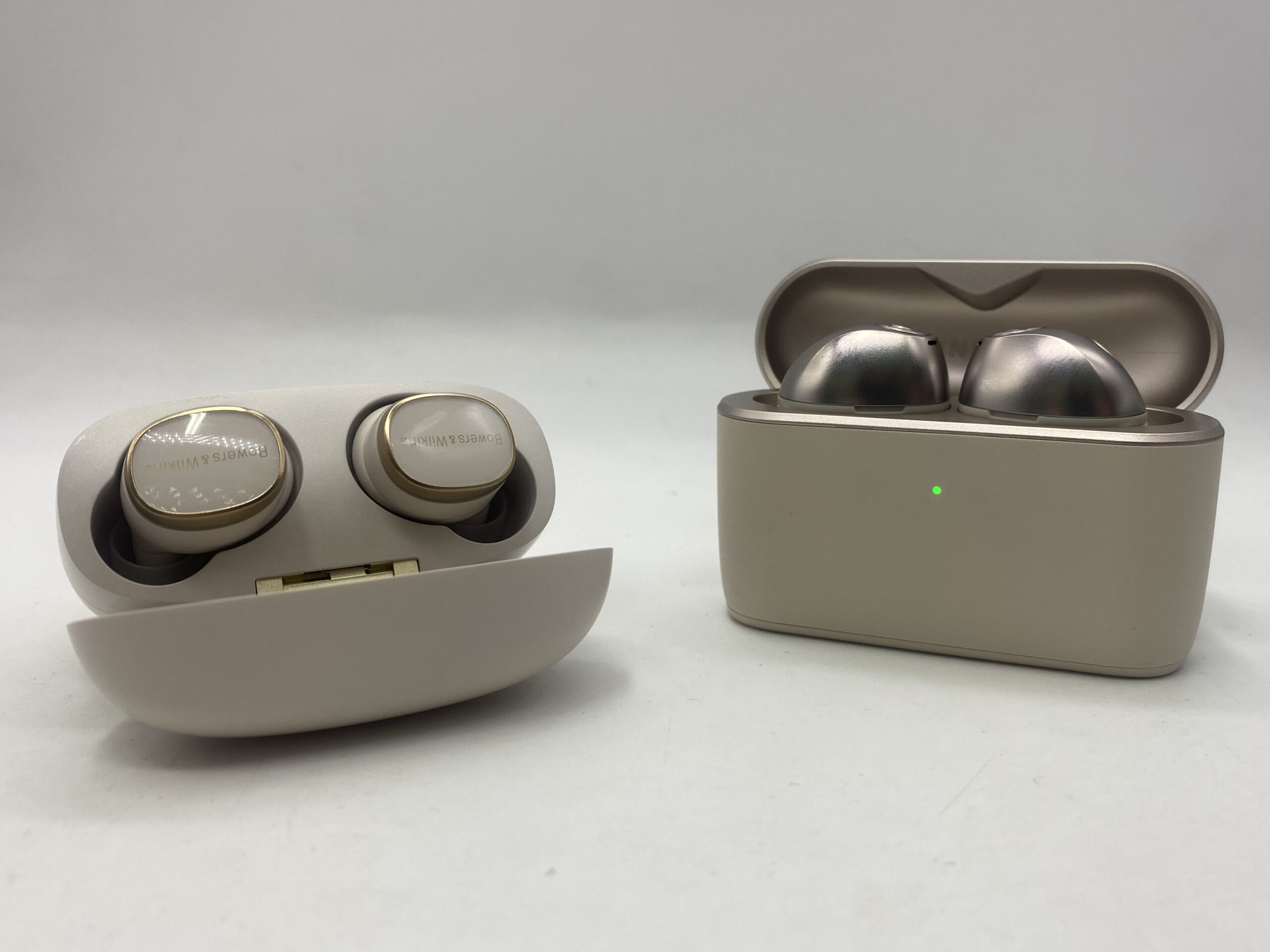
The Momentum uses 7mm TrueResponse dynamic drivers; the Pi8 uses carbon-cone drivers. B&W’s responsive touch controls and app customization are useful strengths. Driver construction explains an engineering approach, but does not establish a sound-quality winner. The more useful comparison is how the resulting presentation handles bass, instrumental definition, and space. Controls deserve attention, too. Playback adjustments should feel straightforward when your phone is in a pocket. Sound quality and convenient operation contribute to different parts of the experience, and neither replaces the other. Both earbuds offer strong active noise cancellation, making isolation a useful part of either package. For a purchase centered on noise cancellation, consider where you listen most often. Steady background noise, passing traffic, and nearby conversation place different demands on isolation. Both are compelling options for listeners who want to reduce distractions while enjoying their music. ANC is a shared strength here. Comfort, battery design, and sound presentation provide more useful distinctions for this comparison.
Bluetooth
Both support multipoint and aptX Lossless with compatible devices. Sennheiser specifies Bluetooth 6.0. The Pi8 has exhibited occasional dropouts and synchronization problems. Codec support should always be considered alongside source compatibility. A codec is useful only when your playback device can use it, while connection consistency matters throughout every listening session. Those occasional Pi8 connection issues are a consideration for buyers who prioritize uninterrupted playback. A premium codec and a consistent wireless connection contribute to different aspects of everyday performance.
Battery Life
The Momentum offers up to 12 hours without ANC, six with ANC, and 40 including its case. Pi8 playback is approximately 6.5 hours per charge. Both support wireless charging; Sennheiser adds user-replaceable earbud and case batteries. The longest Sennheiser figure needs to be understood in the context of its ANC setting. Comparing maximum runtimes without checking operating conditions can exaggerate a difference. Case capacity and uninterrupted playback also answer different questions. Someone regularly returning earbuds to their case may prioritize total capacity; someone listening through a long journey needs sufficient runtime in the earbuds themselves. Battery replaceability introduces another consideration: maintaining a device as its original cells age.
Soundstage
The Pi8 offers a larger stereo field, distinct placement, and forward vocals. Sennheiser emphasizes organized layering and depth within a less expansive stage. Its standard stereo mode offers a more convincing presentation compared with Dolby Atmos. Width and imaging are related, but not interchangeable. Width concerns the apparent reach of the presentation. Imaging concerns how clearly sounds occupy positions within it. An expansive stage can impress without necessarily making every musical line easier to follow. Here, the Pi8 has the stronger case for scale. The Momentum’s appeal lies in orderly arrangement. Listeners should weigh the importance of perceived space against their preference for a cohesive presentation.
Low End
Sennheiser combines physical bass impact, rich mid-bass, and controlled resonance. The Pi8 emphasizes smooth weight and sustained rumble. Bass should be assessed through more than quantity. The initial strike of a drum, the body of a bass note, and its decay all shape the listening experience. Strong low frequencies can add excitement, but their relationship with vocals and instruments is equally important. Both approaches are engaging. Choosing between them comes down to the character of bass you enjoy, rather than simply deciding whether you want strong low frequencies.
Mids
The Momentum’s mids are warm and clean, with limited fine resolution. The Pi8’s fuller, more transparent midrange reveals detail in busy recordings. Clarity makes a musical line easy to hear; resolution helps expose smaller variations within it. Those qualities overlap without being identical. This distinction matters when listening closely to instrumental texture, vocal phrasing, or arrangements with multiple competing parts. The Pi8 is the stronger choice when midrange definition is central to your listening.
Highs
Sennheiser offers crisp, controlled treble with restrained air. The Pi8 supplies gentle brightness and subtle sparkle. Treble affects note edges, percussion texture, and the impression of openness above the music. More brightness does not automatically mean more detail, while smoothness need not mean indistinct sound. +Preference is particularly important here. Some listeners enjoy prominent shimmer; others prefer an upper register that draws less attention to itself. The preferred treble presentation will depend on your taste.
Summary
Choose the Sennheiser Momentum True Wireless 5 for comfort and battery serviceability. Choose the Bowers & Wilkins Pi8 for spacious imaging and midrange definition. The best buying decision starts with your everyday listening routine. An impressive presentation has limited value if the fit interrupts an album. Equally, convenient features cannot guarantee that you will enjoy the tuning. Weigh the strengths you will appreciate every day against the compromises most likely to bother you. That provides a more useful conclusion than declaring either pair universally superior.
The Sennheiser Momentum True Wireless 5 and the Bowers & Wilkins Pi8 are available at Audio46.