


How close can a pair of Bluetooth headphones get to the experience of listening to studio monitors? That’s the question I kept coming back to while listening to the T+A Solitaire T Pro. At the luxury end of the wireless headphone market, good build quality and a long feature list are easy to expect. What I wanted to hear was whether T+A could bring the sense of space, instrumental detail, and control I look for in a dedicated listening setup to a pair of closed-back wireless headphones.
What You Get
- T+A Solitaire T Pro Headphones
- Carrying Case
- USB-C to USB-C Cable
- 3.5mm Auxiliary cable
- 3.3mm to 4.4mm Balanced Cable
- Quarter-inch adapter
- Airplane Adapter
- User Manual
- Warranty
Look & Feel
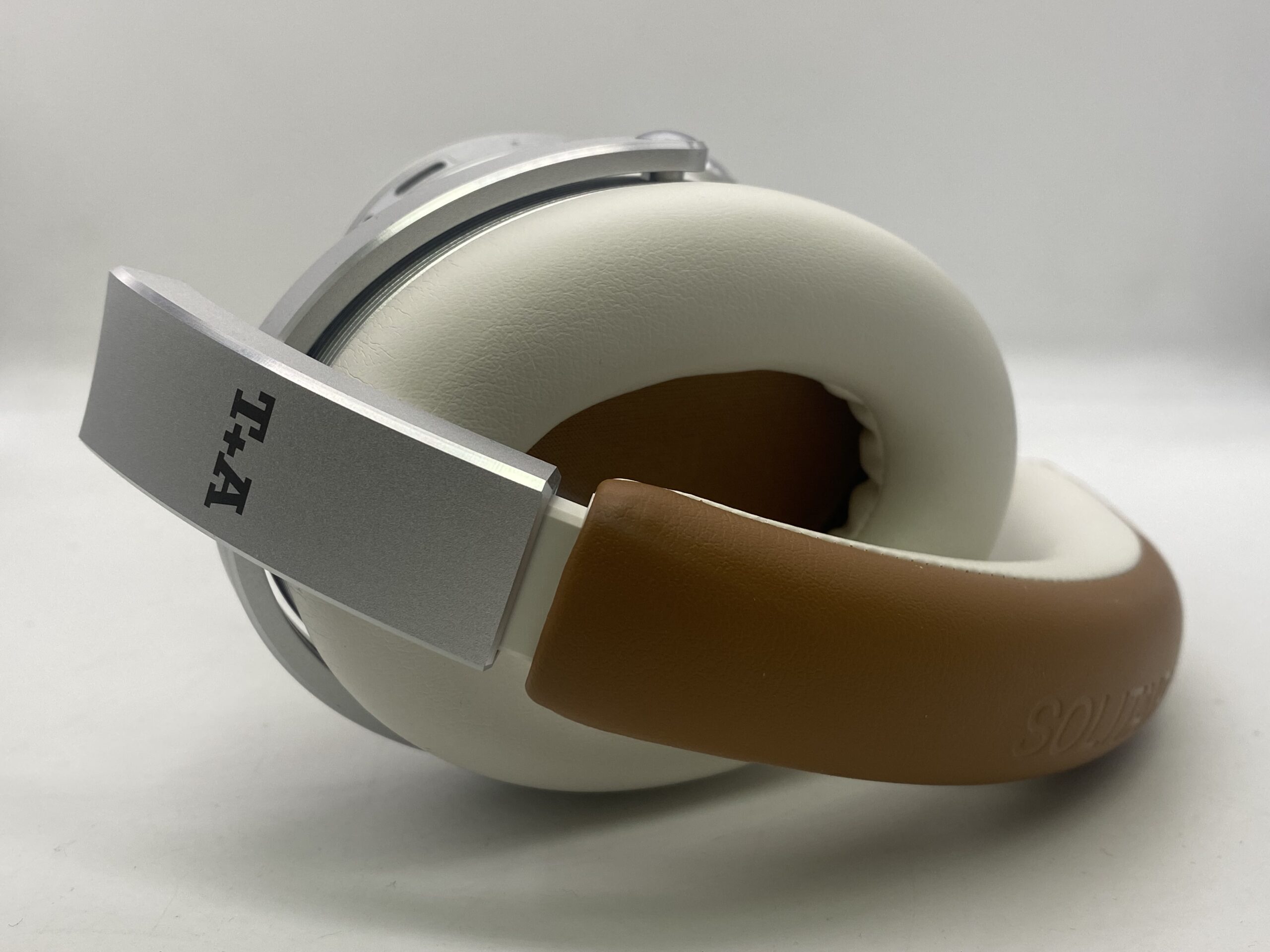
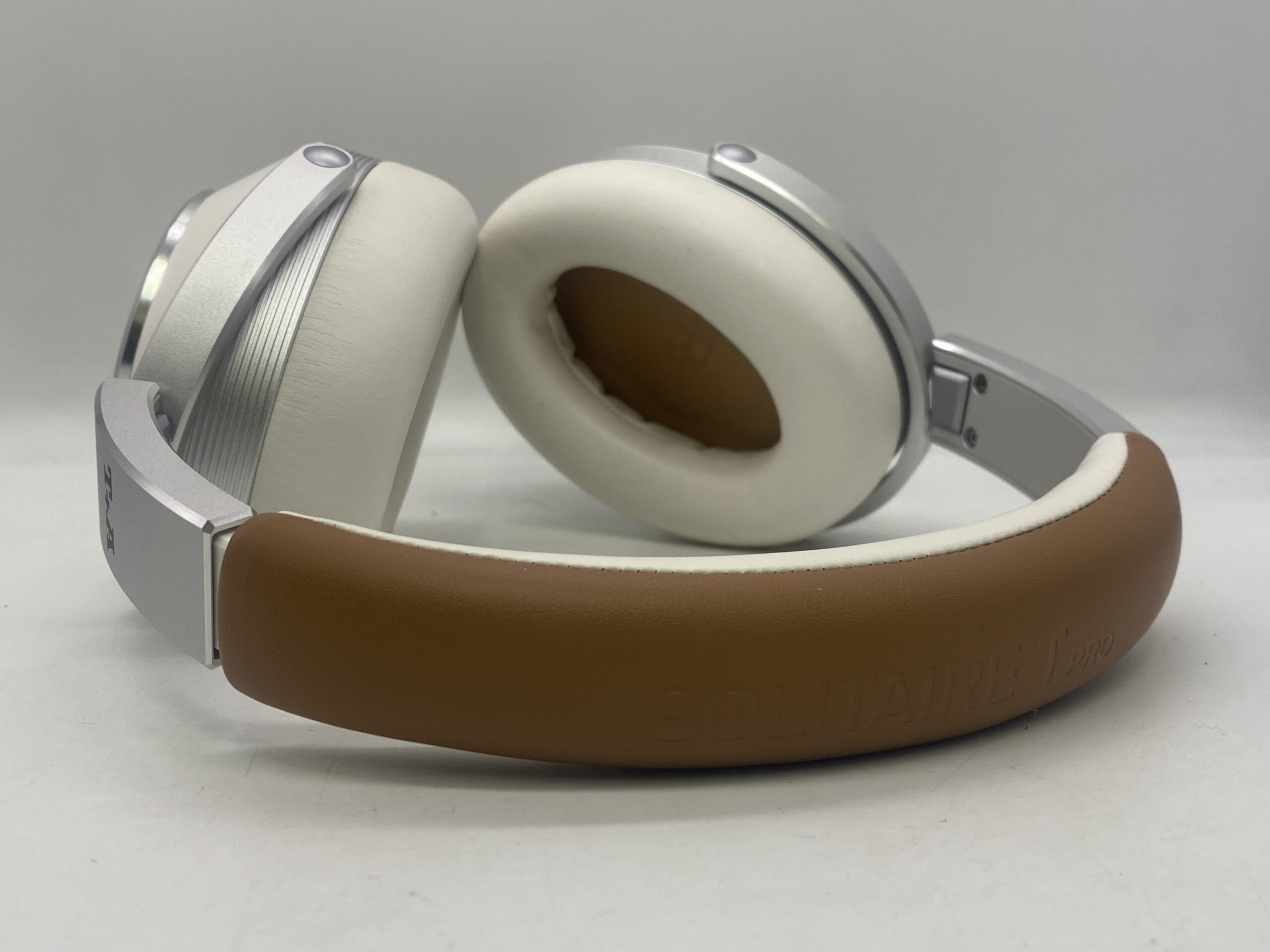
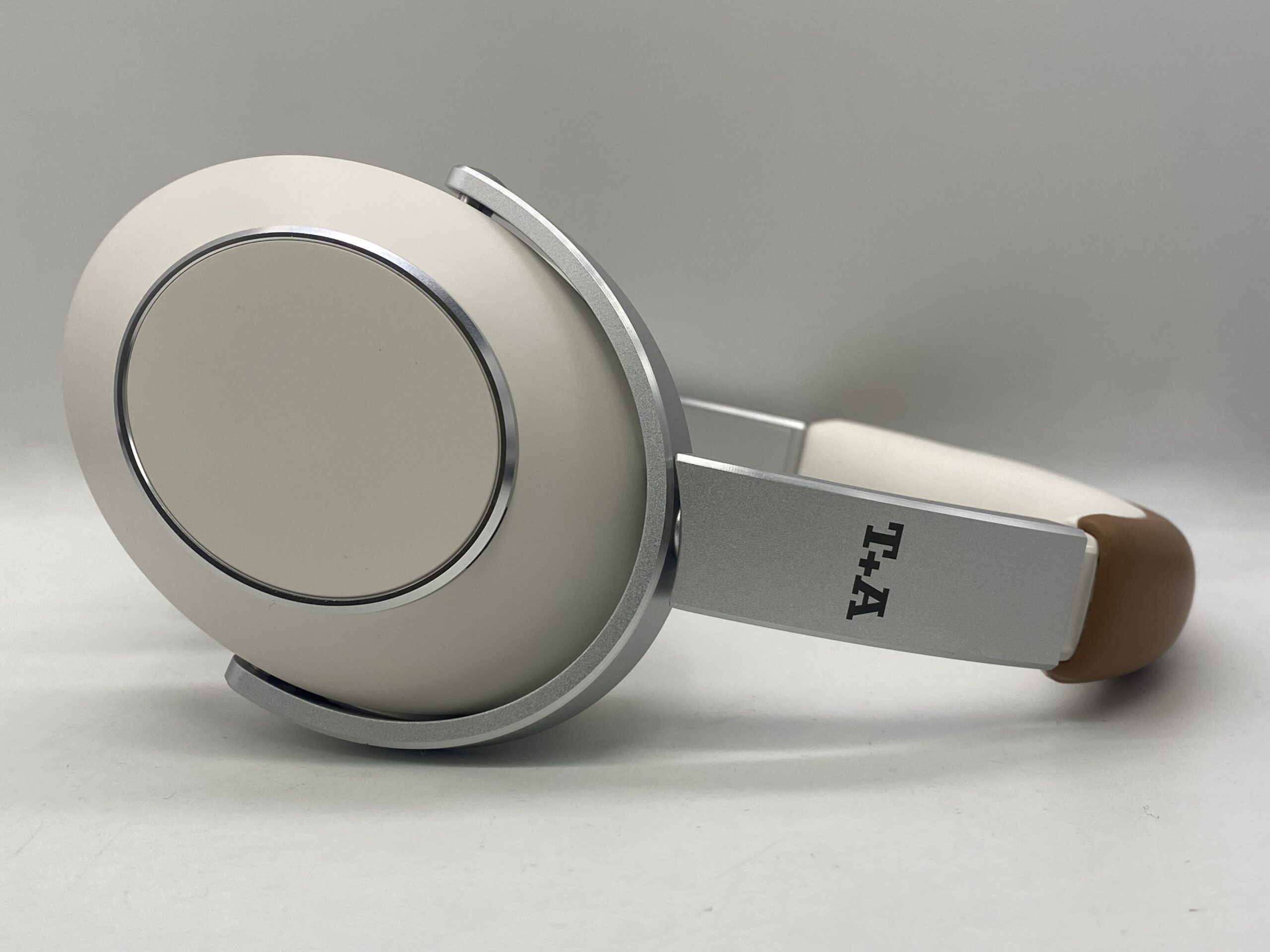
For this review, I used the Riviera version of the Solitaire T Pro. This is basically the white version of this specific headphone, but there’s more to it than that. It combines the cream white of the earcups and pads with the cognac brown that does a great job communicating the appearance of a luxury product. It’s a high-end speaker design that is consolidated into the form of a wireless headphone. This is one of the sturdiest foldable designs I’ve used, with an anodized aluminum frame that holds everything together extremely well. It is exactly the kind of build you’d be looking for at this price.
In terms of comfort, the ear cups might be a bit too narrow, but for my big ears, they felt very snug. The cushions don’t have a ton of room, but they didn’t feel tight or constrained. You may want some more breathable room from your headphones, but I didn’t experience any fatigue from my many hours of listening.
Design & Functionality
The T+A Solitaire T Pro uses 42 mm dynamic drivers selected for tight manufacturing tolerances. Each driver features a cellulose diaphragm with edge damping to control unwanted vibrations. The headphones have a rated frequency response of 4 Hz to 22 kHz in active mode and 4 Hz to 45 kHz in passive mode. Total harmonic distortion is rated below 0.05% at 1 kHz and 94 dB SPL.
Like most audiophile ANC headphones, the noise-canceling part is usually not as prominent a feature as other consumer-grade wireless headphones. The Solitaire T Pro fits with that notion, as the noise-canceling is effective enough but not as strong as other headphones that are wildly more affordable.
There is a companion app that allows you to access a customizable EQ with plenty of presets, as well as spatial audio powered by Dolby Atmos. You can even customize the spatial audio a little bit by switching between reverberizer and reverberizer HRTF that operate the virtual soundstage differently.
Bluetooth
The T+A Solitaire T Pro uses Bluetooth 6.0 with a Qualcomm QCC5181 chipset and supports SBC, AAC, LC3, LDAC, aptX HD, aptX Adaptive, and aptX Lossless. Your source device determines which codec you can use. Auracast support lets the headphones tune into compatible Bluetooth audio broadcasts. For wireless listening in Studio Pro Mode, the Solitaire T Pro routes playback through its dedicated ESS Sabre ES9219 DAC and analog amplifier.
Battery Life
The T+A Solitaire T Pro offers up to 50 hours of playback on a single charge, or up to 25 hours in Studio Pro Mode, which uses the dedicated ESS Sabre DAC and analog amplifier. The 1,200 mAh battery takes about two hours to fully recharge over USB-C. Passive wired listening is also available when the battery runs out.
Soundstage
The way everything is positioned in the soundstage makes the Solitaire T Pro feel like the closest Bluetooth headphones have come to replicating a studio monitor. Not only does it have a wide scope, but the anchoring of each element feels hyperspecific to its assigned channel. The headspace is also very open, not just appearing like sound coming out of drivers, but a space that occupies different positions around your head for a more natural stereo setting. Performances are displayed out in front of you, still appearing close, but with an extra bit of dimension that results in a sound that hovers along the barrier of a closed space. Spatial imaging is very precise, responding extremely well to subtle pan movements. It’s a very direct and organized stage that really feels like it’s encapsulating your head in sound.
Low End
Your impression of the bass frequencies on the Solitaire T Pro will be impacted heavily by what EQ setting you choose to use with it. The flat tuning is the headphone’s default sound, and based on that, you might think the bass is lacking impact. The lows have a very subdued response here, but it’s not entirely missing. It just sounds very flat, which is fitting for the Solitaire T Pro’s factory setting. If you use the bass boost EQ preset, you will get a bit more bass presence, but it might not be enough to change your mind about its form.
What it does best is give you very tactile mid-bass notes that act more as support than its own identifiable tone. They are very balanced and even, but also feel a bit dry. If you’re looking for realism, the Solitaire’s T Pro’s bass has it in spades, but you only get a sense of the complete shape of the lows when you tweak it with EQ. This increases the rumble and supplies a more established sub-bass region. It is still pretty neutral in timbre, but there’s definitely more of a body to it.
Mids
This is where the sound signature feels the most alive. The midrange on the Solitaire T Pro sits forward; the frequency content is rich. Instruments feel pronounced throughout the spectrum, showcasing performances that have a real shape to them. Their naturalistic qualities are clear and detailed, resulting in striking cuts from string plucks and piano key impact. Transients respond with quickness and grace, never shouting but making sure moments of force are controlled and dynamic. Snare cracks are tight and resolving, making a great impression on the fidelity of the midrange as a whole. You get a sense of fullness and tact that is usually unheard of on a pair of wireless headphones.
Highs
The treble has a very prominent character to it that is also very even and controlled. It has an airy texture with moments of glisten that is just noticeable without being exaggerated. The highs can feel quite bright and even peaky in some instances, specifically in tracks with choral high notes that make the treble rise to the surface. However, this never caused fatigue. The frequencies were scaled properly; their tonal rawness was brought into balance for a more digestible response. This results in a treble that is heightened and very articulate, pushing clarity in high frequencies that almost no Bluetooth headphone is capable of.
Summary
The T+A Solitaire T Pro comes closest to answering that question with its soundstage. Subtle pan movements are easy to follow, and instruments hold their positions even when a mix gets busy. The midrange is what kept me listening, though. String plucks, piano strikes, and snare hits have the attack and body that make a performance feel immediate. The bass is restrained in the default tuning, but a few EQ adjustments give the sub-bass more weight. The airy treble brings out fine detail, although it can get bright on some recordings.
The sturdy foldable build and passive wired playback make the Solitaire T Pro a versatile pair of headphones, while the narrow earcups and modest noise cancellation are worth weighing if you plan to use them primarily for travel. For listeners who put precise imaging and natural instrument timbre first, the Solitaire T Pro makes a convincing case as a luxury wireless headphone. I’d pick it for the way it places instruments in a mix and preserves the character of each performance.

The T+A Solitaire T Pro is available at Audio46.