


The Noble Audio Iris and Sennheiser IE 600 occupy a similar place in the audiophile IEM market. Both cost $699 and use a single dynamic driver, favoring coherence over the complexity of a multi-driver configuration. However, they approach that formula differently. The Iris uses a larger driver and monitor-inspired tuning, while the IE 600 offers a more energetic sound with impactful bass and immersive imaging. Both IEMs deliver strong technical performance, natural timbre, and premium construction, but which one is the better choice? Let’s compare the Noble Audio Iris and Sennheiser IE 600 to find out.
| Iris | IE 600 |
|
|
Look and Feel
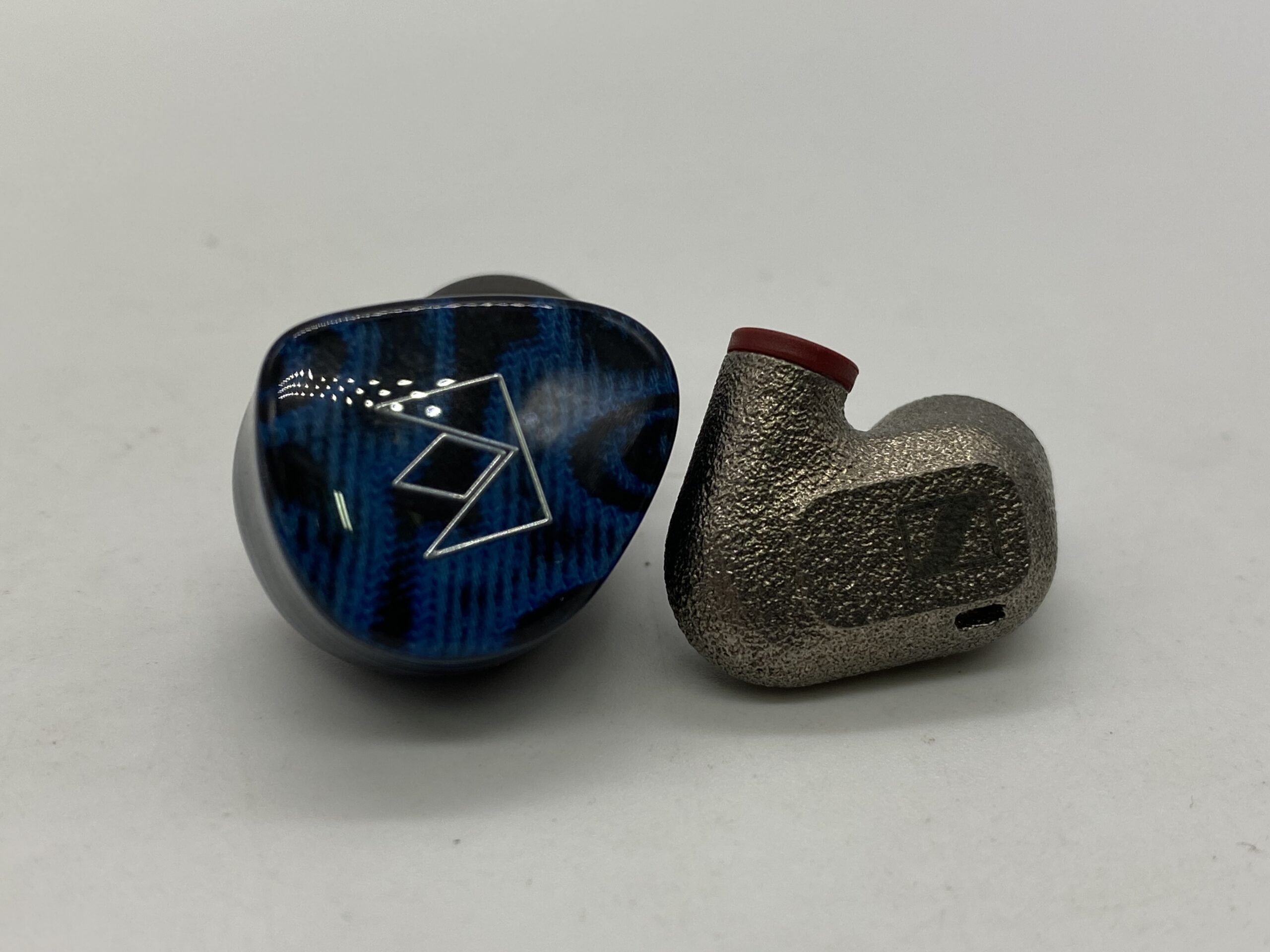
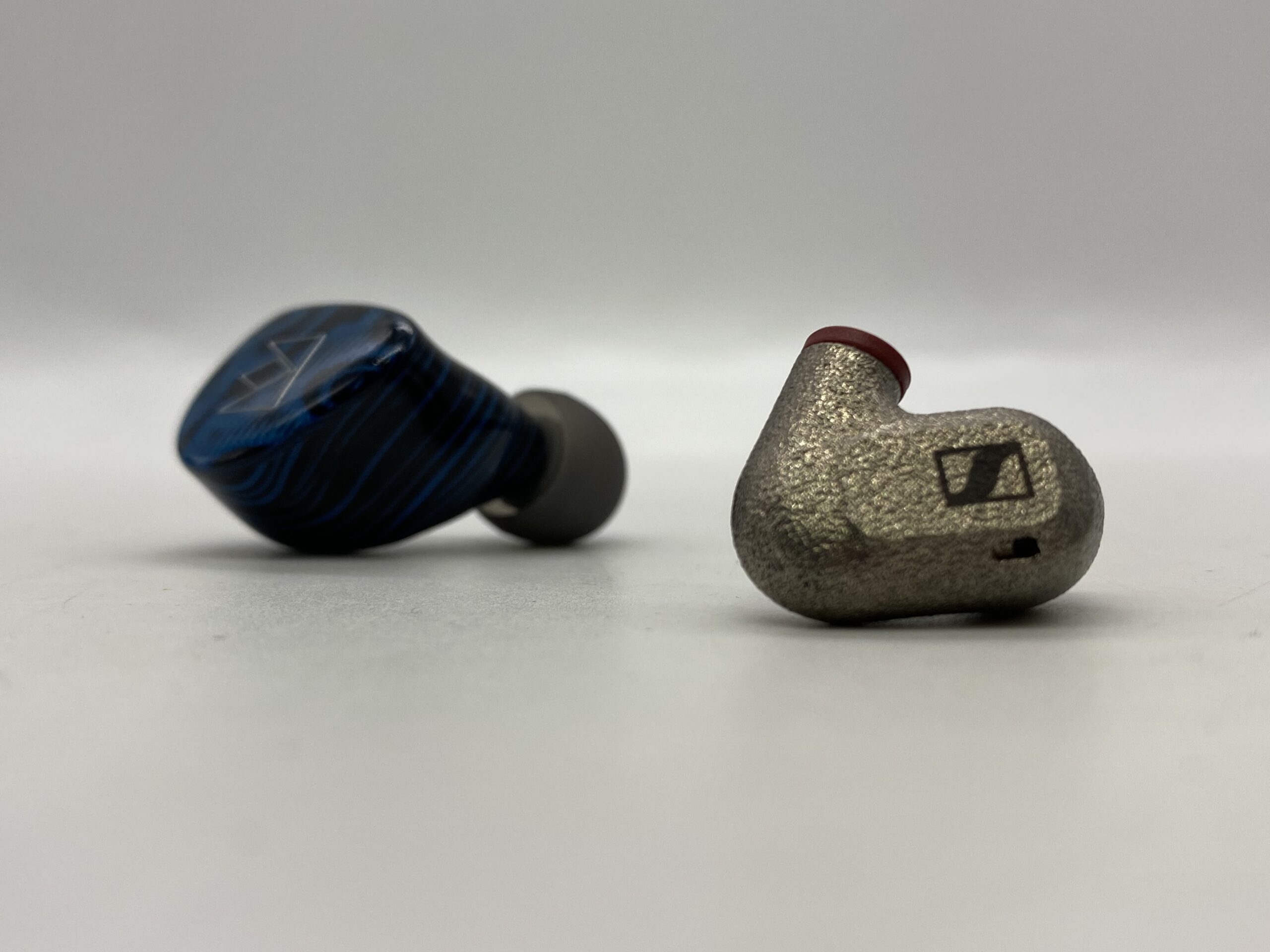
Noble Audio is known for its artistic IEM designs, and the Iris maintains that identity. Its blue Micarta shell features a layered pattern inspired by the iris flower, giving each earpiece an organic, handcrafted appearance. The CNC-machined housing follows a conventional ergonomic IEM shape, with enough contouring to sit naturally within the ear. Its appropriately sized nozzle also helps keep the shell secure. The Sennheiser IE 600 has a much more understated appearance. Its compact shell uses amorphous metal, giving it excellent durability without adding much weight. This construction feels rugged and premium, but the design is more industrial than decorative.
Fit will depend heavily on the listener. The Iris has a fuller housing that provides more contact with the ear, while the IE 600 is exceptionally small. Some listeners will appreciate how unobtrusive the Sennheiser feels, but others may need larger ear tips to give the shell enough support. The Iris is the more visually striking IEM, while the IE 600 is better suited to listeners who prioritize compactness and durability.
Design
The Noble Audio Iris uses a custom 10.2mm dynamic driver with a three-layer PU and PEEK diaphragm. A dual neodymium iron-boron magnet system helps control driver movement, while a triple-chamber acoustic structure manages airflow and contributes to its precise imaging. It has an impedance of 34 ohms, a sensitivity of 113dB at 1kHz, and a frequency response of 20Hz–20kHz.
Sennheiser equips the IE 600 with its 7mm TrueResponse dynamic driver. Its dual resonator chamber system is designed to reduce unwanted frequency peaks and produce a smoother, more neutral response. Although its driver is smaller than the Iris’ 10.2mm unit, it generates greater perceived bass impact and a more forceful sense of dynamics. Both models include 3.5mm and 4.4mm connectivity. The Iris supplies one cable with interchangeable plugs, while the IE 600 includes separate balanced and unbalanced cables. Sennheiser also provides both silicone and foam ear tips, giving it a slightly more comprehensive accessory package.
Soundstage
The Iris has the more organized and monitor-like soundstage. Instruments and vocals occupy clearly defined positions, with strong separation making individual elements easy to locate. Its presentation is spacious and dimensional without trying to create an exaggerated holographic effect. What makes the Iris especially impressive is its ability to reproduce the organization of a control room. The image has convincing height and scale, while its precise layering makes it useful for critical listening. It sounds unified and immersive, but accuracy remains the priority.
The IE 600 presents music more intimately. Its soundstage does not extend as widely as the Iris, but it forms a natural sphere around the listener. Its layering provides excellent depth, and the stereo image can feel almost semi-holographic as sounds curve around the head. The IE 600 is particularly effective with rock and electronic music, where its focused presentation adds intensity. However, orchestral and jazz recordings may not receive the same openness they do from the Iris. For monitoring, separation, and spatial accuracy, the Iris has the advantage. The IE 600 is better for listeners who prefer a closer and more enveloping presentation.
Low End
Bass is one of the clearest differences between these IEMs. The Noble Audio Iris has a balanced, supportive low end that emphasizes articulation over physical impact. Bass notes sound rounded, transparent, and controlled, with enough sub-bass depth to establish a firm foundation. The Iris does not produce an aggressive slam or pronounced rumble. Instead, it makes basslines easy to follow while preserving their natural timbre. This approach works especially well with jazz, slow rock, acoustic bass, and recordings where texture matters more than sheer force.
Sennheiser gives the IE 600 a more theatrical low end. Its bass hits with greater punch and uses a quick transient response to create an immediate sense of impact. Despite this additional weight, it remains controlled and does not overwhelm the mids. Listeners looking for a neutral and articulate bass response will likely prefer the Iris. Those who want more slam, energy, and excitement should choose the IE 600.
Mids
The Iris delivers an expressive, transparent midrange with a slightly forward character. Instruments have clean attacks and controlled resonance, allowing strings, brass, and piano to sound detailed without becoming sterile. Vocals are crisp, lifelike, and highly intelligible. Everything in the Iris’ midrange appears to operate on an even playing field. Very little is pushed into the background, which complements its monitor-like soundstage and makes it easier to analyze dense arrangements.
The IE 600 offers a richer and more gripping midrange. Its presentation combines warm textures with natural air, producing a wide dynamic range that suits different instruments and vocal styles. The mids also benefit from the IE 600’s strong layering, which gives reverberant textures and backing vocals plenty of dimension. Both models perform exceptionally well here. The Iris is cleaner and more revealing, while the IE 600 sounds warmer and more emotionally immediate. Vocal-focused listeners may favor the Iris, whereas the IE 600 offers the more colorful overall midrange.
Highs
The Iris finds an effective balance between smoothness and sparkle. Its treble has a clear presence, particularly through the mid-treble, but avoids harsh or piercing textures. Cymbals have a tight click and controlled ring, while the additional air gives the sound some height without disrupting its focus.
The IE 600 takes a smoother and more relaxed approach. Its highs extend naturally and give reverb tails enough room to dissipate. There is less overt emphasis, but the treble remains realistic and complements the weight of the bass and richness of the mids. Neither IEM is excessively bright. The Iris provides more noticeable sparkle and articulation, while the IE 600 is softer and more understated. Treble-sensitive listeners may find the IE 600 easier to enjoy, but those who want additional definition will probably prefer the Iris.
Summary
Choosing between the Noble Audio Iris and Sennheiser IE 600 comes down to how you want a premium dynamic-driver IEM to present music. The Noble Audio Iris is the more analytical option. Its spacious and carefully organized soundstage, transparent mids, articulate bass, and crisp treble make it an excellent choice for critical listening. It also has the more distinctive shell design and may provide a more naturally supported fit for listeners who find the IE 600 too small.
The Sennheiser IE 600 delivers the more energetic listening experience. Its bass has greater slam, its mids possess more warmth, and its intimate soundstage can make rock and electronic recordings feel especially immersive. Its compact metal construction also makes it a durable and unobtrusive everyday IEM. Choose the Noble Audio Iris if you prioritize accurate imaging, vocal clarity, separation, and balanced bass. Choose the Sennheiser IE 600 if you want stronger low-end impact, warmer musicality, and a compact fit. Both are excellent single-dynamic-driver IEMs at $699, but the Iris is the stronger monitor while the IE 600 is the more exciting all-around listen.
The Noble Audio Iris and the Sennheiser IE 600 are available at Audio46.