



The Sennheiser Momentum 5 and Bowers & Wilkins PX7 S3 are two premium wireless headphones made for listeners who want more than basic Bluetooth sound. Both models offer noise cancellation, high-resolution codec support, wired listening, and companion apps, but they approach the experience differently. The Momentum 5 prioritizes battery life, adaptable features, and a spacious, powerful sound, while the PX7 S3 places more emphasis on luxury, precise imaging, and a smooth hi-fi presentation. Choosing between them comes down to which strengths matter most. Is the Sennheiser Momentum 5 the better all-around travel headphone, or does the Bowers & Wilkins PX7 S3 offer the more refined listening experience? Let’s compare their design, functionality, Bluetooth performance, battery life, and sound.
| Momentum 5 | PX7 S3 |
|
|
Look and Feel
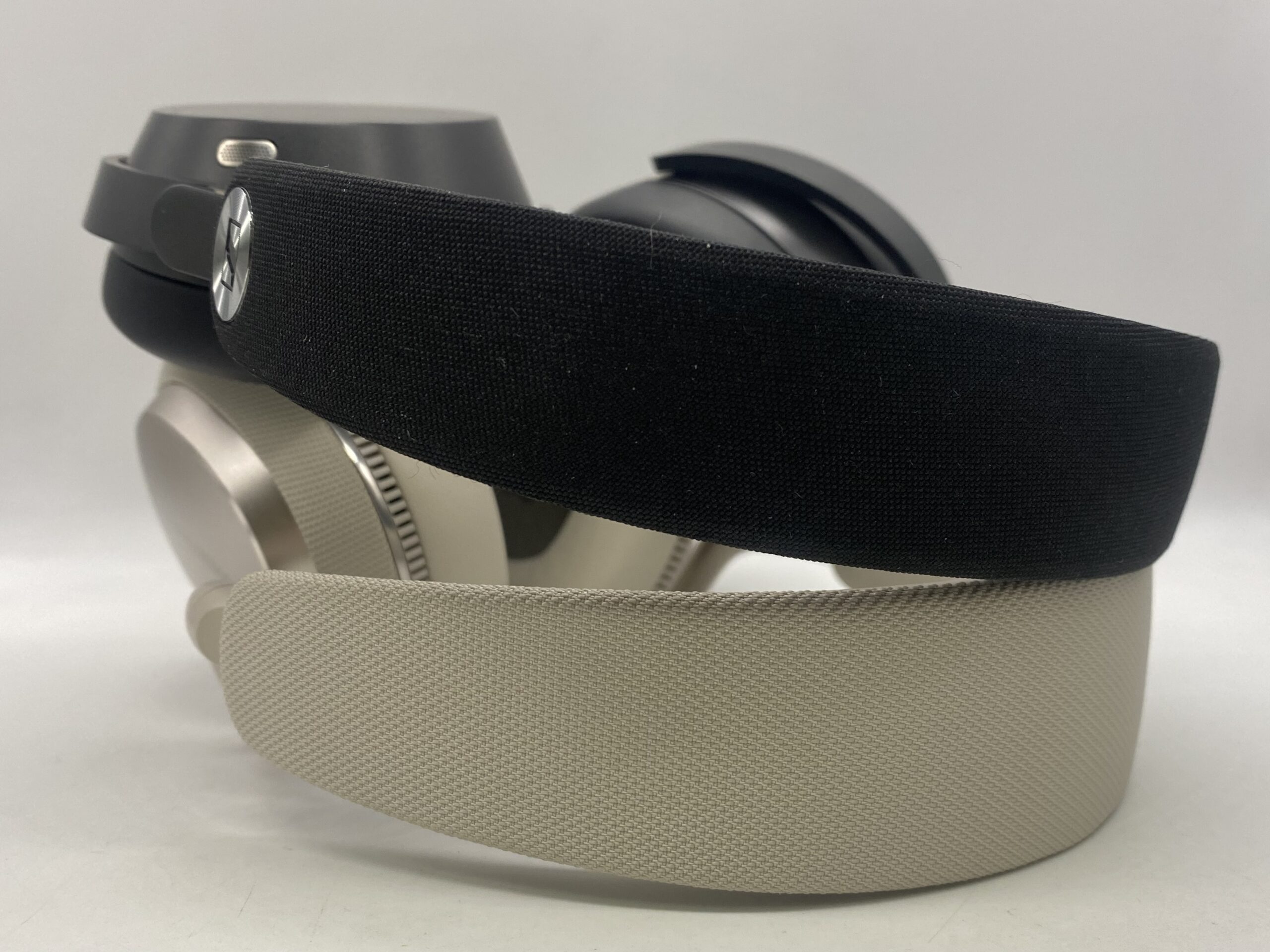
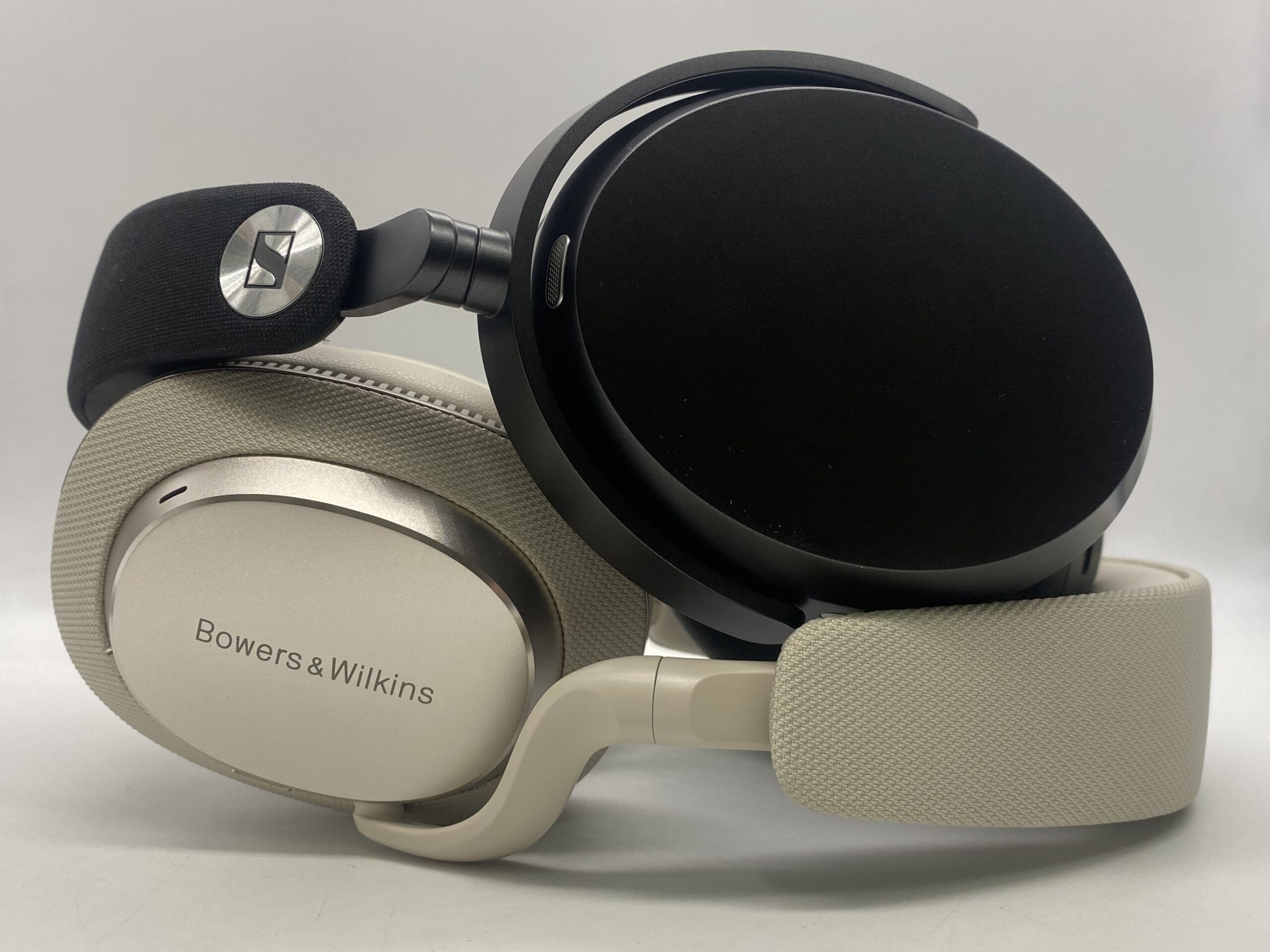
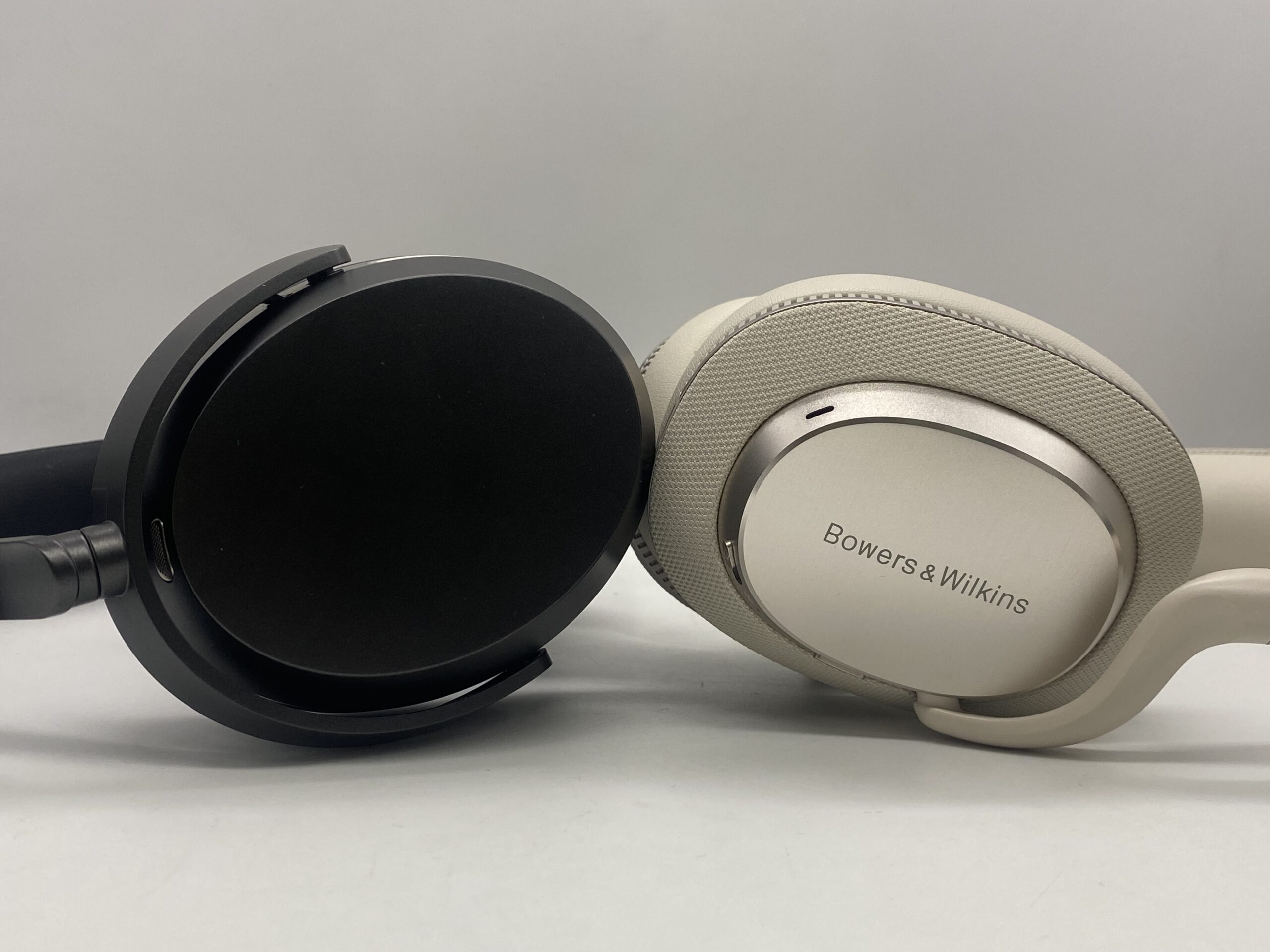
Both headphones have attractive designs, but the PX7 S3 feels like the more luxurious model. Bowers & Wilkins uses a compact frame with flattened ear cups, refined fabric accents, and a streamlined profile. Its lightweight construction and deeper ear cushions also make it more comfortable than some previous PX7 models. The design feels sophisticated without becoming excessively flashy.
The Momentum 5 maintains the practical, minimalist appearance of the Momentum 4 while adding a few touches that make it look more upscale. Its finish has a pleasant sheen, and the medallion-style Sennheiser logo gives the headband more personality. It still looks like an everyday consumer headphone, but it feels polished enough to compete in the premium category. Comfort is close. Both headphones can be worn for long sessions without causing significant fatigue. The Momentum 5 has soft cushions and a familiar lightweight fit, while the slimmer construction of the PX7 S3 helps it sit more naturally around the head. The PX7 S3 has the more distinctive design, but the Momentum 5 is just as practical for extended listening.
Design and Functionality
The Sennheiser Momentum 5 uses a 42mm dynamic driver, while the PX7 S3 features a 40mm bio-cellulose dynamic driver. Both produce enough output for everyday listening, although the PX7 S3 offers more noticeable headroom. The Momentum 5 reaches a comfortable level easily, but there is less extra volume available beyond that point. Noise cancellation gives the Momentum 5 a significant functional advantage. Sennheiser’s adaptive hybrid ANC uses eight digital microphones and does a better job suppressing environmental distractions. Its Smart Control Plus app also lets you adjust the level of cancellation, control transparency mode, reduce wind noise, customize touch commands, and alter the sound with EQ.
The PX7 S3 provides effective ANC, but isolation is not its defining feature. It reduces enough background noise for commuting and office use, although it is less complete than the Momentum 5. The Bowers & Wilkins Music app is also more straightforward, offering fewer opportunities to personalize the experience. Physical operation is another point of distinction. The PX7 S3 uses tactile buttons, which provide immediate confirmation and can be easier to operate while moving. The Momentum 5 uses responsive touch gestures for playback and volume. Its wear sensor is also quick to pause or resume music when the headphones are removed. Both headphones support USB-C audio. The Momentum 5 can receive audio at up to 24-bit/96kHz through USB-C, while the PX7 S3 uses its internal DAC and DSP to provide a true 24-bit wired connection. These modes give both models more value as desktop headphones, although the PX7 S3’s USB performance feels particularly central to its audiophile appeal.
Bluetooth
The Momentum 5 uses Bluetooth 5.4, while the PX7 S3 features Bluetooth 5.3. Both establish fast, stable connections and support aptX Lossless for compatible Android and Snapdragon Sound devices. Sennheiser provides a particularly extensive codec selection, with support for SBC, AAC, aptX, aptX HD, aptX Adaptive, and aptX Lossless. The PX7 S3 also supports SBC, AAC, aptX HD, aptX Adaptive, and aptX Lossless. Either headphone is a strong option for Android users who want higher-quality wireless audio. The Momentum 5 has a slight advantage through its newer Bluetooth version and flexible feature set, but everyday connection quality is dependable on both models. iPhone users will be limited to AAC regardless of which headphone they choose.
Battery Life
Battery life is one of the clearest differences in the Sennheiser Momentum 5 vs Bowers & Wilkins PX7 S3 comparison. The Momentum 5 offers up to 57 hours of playback with ANC enabled. This is nearly double the PX7 S3’s 30-hour battery and makes the Sennheiser much more convenient for travel, commuting, and long workweeks. Sennheiser has also designed the battery to be user-replaceable, potentially extending the useful lifespan of the headphones. Sennheiser lists up to 57 hours with ANC and a replaceable battery. Thirty hours is still enough for several days of normal listening, so the PX7 S3 does not have poor battery life in isolation. It simply feels less competitive when placed next to the Momentum 5. Anyone who regularly forgets to charge their headphones will find the Sennheiser significantly easier to manage.
Soundstage
Both headphones produce a spacious soundstage, but the PX7 S3 has the more precise and naturally holographic presentation. The PX7 S3 creates strong separation between the left and right channels, preventing the image from collapsing toward the center. Instruments occupy recognizable positions, and the presentation feels wide without relying on artificial spatial processing. It does not communicate an enormous amount of forward depth, but its layering and positional accuracy are exceptional for a Bluetooth headphone.
Sennheiser’s Momentum series has always performed well in this area, and the Momentum 5 continues that tradition. Its soundstage is broad, immersive, and organized, with enough room for individual elements to establish a clear identity. The imaging is accurate, although the presentation feels slightly less focused than the PX7 S3. The Momentum 5 also offers Dolby Atmos spatial audio. It can add height and scale to ambient recordings, film scores, and electronic music, but it may soften impact and make the image less precise. The standard stereo mode sounds more natural, while the PX7 S3 delivers its most immersive presentation without needing a separate spatial effect.
Low End
Bass is a major strength for both headphones, although their low-frequency presentations have different personalities. The Momentum 5 has the bigger and more expansive bass response. Its sub-bass produces a deep bloom that gives electronic music, hip-hop, and cinematic tracks a powerful foundation. The tone is thick and satisfying without becoming excessively bloated. Bass Boost and the app’s EQ can add even more weight for listeners who want a stronger rumble.
The PX7 S3 sounds tighter and bouncier. Its bass notes are pushed forward with clearer definition, making individual performances easier to follow. There is still plenty of impact, but it is more centered and controlled than the Momentum 5. Bass guitars and kick drums have an energetic character that keeps the sound moving without overwhelming the rest of the frequency range. Listeners who want deeper sub-bass and greater physicality should choose the Momentum 5. Those who prefer a cleaner, more rhythmic low end may enjoy the PX7 S3 more.
Mids
Neither headphone presents the midrange with complete transparency, but each preserves enough texture and definition to sound convincing. The Momentum 5 gives strings, vocals, and smaller instrumental arrangements a good sense of presence. Some complex mixes can appear hazy, and transients occasionally sound smoothed over, but there is still enough room around each instrument to maintain clarity. Its midrange feels open and natural, particularly with acoustic and orchestral material.
The PX7 S3 has a warmer, denser midrange. Fine details are not always exposed, but instruments have a satisfying surface texture and remain prominent in the mix. Its mids sound rich rather than analytical, complementing the headphone’s smooth bass and relaxed treble. The Momentum 5 is slightly clearer and roomier, while the PX7 S3 supplies more warmth and body. Vocal-focused and acoustic recordings may benefit from the Sennheiser’s openness, but listeners who prefer a lush presentation should gravitate toward the Bowers & Wilkins.
Highs
The Momentum 5 has the livelier treble response. Cymbals, bells, and upper harmonics have more bite, producing a clearer sense of attack without introducing much harshness. The highs are elevated enough to give the sound energy, and the roll-off does not noticeably shorten most reverberations or note tails. Bowers & Wilkins takes a safer approach. The PX7 S3 has a smooth, airy top end with a comfortable roll-off that avoids sharpness. It is easy to listen to for long periods, although it lacks some of the shimmer and extension that would make its treble feel truly revealing. Listeners sensitive to brightness will likely prefer the PX7 S3. Those who want more energy, definition, and presence in the upper frequencies should choose the Momentum 5.
Summary
The Sennheiser Momentum 5 is the better all-around wireless headphone for most listeners. Its stronger ANC, customizable controls, newer Bluetooth platform, extensive codec support, replaceable battery, and 57-hour playback time make it exceptionally practical. It also delivers a spacious sound with deep bass and lively treble, giving it enough personality to stand out from mainstream Bluetooth headphones.
The Bowers & Wilkins PX7 S3 is the more specialized choice. Its premium construction, focused bass, warm mids, and precise imaging create a refined listening experience that feels closer to a traditional hi-fi headphone. Its USB-C DAC functionality also makes it appealing for listeners who plan to alternate between wireless playback and wired desktop listening. Bowers & Wilkins confirms Bluetooth 5.3, aptX Lossless, and USB-C audio support. The Momentum 5 wins for travel, battery life, ANC, and everyday versatility. The PX7 S3 wins for style, imaging, and a smooth, carefully controlled sound signature. Both are excellent premium Bluetooth headphones, but they appeal to different priorities.
The Sennheiser Momentum 5 and the Bowers & Wilkins PX7 S3 are available at Audio46.