
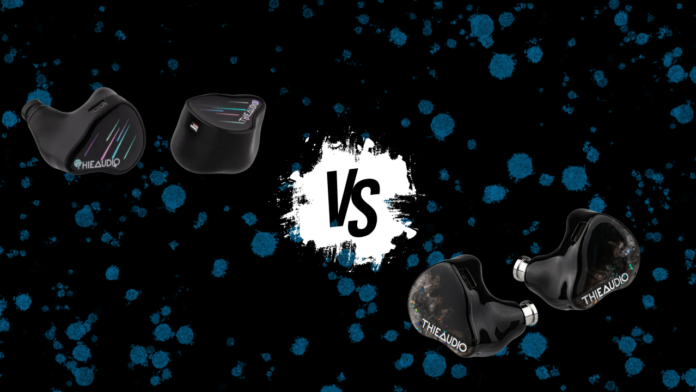
Thieaudio’s Monarch series has become one of the most recognizable names in the high-end IEM market, giving audiophiles a strong mix of technical performance, premium design, and engaging tuning. With the Monarch MKIII, Thieaudio delivered one of its most exciting thousand-dollar IEMs yet, combining a holographic soundstage, powerful bass, and crisp treble. Now, the Monarch MKIV continues that legacy with a revised 10-driver tribrid setup, updated build elements, and a new tuning direction that aims for greater control and refinement.
Both models sit in a similar flagship space, but they do not present music in exactly the same way. MKIII feels more spacious, vivid, and grand, while MKIV tightens the image, adds a more focused stereo presentation, and introduces a rumble mode that gives its low end a new level of physicality. If you are deciding between the Thieaudio Monarch MKIV and Monarch MKIII, this comparison breaks down where each model stands out.
What You Get
| Monarch MKIII | Monarch MKIV |
|---|---|
|
|
Look & Feel
Between the two, MKIV feels like the more polished and premium design. The Monarch MKIII already had a strong design language, continuing Thieaudio’s tradition of colorful, high-art faceplates and ergonomic resin shells. Its smaller shell made it more approachable than earlier Monarch models, with a natural fit that provided solid comfort, seal, and isolation. It still feels like a refined audiophile IEM, with enough visual flair to separate it from more understated designs. However, the Monarch MKIV takes the visual design a step further. Its Stellashot design gives it a more elegant and mature aesthetic, with meteorite-like streaks that look premium without becoming too flashy. The aluminum shell adds durability, while the shape remains secure and comfortable in the ear. Some Thieaudio IEMs can feel large, but MKIV keeps its size reasonable enough for longer listening sessions without feeling too intrusive. The MKIII is still comfortable and visually appealing, but MKIV has a sleeker finish and a build that feels more evolved.
Design
On paper, both IEMs are similarly ambitious. In practice, MKIV feels like the more controlled and customizable evolution, while MKIII focuses more on immediacy, scale, and excitement. The Monarch MKIII uses a tribrid configuration with dual dynamic drivers, six balanced armatures, and two electrostatic drivers. One of its biggest design highlights is Thieaudio’s IMPACT2 system, which acts like a subwoofer and helps give the MKIII its deep, gripping bass response. A four-way crossover with nine separate passive components also helps divide the frequency range with precision. The Monarch MKIV keeps the same general tribrid philosophy but updates the configuration with dual 8mm dynamic drivers, six Sonion balanced armatures, and two electrostatic drivers. It also uses a passive four-way crossover with four independent sound tubes, separating low, mid, high, and ultra-high frequencies. IMPACT2 returns here, but MKIV adds a major tuning feature with its rumble mode switch, giving listeners the option to increase bass power and physicality.
Soundstage
The Monarch MKIII has one of the most impressive soundstages in the Monarch line. It presents music with extensive width, strong layering, and a holographic sense of space. Instruments and effects feel like they are jumping out in front of you, creating a presentation that feels immersive without sounding artificial. Its imaging is highly accurate, but what makes it special is how naturally it surrounds you with depth and movement. The Monarch MKIV takes a different approach. Instead of going for the same open, dome-like headspace, it reins in the stage for better control and articulation. The MKIV has a wide stereo field, but it feels more front-facing and studio-like than the MKIII. Imaging is still very accurate, with clean separation and graceful layering, but the space is more linear and controlled rather than holographic. This is one of the biggest differences between the two IEMs. The MKIII is the better choice if you want a more expansive and immersive soundstage. The MKIV is better if you want tighter imaging, cleaner organization, and a more monitor-like spatial presentation.
Low End
Bass is one of the Monarch MKIII’s strongest qualities. Its low end has a gripping timbre, deep extension, and strong impact. It delivers enough weight to satisfy listeners who enjoy bass-heavy music, but it also maintains clarity and texture. The sub-bass and mid-bass both have good body, giving the MKIII a full and dynamic foundation without losing control. The Monarch MKIV goes even further with bass thanks to its rumble mode switch. With rumble mode turned on, the MKIV produces a deeper, smoother, and more physical bass response. The sub-bass reaches low with excellent definition, creating a rich and transparent rumble that feels more tactile than the MKIII. With rumble mode off, the bass is still clear and detailed, but the lift is reduced for a more balanced response. The MKIII has a more naturally integrated bass response, while the MKIV gives you more flexibility and more physical slam when you want it. If bass impact is your priority, the MKIV has the edge, especially with rumble mode engaged.
Mids
The MKIII’s mids feel a bit more expressive and colorful, while the MKIV’s mids are more refined and controlled. Both are strong, but the MKIV has the cleaner sense of organization, while the MKIII has a more vibrant character. The Monarch MKIII has clean, transparent mids with a slight low-mid lift from its expressive bass response. The midrange remains mostly neutral, but it never sounds thin or recessed. Upper mids are especially strong, giving instruments and vocals a vivid sense of attack, decay, and identity. This makes the MKIII sound lively and detailed without losing musicality. The Monarch MKIV keeps the mids energetic and well-balanced, even with its stronger bass option. The midrange has good body, excellent organization, and a clear monitor-like quality. Instruments sound precise and well-separated, with enough weight to keep the signature from becoming overly analytical. When rumble mode is active, the low mids gain a small amount of warmth, but not enough to cloud the overall presentation.
Highs
For treble lovers, the MKIII might be the more exciting option. It has crisp, colorful highs with a strong sense of sparkle. Its treble is bright enough to bring out air and detail, but it avoids harshness by keeping its upper frequencies controlled. This gives cymbals, strings, and ambient textures a satisfying ring, making the MKIII especially engaging for listeners who enjoy energetic treble. The Monarch MKIV smooths things out a bit more. Its highs are airy and clear, but they do not rely on heavy brightness or piercing textures. The treble has a glimmering quality that adds color and realism, while staying controlled across the region. It still occupies a wide area, but it feels more refined than aggressive. For listeners who want clarity without as much bite, the MKIV is the safer and more polished choice.
Summary
The Thieaudio Monarch MKIV and Monarch MKIII are both excellent flagship tribrid IEMs, but they serve slightly different preferences. MKIII is more open, holographic, and exciting, making it ideal for listeners who want a big and highly immersive sound. MKIV is more focused, controlled, and physically engaging, with a bass switch that gives it extra versatility without sacrificing clarity. For pure soundstage immersion, Monarch MKIII still has a special quality. For overall refinement, bass flexibility, and a more modern flagship tuning, Monarch MKIV feels like the stronger all-around pick. Both models show why the Monarch series remains one of Thieaudio’s most important lines, but MKIV ultimately feels like the more complete next step.
The Thieaudio Monarch MKIII and MKIV are available at Audio46 and Linsoul.