
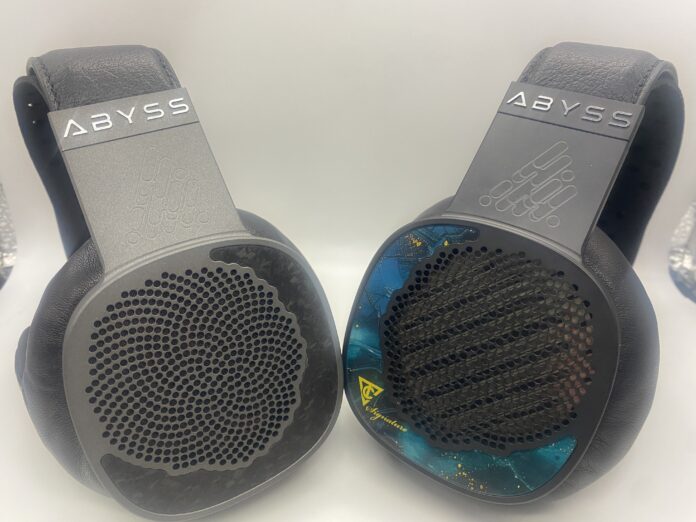
ABYSS’s Diana line establishes itself within the high-end audio space through luxury sound, build quality, and groundbreaking technological innovations. Two different revisions to previous entries, the MRx and TC Signature, released this year with very different takes on their planar magnetic formula. Where do each exceed? What should buyers know when deciding between them?
What You Get
| MRx | TC Signature |
|
|
Look and Feel
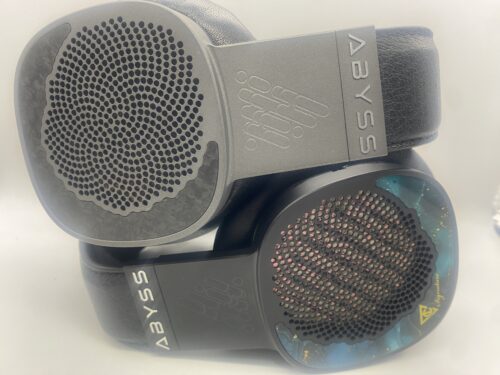
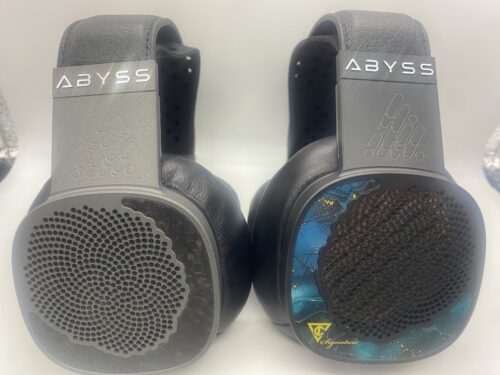
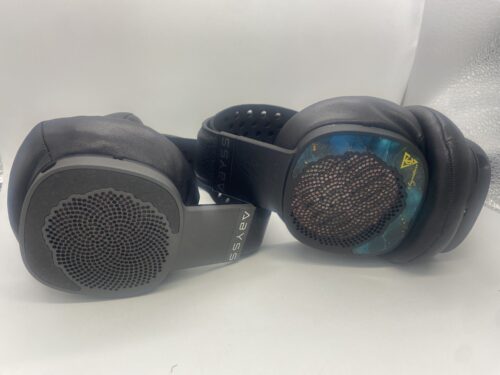
Given they come from the same line, much of the difference comes down to color and material. The carbon and wood options of the MRx have concrete, rigid patterns, making them a complimentary piece that fits almost any vibe. Overlapping teal textures with neon yellow highlights on the TC Signature show significantly more confidence, giving the headphones a statement look deserving of a true luxury pair. While I’m personally preferential to the natural-colored plate finishes of the MRx, those looking for unique personality in their gear will really like the TC Signature.
As for build, they are almost exactly the same. Both are crafted with aircraft-grade aluminum, a polymer-ceramic finish, a high-end leather headband, and an Ultrasuede suspension strap. The only particular difference is the TC’s bass ported ear pads, which further enhance the low end. However, these pads can be purchased independently for the MRx. All these similarities meant the differences in feel were very slight, likely created by the different technical specs. I found the MRx to be lighter, and the TC Signature to be tighter.
Design and Functionality
Being a reference headphone, much of the priority with the MRx is ensuring a flat frequency response. The Diana line of headphones is already known for its bass, especially with the TC Signature-pioneered Extended Bass Response, so there is unique expectation of performance. Abyss meets the challenge with 63mm MRx planar-magnetic speakers designed with the TC Signature’s EBR. The MRx’s driver setup intends to further tune the sound to squeeze even more out of the low end, providing reference quality for every point of the range.
The TC signature uses its own 63mm planar driver with EBR, but specifically emphasizes its neodymium magnet and ultra thin diaphragm. Designed for a more general reference quality, this driver is tuned to push clarity through all ranges. Additional intent is still given to the bass, with its combined EBR and pad setup contributing to a range that goes 1 Hz lower than the MRx.
Switching between them, I noticed a staunch difference in sound output. Even with similarly low sensitivity, having over double the impedance of the MRx makes the TC signature a much quieter headphone. With this low sensitivity, both will likely still require an amplifier. For this review, I used the Questyle M18i, which aptly gave both headphones the power they needed.
Soundstage
The Soundstage of the MRx is incredibly distinct. Almost akin to a bell curve, the available depth and verticality seemed to correlate with closeness to the center of the sound. That does not imply compromise at the polar ends; the farthest reaches of the stage are still given a lot of room, and instruments feel consciously placed and appropriately layered. These qualities result in a much more intimate listening experience, which helps the bass better stand out.
By contrast, the TC Signature’s scale feels more uniformly grandiose. If musicality weren’t a factor, they almost feel as though they could expand on forever. Precision in instrument placement was distinct and detailed, giving this infinite sense of space a complimentary disciplined feel. Both of these models flex impeccably large stages, though their staunchly different shapes make comparison up to personal preference.
Low End
As a bass reference headphone, it should make sense that the low end is the MRx’s defining range. The MRx effortlessly handles the lowest notes with a definition and grace made further realized by the intimate soundstage. While not giving the range a serious weighted force, what’s there gives the dynamic low end a sensible underbelly. Every level is given proper room to flourish, never feeling bogged down or sludgy.
Abyss also gave the TC Signature much attention to its bass range, but their priorities here are slightly different. The headphones have a bit more force than the MRx, creating a more energetic, if less nuanced range. Texturing of the bass is still excellent, it just unfortunately comes short in comparison to a headphone prioritizing the range. Even with this very light difference, the bigger punch of the TC Signature gives the headphones their own statement at the low end.
Mids
Mid ranges on the MRx are certainly not overshadowed by the focused lows. Instruments and vocals are given the room and clarity they need to stick out and shine, most notably in the lower mid range. Vocals are especially empowered, made all the more rounded by the MRx’s closer soundstage. Even with bass at the forefront, the mids still hold their ground and remain a strong asset in the mix.
With less priority in the bass, the TC Signature has more opportunity to push the mids. More than that, they are able to flourish, blessing the mix with a sharp and polished energy. The entire spectrum feels considered and weighty. As was true with the MRx, the TC Signature’s soundstage compliments the intricacies provided by such a broad midrange.
Highs
Placing focus elsewhere means the highs aren’t as substantial. I’d say this point is more noticeable on the MRx, which keeps the range more stylistically static. They’re certainly not cloudy, just hesitant to move anywhere that would create brightness. All of this serves to deepen the bass and lower mid ranges, keeping much of the reference-quality within the planned design.
The TC signature has a bit more to work with, but the highs are still noticeably less pushed. There’s some sheen in the lower ends, but nothing that might feel obnoxious within such a grandiose soundstage. Regardless, these are still luxury headphones in quality and price, so none of this is to imply a lack of intent for either pair.
Summary
These renditions to the Diana model both hold competitive ground within luxury audio. With its holistic bass approach, supportively close soundstage, and more comfortable build, the MRx is a pristine reference headphone that goes all in on supporting the lowest frequencies. By contrast, the TC Signature flexes an infinite scope of sonic quality and stage prescense, advertising a more uniform appeal.
Deciding between headphones comes down to personal priorities. If you are looking to add a no-fluff bass headphone to your collection, the MRx makes a seriously strong case. However, those looking for a less tunneled luxury headphone might find more with the TC Signature.
The MRx and TC Signature are available at Audio46.