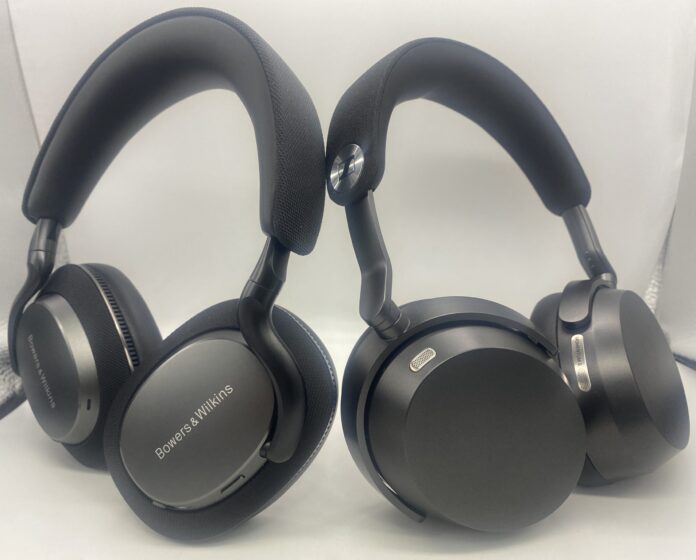
Premium noise cancelling headphones remain an exciting, competitive market with new innovations feeling incredibly frequent; two reasons for such being Sennheiser and Bowers & Wilkins. This month, Sennheiser released their latest entry in the Momentum wireless headphone series, the Momentum 5. Comparing them side by side with B&W’s latest premium wireless headphones, the Px7 S3, how does this new edition stand out amongst its peers? Can the Px7 S3 maintain relevance as its competition updates their inventory?
What You Get:
| Momentum 5 | Px7 S3 |
|
|
Look and Feel
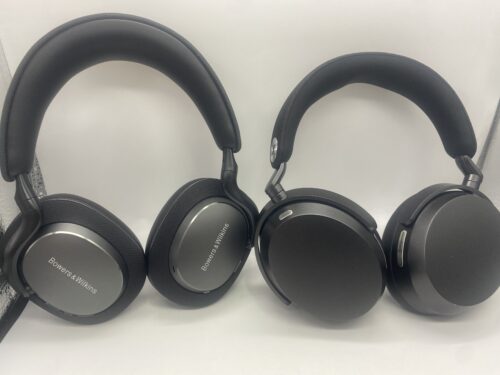
The Momentum 5’s play more to subtlety in aesthetics and comfort alike. Absent any visual flair, the shell is purely flat colors, with slight accents on the side buttons, headband and metallic logo. Definitely not outwardly exciting like the Px7 S3’s, but the market for this design is more universal. Initially feeling the pads as less cushioned than the Px7 S3’s, I was surprised at how comfortable these headphones were overall. I would likely forget they were on my head if I wasn’t playing music. For a lengthy workday or commute, the Momentum 5’s might be a more relaxing choice. This light weight sadly compromises sturdiness, however, as the Momentums feel weaker in construction than the tougher build of the Px7 S3.
The Px7 S3’s want you to know they’re a premium product. Each layer of the plates has a different texture, cleverly expanding its slimmer profile. A variety of colorways allows for more personal customization beyond the sound. The material of the band feels thick and durable, complimenting the quality look. Unfortunately, these different materials contribute to a heavier, tighter fit. The pads themselves have more padding than the Momentum 5, but Sennheiser’s build provides a less obtrusive feel that stays comfortable in long-term use. While this is entirely subjective, I’m also less into the text logo on the outer plates. It certainly emulates the brand confidence of other high-end products, but I much prefer something like the sleek logos on the sides of the Momentum 5 headband.
Design and Functionality
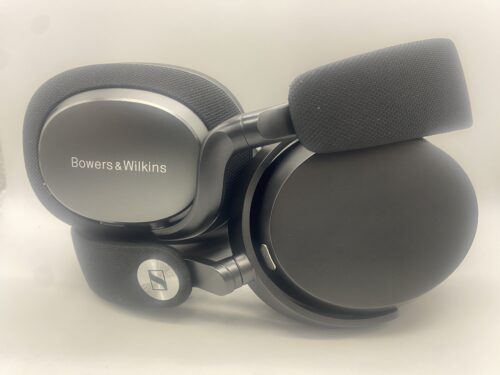
Both headphones are tuned through a similar-sized set of dynamic drivers, with the Momentum 5 being slightly larger. They additionally establish themselves within the premium wireless market with high-end features like Active Noise Cancelling, transparency mode and smartphone integration.
Comparing these two back-to-back emphasizes the Momentum 5 as being significantly quieter. Fortunately for Sennheiser, however, they cover this shortcoming with superior noise-cancelling technology. Not just in raw noise blockage, but through dynamic customization too. Either directly through the phone or on the Sennheiser “SmartControlPlus” application, users can choose their ANC or transparency level down to the percentage.
Speaking of the application, it is leagues beyond the Bowers & Wilkins app, and most others for that matter. Its wide range of features are compiled under a very smooth UI. Most notably for audiophiles is the 10-band EQ, which doubles the customization of the Bowers & Wilkins 5-band EQ. The Bowers & Wilkins app has integration with streaming, which is certainly interesting, but the UI’s social media stylized model feels cheap and confusing.
For more subjective comparisons, I’m always more inclined towards button controls as opposed to tapping. While the pure touch controls of the Momentum 5 certainly contribute to the sleek look, pinching and pulling for noise cancelling felt much more awkward than the button activation of the Px7 S3. Having touch controls also makes the headphones more susceptible to error after longtime use, not doing much favors to the already decreased durability of the Momentum 5.
Bluetooth
Both headphones carry strong connections, especially due to sharing aptX Lossless, aptX Adaptive and AAC codec support. I found little difference in responsiveness during my personal use, but there are some technological differences. The Momentum 5 has a more updated Bluetooth, being 5.4 to the Px7 S3’s 5.3. The Px7 S3 has additional codec support with aptX HD, aptX Classic and SBC also being available.
Battery
In terms of battery, the clear winner is Sennheiser. Using both with ANC, the Momentum 5 nearly doubles the Px7 S3’s 30 hours of playback with a dwarfing 57 hours. The battery also charges slightly faster. To acquire seven hours of battery, the Px7 S3 needs 15 minutes to the Momentum 5’s 10. This gap expands ever further as the Momentum 5’s battery is entirely replaceable, making the Momentum 5 a longer lasting headphone altogether. Granted, both headphones carry more than enough battery for any user willing to charge regularly.
Soundstage
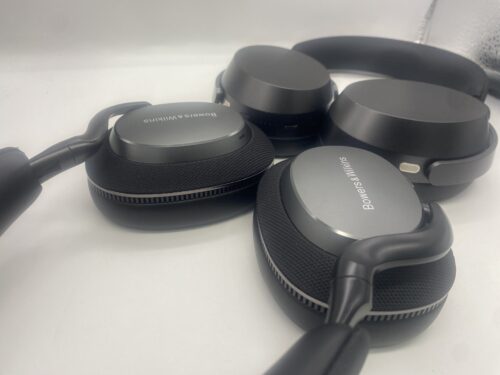
The soundstage of the Momentum 5 is surprisingly large and multidimensional. Instruments and sounds felt conjoined yet meticulously layered, giving the headphones a sense of grandiose not often felt with a closed-back design. The soundstage can become more fluid through support of Dolby ATMOS, allowing for 3D Spatial Audio.
I found the Px7 S3 to be a more intimate soundstage. Still broad in comparison to other closed back headphones, but the Momentum 5 was distinctly expansive. Even so, the mix never felt cloudy in instrumentally busier tracks, making them my preference for smaller bands and solo performances.
For the closed-back market, each makes an impressive showing. Their specific strengths slightly differ, however, making it up to personal preference.
Low End
The differing ways Bowers & Wilkins and Sennheiser tune their dynamic drivers contribute to strong basses with opposing strengths. Sennheiser brings with it much more force. That is not to say the bass doesn’t have thought behind it; the overall mix uses the low end to prioritize musical spectacle over all. In a lead supportive role, the bass feels emotionally dense and complimentary to the mids and highs.
The Px7 S3 leans more on precision than raw power. You won’t feel as much of a rumble on large hits, but each note feels impeccably rich and defined. Smaller progressive bands with intricate bass parts like Rush or Primus are a treat to listen to with these headphones, as each guttural instrument pluck feels further appreciated within the smaller sound stage. While electronic dance music typically implements a forceful low end, I found trading weight for nuance recontextualized songs in compelling ways.
In selecting which headphone is better for you, this staunch difference between bass ideology might be a deciding factor.
Mids
Midrange with the Momentum 5 is not as outwardly impressive as the low end, but the mids remain particularly supported towards the lower range. This comfortable, warmer signature further contributes to the relaxing, musical design philosophy of the headphones. The Px7 S3 carries similar strengths, but its clarity and sharpness are still present throughout the midrange frequencies. Instruments and vocals feel individually responsive yet blended, giving the range a fully actualized identity.
Highs
Moving into the highs, the Momentum 5’s maintain their appeal with a more rolled high, but I still found them appropriate for the rest of the headphone’s range. They’re allowed to be felt, but any significant peaks that could be seen as bright are sanded off. The Px7 S3 keeps them appropriately glossy without becoming overbearing and bright. There’s a tight control to the highs that I really liked, allowing them to feel broad in scope yet remain crisp and sparkly.
Summary
Both the Momentum 5 and the Px7 S3 carve distinct but competitive paths through the field of premium wireless headphones. Flexible features, powerful battery and lighter build define the next evolution of the Sennheiser brand. The Px7 S3’s distinct sonic identity, premium look and reliable durability combine to create a headphone that stands out in sound and style. Deciding which headphone is the better option lies solely in personal preference. If you are drawn to robust features and comfort, the Momentum 5’s warmer sound and cushiony feel will be more appealing. Somebody looking for a tougher shell and unique signature for their collection might feel more at home with the Px7 S3.
The Momentum 5 and Px7 S3 are available at Audio46.