


I’m always curious to hear what Noble Audio does with its next pair of true wireless earbuds. The brand’s background in wired IEMs gives me a good reason to pay attention, especially in a category with so many premium options. Going into my time with the Noble Audio Astrid, I had one question in mind. Would these be the earbuds I’d keep reaching for?
What You Get
- Astrid True Wireless In-Ear Monitors
- Charging Case
- USB-C Charging Cable
- Pouch
- 6 Pairs of Ear Tips
Look & Feel
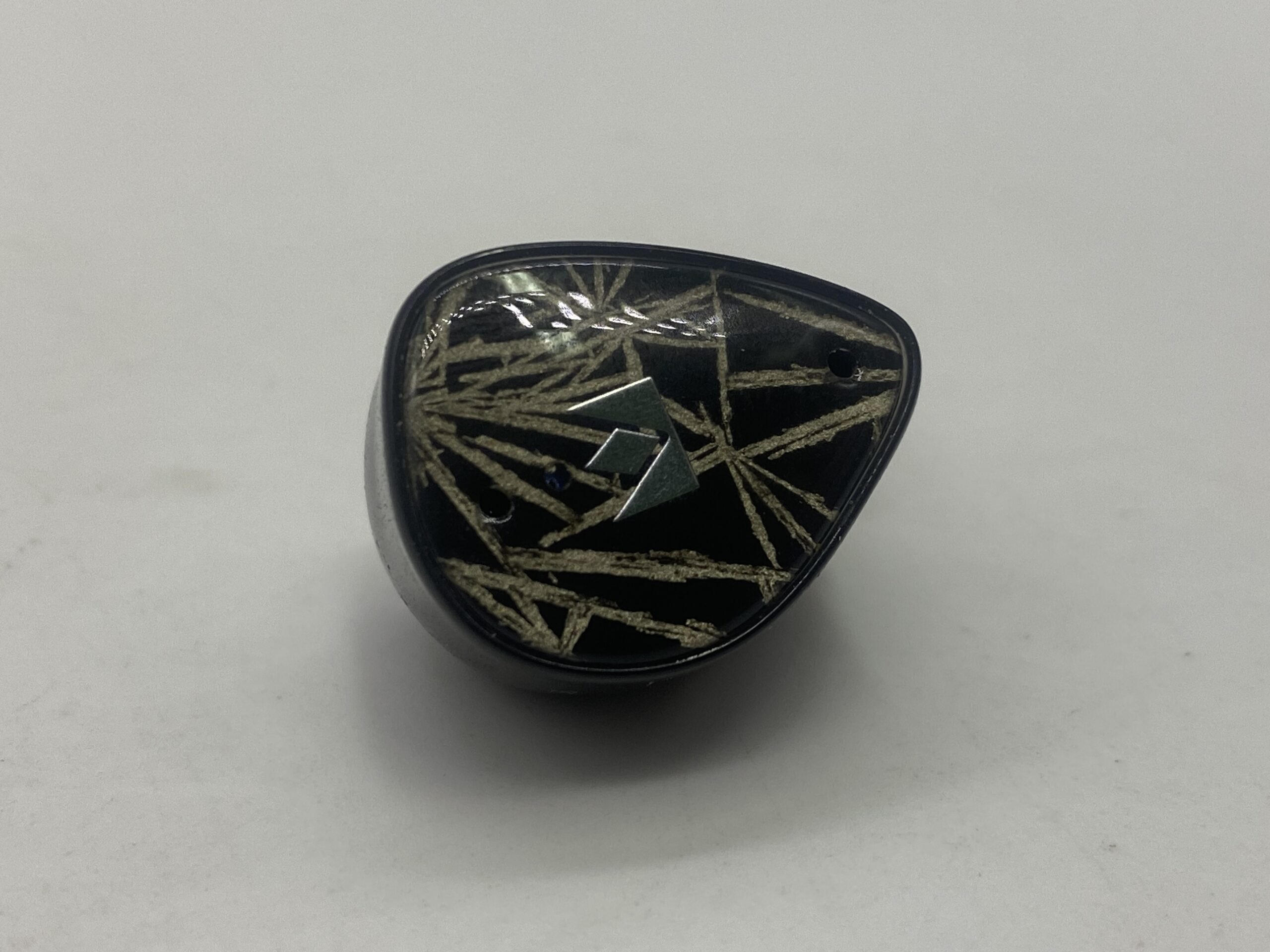
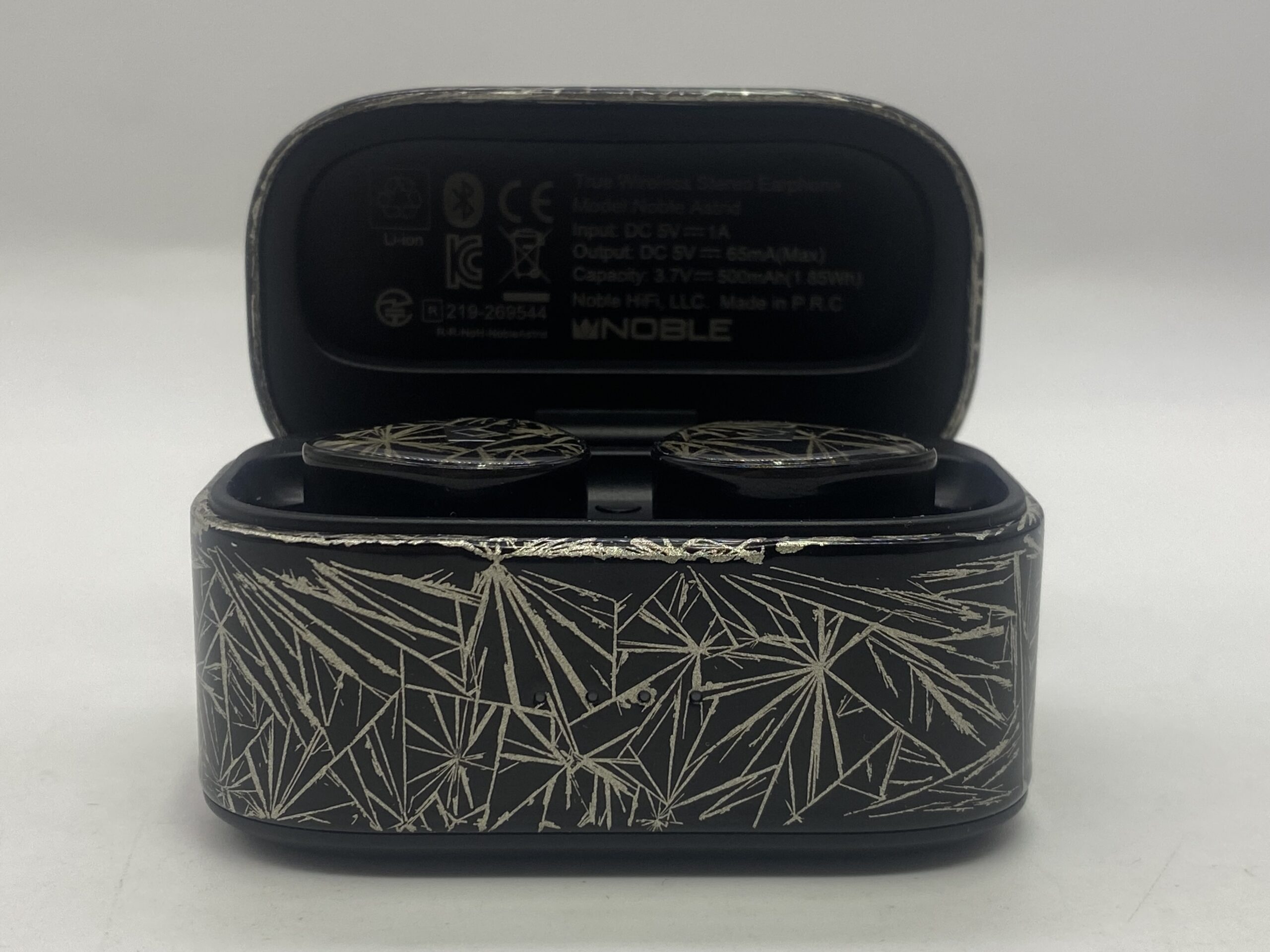
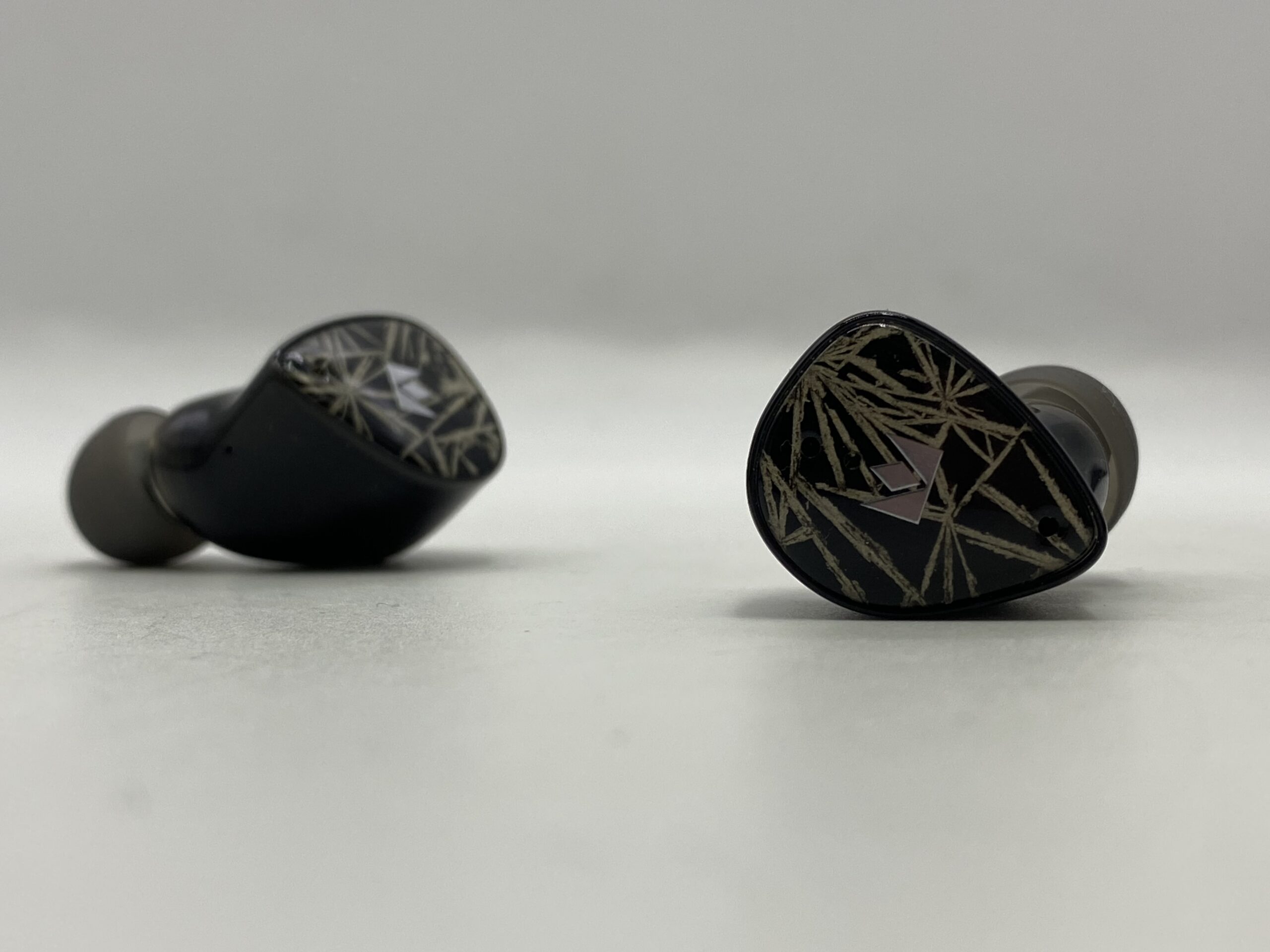
Noble Audio produces some of the best-looking true wireless earphones on the market. The Astrid keeps that up with its earbud and charging case design that resembles cracked ice, represented by streaks of silver lines on top of a glossy black surface. There are a lot of true wireless earbuds that have stylish designs, but the Astrid is definitely one of the coolest-looking. What carries over from other FoKus models is the shell shape. The Astrid takes the look of Noble’s IEMs and makes them wireless, making for an ergonomic fit that melds with the natural grooves and ridges of your ear cavity.
In terms of how it compares to other models from the FoKus series, the Astrid is closer to the Prestige Encore than the larger shelled Rex5. Wearing the Astrid feels like wearing an IEM. The shell sticks out and is supported by a wide spout that holds it in place. My ears never felt fatigued, and the shell is a good size that sits right.
Design & Functionality
The Noble Audio Astrid uses a three-driver hybrid design in each earbud, pairing an 8.3 mm dynamic driver with a 6 mm planar driver and a single balanced armature. The dynamic driver features a polyurethane diaphragm with an aluminum-magnesium alloy dome, combining a flexible diaphragm material with a rigid metal dome. Together, the three driver types make up a system with a rated frequency response of 20 Hz to 20 kHz.
In terms of noise canceling, these audiophile brands that also make ANC earbuds usually put this feature on the back burner. I think the Astrid has uncharacteristically good noise canceling. It never feels like an afterthought, as the Astrid gives you effective isolation for most obstructive noise. It quiets the environment and leaves you with just your music without distraction. This doesn’t stop the Astrid from being a sound quality-first wireless earphone. The Noble FoKus app helps with this, offering two ways to tailor the sound. Audiodo Personal Sound runs a short hearing test for each ear and uses the results to create a profile that adjusts playback to your hearing. Audiodo Equalizer lets you fine-tune the bass, midrange, and treble to suit your preferences.
Bluetooth
The Noble Audio Astrid uses Bluetooth 6.0 with a Qualcomm QCC3091 chipset and supports LDAC, aptX Adaptive, aptX, AAC, and SBC. LDAC and aptX Adaptive offer higher-quality wireless playback with compatible source devices, while Bluetooth multipoint lets you stay connected to two devices at once, such as a phone and laptop.
Battery Life
The Noble Audio Astrid offers up to 11 hours of playback per charge, with the charging case bringing total listening time to up to 40 hours. Actual runtime depends on your settings. Each earbud has a 65 mAh battery, and the 500 mAh case supports both USB-C and wireless charging.
Soundstage
Noble Audio has consistently been at the top of its game when it comes to Bluetooth soundstages. The Astrid keeps up the pace, delivering one of the widest soundstages with some of the most precise imaging I’ve heard in true wireless earbuds, only outdone by Noble’s Prestige Encore. Compared to most other big-brand consumer earbuds, the Astrid is in a totally different class, where it has more in common with wired IEMs than it does with wireless earphones. Its presentation is still linear, but that doesn’t mean the Astrid can’t communicate a certain level of depth in its sound.
Spatial positioning is pretty succinct, with good separation that highlights channel identity. You can totally assess a space with the Astrid, as it feels clear and organized. Layering is delivered in a believable fashion, but it’s stacked flatly across the stereo field. This doesn’t take away from the soundstage’s immersion, but it does lessen the Astrid’s headspace. Even with an interior display, the Astrid can feel pretty cavernous and dimensional at times, which is what makes it a better comparison with IEMs than true wireless earphones.
Low End
Bass frequencies are tight but tonally rich in their default setting, with slight tweaks to EQ increasing its body and resonance. It never quite sinks deep, but the lows still exhibit some strong rumble that adds clear vibrations that are easy to feel gripping. Physical bass instruments feel big but still shaped without being boomy. With that said, you can certainly make the resposne boomy yourself through the in-app EQ. The bass has more than enough clarity and thickness without it, showcasing a solid thud that is consolidated rather than foggy.
It can take a step back when the track asks it to, but the Astrid doesn’t hold back when the bass needs to really deliver on growling grooves. While the frequencies showcase good separation in the mix, everything feels stationary in the lows. You get this very prominent body of tone that does enough to energize the sound signature, but I kept wanting it to go just a bit deeper. With that said, the bass is lively and dynamic enough to entice any listener.
Mids
The midrange is mainly low-end dominant in its default tuning, but it stays clear and detailed rather than bloaty. Using the EQ curve in the app helps balance things out a bit more, but I don’t find the factory settings any less natural. Instruments stay well-defined even when tilting toward the warmer end of the spectrum. This gives the midrange a clear form that leads to fuller instruments. While not as physical as the bass resposne, the mids still show a sense of accuracy with their note clarity. There isn’t much finesse to the transients, but they still cut through the mix quite well. Vocals are slightly veiled in the mix in a way that dampens the crispness of the upper-mids.
Highs
In the treble, the Astrid features areas of sparkle without harshness, but for the most part don’t call much attention to themselves when the track doesn’t ask it to. For this section, I really had to listen for the most sizzley hi-hats and the most twinkly tambourines to get a sense of what the identity of this treble was. I was quite happy when I got to hear what it can do, but it’s not a consistent response. Sometimes the highs just sit back and are very relaxed, and other times, the highs ring out and show off some airiness and height. EQ can help give these frequencies a more consistent presence in the mix, but I think most listeners will be happy with its laid-back approach.
Summary
The Noble Audio Astrid stands out for its soundstage. It’s one of the widest I’ve heard from true wireless earbuds, and the precise imaging makes it easy to follow individual instruments in a busy mix. The tuning is warm and full, with tight bass, clear lower mids, and relaxed treble that can still sparkle when the track calls for it. I wanted a little more sub-bass depth and vocal presence, and the app’s EQ gives you room to adjust the balance. Between the comfortable IEM-style fit and effective noise canceling, the Astrid is easy to recommend if spacious sound is high on your list.

The Noble Audio Astrid is available at Audio46.