
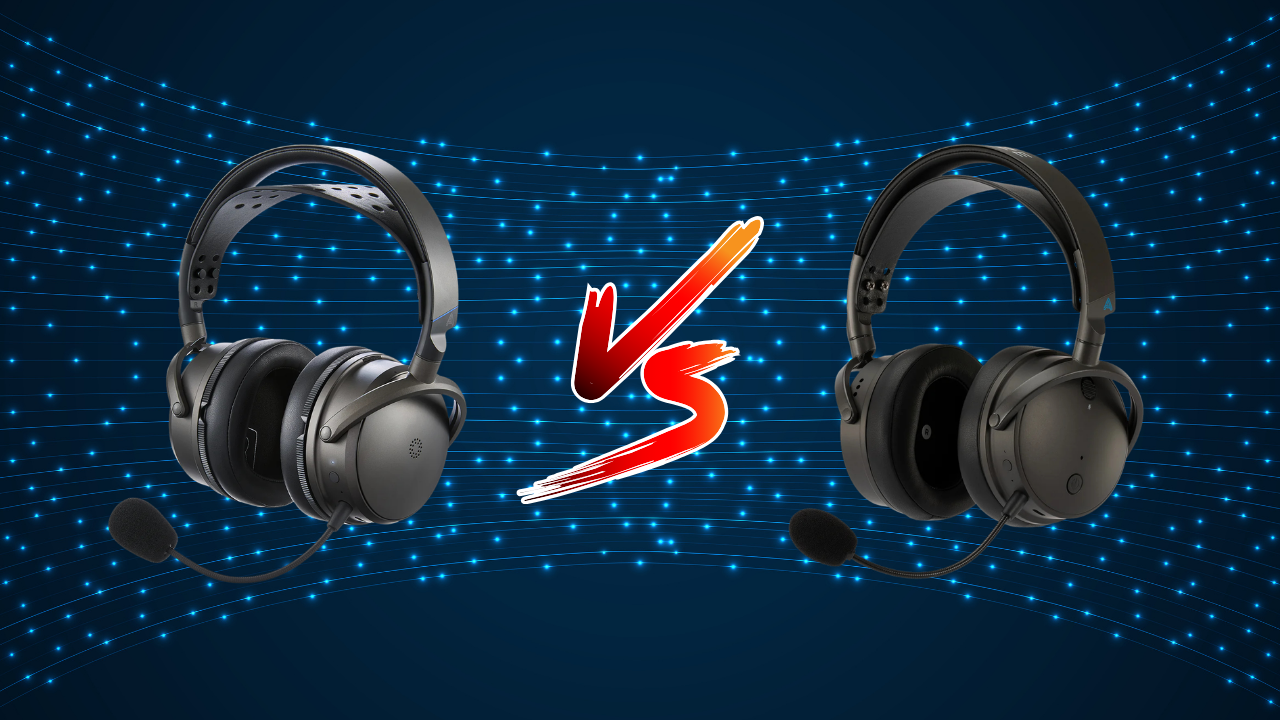
When Audeze released the original Maxwell, it redefined what a wireless gaming headset could be, introducing planar magnetic drivers and audiophile-level tuning into a space typically dominated by convenience-focused designs. It quickly became a benchmark for gamers and listeners who wanted more than just functionality; they wanted fidelity. With the Maxwell 2, Audeze returns with a product that doesn’t aim to reinvent the formula, but rather refine it. Based on the differences outlined in both reviews, the question isn’t whether the Maxwell 2 is better; it’s how much better it is, and whether those improvements justify an upgrade.
What You Get
| Maxwell | Maxwell 2 |
|
|
Look & Feel
The original Maxwell established itself as a durable, premium-feeling headset with an almost industrial build. Its solid frame and high-quality materials gave it a reassuring sense of longevity, though this came at the cost of added weight. For many users, that weight became one of the defining characteristics of the headset, offering stability but also contributing to fatigue during longer sessions.
The Maxwell 2 retains this same design philosophy while introducing subtle ergonomic refinements. Audeze has implemented a wider suspension strap with improved ventilation, along with revised padding that aims to distribute weight more evenly across the head. These changes are clearly intended to improve long-term comfort, but in practice, the headset remains quite heavy. While the updated design may reduce pressure points, it doesn’t dramatically change the overall wearing experience. Both models ultimately occupy the same category: premium, sturdy, and slightly weighty headphones that prioritize build quality over lightweight convenience.
Design
At the core of both the Maxwell and Maxwell 2 is the same defining feature: Audeze’s large 90mm planar magnetic drivers. This is a significant departure from the dynamic drivers typically found in gaming headsets and is largely responsible for the Maxwell line’s standout audio performance. Planar magnetic drivers are known for their fast transient response, low distortion, and ability to render complex audio with precision. In both models, this results in a highly detailed and layered presentation that excels in both gaming and music playback. The Maxwell 2 continues to use this same driver architecture, but incorporates Audeze’s updated SLAM acoustic technology to further refine bass response and spatial accuracy. Rather than introducing a completely new driver system, Audeze has focused on optimizing what already worked exceptionally well.
Microphone Quality
Microphone quality sees one of the most noticeable improvements in the Maxwell 2. While the original Maxwell already offered solid performance with its detachable boom mic, the newer model introduces enhanced noise filtering and improved vocal clarity. These upgrades result in clearer communication, especially in noisy environments, where background sounds are more effectively suppressed. Voices come through with greater consistency and intelligibility, making the Maxwell 2 a stronger option for multiplayer gaming, streaming, and voice chat applications.
Battery Life
Battery life continues to be a standout feature for both models. With up to 80 hours of playback on a single charge, the Maxwell and Maxwell 2 both rank among the longest-lasting wireless gaming headsets available. This extended battery performance allows for multiple days of use without needing to recharge, making them highly practical for regular gaming and listening sessions. Fast charging capabilities further enhance convenience, ensuring that even short charging periods can provide hours of playback.
Soundstage
The original Maxwell already delivered an impressive sense of space for a closed-back gaming headset, offering strong positional cues and immersive imaging that made it suitable for both cinematic and competitive gameplay. The Maxwell 2 builds on this foundation with more precise spatial placement and improved separation between elements. These refinements make a noticeable difference in complex gaming environments, where multiple sounds compete for attention. Footsteps, environmental cues, and directional effects are more clearly defined, giving the Maxwell 2 an edge in competitive scenarios. The improvements are not drastic, but they are meaningful, especially for players who rely on accurate positioning.
Low End
The low-end response is one of the areas where the tuning differences between the two models become most apparent. The original Maxwell presents bass with a fuller, slightly warmer character, adding weight and engagement to both music and gameplay. In contrast, the Maxwell 2 adopts a more controlled and disciplined approach to bass. While it still delivers depth and extension, the emphasis shifts toward accuracy rather than impact. This results in a cleaner low end that integrates more naturally with the rest of the frequency spectrum, though some listeners may find it less immediately engaging. The difference ultimately comes down to preference, with the original Maxwell leaning toward musicality and the Maxwell 2 favoring precision.
Mids
Both headsets excel in the midrange, which is crucial for dialogue clarity and in-game communication. The original Maxwell already provided a natural and well-balanced presentation, allowing vocals and midrange elements to come through clearly. The Maxwell 2 enhances this further by improving separation and definition. In dense mixes, individual elements are easier to distinguish, and vocals appear more forward and articulate. This refinement contributes significantly to the overall sense of clarity and makes the Maxwell 2 particularly strong for both competitive gaming and detailed music listening.
Highs
Treble performance is another area where the Maxwell 2 introduces subtle but impactful changes. The original Maxwell features a smooth and slightly relaxed high end, which helps prevent fatigue during long sessions. The Maxwell 2 extends the treble slightly, adding more air and detail to the presentation. This results in a brighter and more revealing sound, which enhances the perception of space and clarity. While still controlled, the increased treble presence allows finer details to emerge more easily, contributing to a more analytical listening experience.
Summary
The Audeze Maxwell 2 represents a thoughtful refinement of an already outstanding headset. Rather than introducing sweeping changes, it focuses on improving clarity, spatial precision, microphone performance, and software usability while maintaining the same core strengths that made the original Maxwell so compelling.
For new buyers, the Maxwell 2 is clearly the better choice, offering the most polished version of Audeze’s vision for a wireless gaming headset. For existing Maxwell owners, however, the upgrade is more subtle. The improvements are real and noticeable, but they are incremental rather than transformative. Ultimately, the decision comes down to priorities. If you value precision, clarity, and competitive performance, the Maxwell 2 delivers meaningful enhancements. If you prefer a warmer, more relaxed sound and are already satisfied with the original, there may be less urgency to upgrade.
The Audeze Maxwell and Maxwell 2 are available at Audio46.
MAJORHIFI may receive commissions from retail offers.